

Tag Archives: houston industrial marketing

Hands review a mobile service page and analytics notes during a mobile site optimization check.

Mobile Site Optimization for Better B2B Conversions

Many B2B buyers first interact with your company on a phone, even when the final purchase involves a long sales cycle, a technical evaluation or a formal quote request. That makes mobile site optimization more than a design concern. It affects how quickly a prospect understands what you do, whether they trust you enough to keep reading and how easy it is to take the next step without waiting until they are back at a desk.

For industrial suppliers, service firms and B2B companies in competitive markets like Houston, mobile traffic often includes engineers checking specifications, purchasing managers comparing vendors, executives scanning credentials and field teams looking for immediate answers. If the mobile experience is slow or cluttered, the visitor may not complain. They simply leave, return to search results and choose another company.

B2B mobile behavior is different from consumer browsing

B2B mobile visits are usually task-driven. A visitor may be looking for a capability statement, service area, product application, safety credential, case study or contact path. Good mobile site optimization supports those jobs without forcing the user to pinch, zoom, hunt through oversized menus or complete a desktop-style form on a small screen.

The conversion may not happen during that first visit. In B2B, mobile often plays an assist role. A prospect finds you on mobile, reads enough to shortlist you, then converts later through a desktop form, email, phone call or direct sales conversation. That still makes the mobile visit valuable. It shapes trust early in the buying process.

Mobile-first indexing also changes the stakes. Google primarily evaluates the mobile version of a site for indexing and ranking, so weak mobile pages can limit both visibility and conversion performance. In 2026, the question is no longer whether your site should work on mobile. The question is whether it is strong enough to win qualified attention.

Map the mobile journey before changing the layout

Before editing buttons or compressing images, identify the pages that matter most to mobile visitors. Start with organic landing pages, PPC landing pages, service pages, industry pages and contact pages. These pages often reveal where prospects enter the site and where friction causes them to drop off.

A mobile user should be able to answer three questions within seconds: is this company relevant to my need, is it credible and what should I do next? If your page cannot answer those quickly, design changes alone will not solve the conversion problem. This is where SEO, messaging and layout have to work together, a point also covered in more depth in this guide to search engine optimization website design for better leads.

Mobile page type Visitor intent Common conversion risk Better mobile approach
Service page Confirm capability and fit Long intro with no proof Lead with service, industries served and CTA
Product page Check details or applications Specs hidden in downloads Summarize key details before the PDF
PPC landing page Act on a specific offer Slow load or vague headline Match ad intent and show one clear action
Contact page Reach sales or request quote Too many fields Offer phone, short form and email options
Case study page Validate experience Dense desktop formatting Use short sections, results and scannable proof

The best mobile site optimization decisions come from watching how real prospects move through this journey, not from copying generic design patterns. Analytics, search queries, heatmaps and sales feedback can all point to the same issue: the page may rank, but it does not make the next step obvious.

Fix speed and technical friction first

A strong mobile page has to load quickly enough that the visitor never thinks about speed. Google’s Core Web Vitals give useful performance signals, especially Largest Contentful Paint, Interaction to Next Paint and Cumulative Layout Shift. In plain language, your main content should appear quickly, the page should respond when tapped and elements should not jump around while the visitor is trying to read or click.

Common B2B problems include oversized hero images, heavy tracking scripts, uncompressed PDFs, slow hosting, too many third-party embeds and forms that load late. These issues are especially damaging on mobile networks, where conditions vary by location and device. For industrial audiences that may include field users, plant managers or traveling buyers, speed is a direct usability issue.

Technical improvements that often help include compressing images, using modern image formats, limiting unnecessary scripts, cleaning up unused code, caching static files and testing pages on real mobile devices. A fast page does not guarantee conversion, but a slow page can prevent conversion before the message is even seen.

Make responsive design serve the buying decision

Responsive design is the baseline, not the finish line. A page can technically resize for mobile and still be frustrating. True mobile usability requires a content hierarchy that respects the buyer’s intent: headline, value proposition, proof, next step and supporting detail in a logical order.

For example, a service business homepage should immediately clarify who it serves, what problem it solves and why its approach is credible. This principle applies beyond industrial B2B as well. A local service site such as Origin Dental Wellness shows how clear positioning, service categories and trust signals can help visitors understand fit quickly before they decide to schedule or inquire.

On a B2B site, the same idea applies to manufacturing services, engineering support, logistics, software, consulting or technical sales. The mobile screen should not bury proof below a long brand story. Certifications, industries served, project examples, response expectations and quote options should appear where they support the decision.

A smartphone showing a clear contact form sits beside notes on page speed, tap targets, CTA placement, and lead quality.

Simplify forms and calls to action

Mobile forms are one of the biggest conversion bottlenecks on B2B websites. A desktop form with ten required fields may be acceptable for a detailed RFQ, but it can be a poor first step on mobile. Prospects who are still evaluating may not want to type extensive information with their thumbs.

Mobile site optimization should treat every form field as a cost. Ask only for what sales truly needs at that stage. If a visitor is requesting a quote, you may need project details. If they are asking a question, name, company, email and message may be enough. The form should also use the right mobile keyboard for email, phone numbers and numeric entries.

Clear calls to action matter just as much. “Submit” is weak because it describes the button action, not the business outcome. Better labels include “Request a Quote,” “Talk to a Specialist,” “Schedule a Consultation” or “Ask About This Service,” depending on the offer. If phone calls are valuable, make the number tap-to-call and place it where a mobile user can find it easily.

Avoid forcing every visitor into the same path. Some B2B buyers want to call, some want to email and some want to fill out a form after checking credentials. A mobile page can support all three without becoming cluttered if the hierarchy is clean.

A mobile site optimization checklist for B2B teams

Use a practical checklist to separate high-impact improvements from cosmetic changes. The goal is not to make the mobile page look busy or trendy. The goal is to reduce friction for serious prospects and help them move from interest to inquiry.

Area to review What to check Conversion-focused fix
Page speed Main content load time and script delays Compress assets and remove nonessential code
Header Logo, navigation and CTA visibility Keep the menu simple and the primary action clear
Hero section Relevance of headline on small screens State the service, audience and value quickly
Proof Trust signals and examples Place certifications, case studies or industries served near key claims
Forms Required fields and mobile keyboard behavior Shorten forms and use correct field types
Tap targets Buttons, links and phone numbers Make actions easy to tap without zooming
Content Paragraph length and section order Break up dense copy and lead with buyer priorities

This checklist works best when paired with conversion data. If you need a broader view of how technical performance, content and landing page structure affect results, this article on website optimization services that improve conversion rates covers related improvements for B2B websites.

Prioritize fixes by business impact

Not every mobile issue deserves the same urgency. A slightly imperfect icon is less important than a slow service page that receives qualified organic traffic. A beautiful animation is less important than a form that fails on mobile browsers. A practical mobile site optimization plan should rank fixes by lead impact, not by personal preference.

Start with pages that already attract relevant traffic. In many B2B campaigns, these include high-intent service pages, technical blog posts, PPC landing pages and location pages. Improve the experience where demand already exists before investing heavily in pages that receive little qualified traffic.

Next, compare mobile behavior to desktop behavior. If desktop conversion rates are healthy but mobile conversion rates lag, the issue may be usability. If both are weak, the issue may be message-market fit, content quality or offer clarity. That distinction matters because it prevents teams from treating every conversion problem as a design problem.

B2B companies should also review mobile and paid search together. PPC can reveal which offers, headlines and pain points attract qualified visitors quickly. Those insights can then improve SEO pages. Likewise, organic search data can reveal questions and terms that should shape mobile landing pages. For companies looking at mobile as part of a larger channel mix, this overview of mobile marketing provides useful context.

Measure more than form fills

Form submissions matter, but they are not the only measure of mobile performance. B2B conversions often include phone calls, email clicks, PDF downloads, quote starts, map taps, repeat visits and visits that later convert on desktop. If analytics only credits the final form submission, mobile may look less valuable than it really is.

Set up tracking that reflects the full buyer journey. Measure scroll depth on key pages, click activity on CTAs, tap-to-call usage, form starts versus completions and assisted conversions where possible. This helps you identify whether visitors are interested but blocked, or simply not persuaded by the page.

Qualitative review helps too. Ask sales what prospects mention when they call. Review the questions that appear in contact forms. Look for gaps between what the mobile page promises and what buyers actually need to know before taking action. The best conversion improvements often come from aligning page content with real sales conversations.

Frequently Asked Questions

What is mobile site optimization for B2B websites? Mobile site optimization is the process of improving mobile speed, layout, content, forms and calls to action so B2B visitors can understand your offer and convert more easily on a phone or tablet.

Why do B2B mobile conversion rates often lag behind desktop? Mobile visitors may be researching early, dealing with smaller screens or avoiding long forms. If the page is slow, dense or unclear, they may postpone action or choose another vendor.

Should B2B companies use shorter mobile content? Not always. Technical buyers still need detail, but mobile content should be structured better. Use clear headings, concise sections, visible proof and links to deeper resources when needed.

How often should a company audit its mobile website? Review high-value mobile pages at least quarterly, and audit them after major design, SEO, PPC or tracking changes. Search behavior, device standards and buyer expectations change over time.

Turn mobile traffic into qualified conversations

Better B2B conversions do not come from mobile design alone. They come from a faster, clearer and more persuasive path from search intent to sales action. When SEO, PPC, content and web design support the same buyer journey, mobile visitors are more likely to become qualified inquiries.

If your B2B or industrial website receives traffic but does not produce enough leads, start with the pages prospects already use on mobile. Improve speed, sharpen the message, reduce form friction and make the next step easy to take. That is where mobile improvements begin to support real business growth.


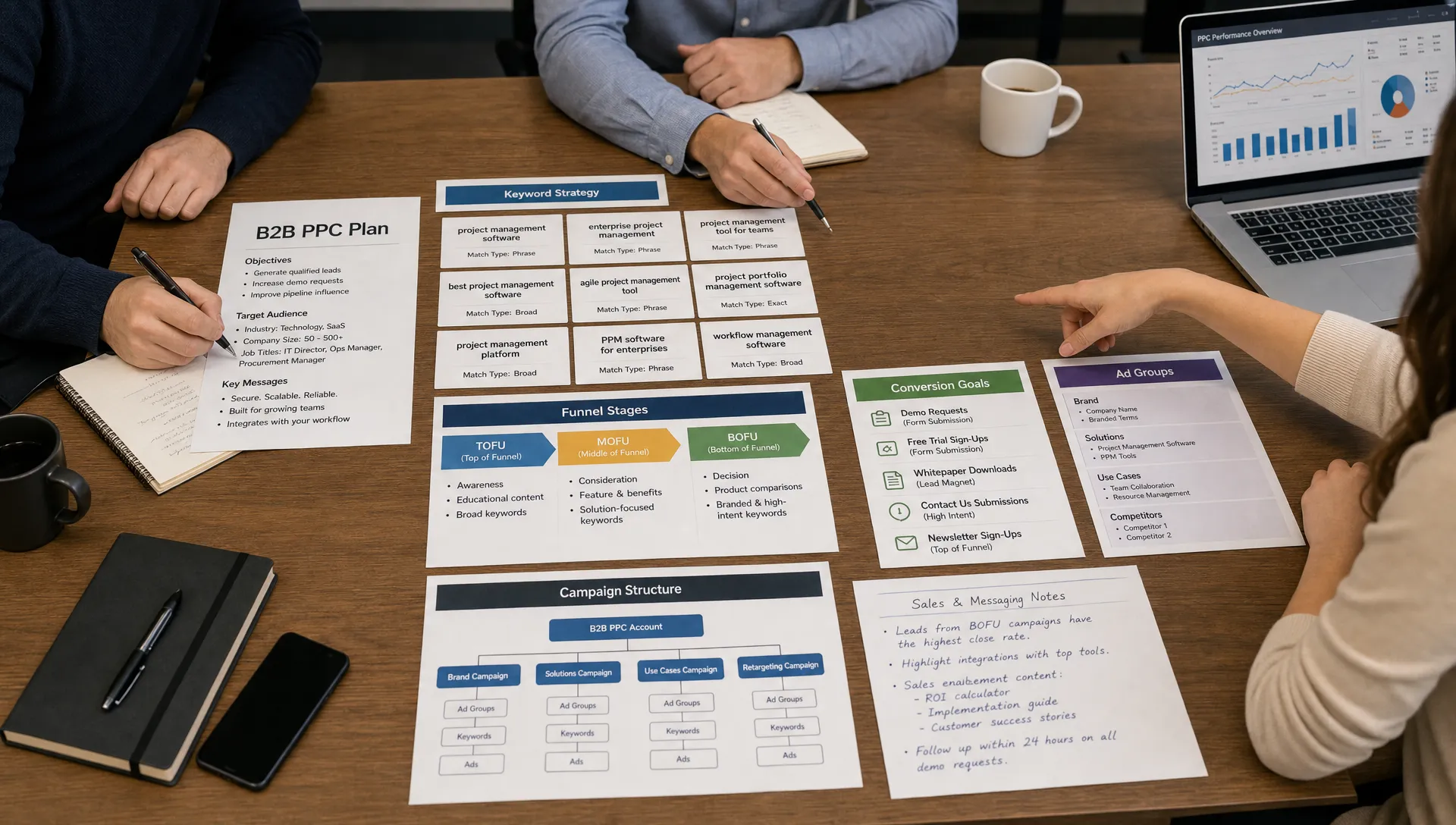
A Houston industrial marketing planning room shows page outlines, conversion notes, and a worktable for website checks.

On-Site SEO Checks Every B2B Website Needs

A strong B2B website depends on a disciplined on site seo process, not just publishing more pages and hoping Google sorts them out. For industrial suppliers, professional service firms and Houston-area B2B companies, the real goal is not traffic alone. The goal is to help the right buyer understand what you do, trust your expertise and take the next step without friction.

Many B2B websites underperform because the problems are hiding in plain sight. A product page may have a vague title tag. A service page may target the wrong intent. A case study may have no internal links to a proposal form. A technically sound website can still lose qualified leads if the page structure, content and calls to action do not match how buyers search.

That is why on site seo should be treated as a revenue-supporting audit, not a one-time publishing task. The checks below focus on the areas that most often affect B2B visibility, lead quality and conversion readiness.

Start with the search intent behind each page

Every page should have a clear job. In B2B marketing, that job usually fits one of three intent categories: educate, evaluate or convert. A blog post may help an engineer compare options, while a service page may need to reassure a purchasing manager that your company can handle a specific project scope.

Before editing tags or adding keywords, ask whether the page satisfies the buyer’s actual search. A visitor searching for “industrial pump repair Houston” probably wants service coverage, response capability, technical qualifications and a way to request help. A visitor searching for “how to reduce downtime in manufacturing” may need a guide, checklist or diagnostic article before they are ready to speak with sales.

This is where many B2B sites drift. They write for internal language rather than customer language. Your checks should confirm that each page has one primary topic, one search intent and one next step.

The on site seo checks that matter most

Once page intent is clear, the practical checks become much easier. Title tags, headings, internal links and body copy should all reinforce the same topic without repeating the same phrase unnaturally.

Start with the title tag. It should identify the subject of the page and give buyers a reason to click. For B2B pages, that often means combining the service, market or location with a value signal. A title like “Industrial Valve Repair in Houston for Processing Facilities” is more useful than “Services” because it tells both search engines and buyers what the page is about.

Meta descriptions do not directly control rankings, but they influence click behavior. A good description should summarize the page in plain language, include a relevant benefit and avoid generic claims. Headings should then support the page structure. Use one clear H1, followed by H2s and H3s that break the topic into decision-friendly sections.

If you want a broader audit framework, this comprehensive SEO checklist can help you organize additional page-level and technical reviews.

Check whether the content proves expertise

For B2B buyers, thin content is a trust problem. A page that says “we provide quality solutions” does not help a plant manager, procurement team or technical buyer decide whether you understand their situation.

Effective on site seo connects search relevance with evidence. That evidence may include process details, industries served, service limitations, standards followed, project examples, FAQs or comparison points. The more specialized the service, the more important specificity becomes.

For example, a niche event service such as large champagne glass pyramid displays needs to communicate the offer, visual impact, logistical credibility and proof of execution quickly because the buyer is evaluating something highly specific. B2B and industrial websites face a similar challenge, even when the subject is less visual. Buyers want to know whether your company can deliver in their environment.

Avoid adding filler just to increase word count. Instead, add the details a real buyer would need before contacting sales.

Page element What to check Why it matters for B2B SEO
Title tag Clear service, product or topic focus Improves relevance and click clarity
H1 and headings Logical structure with buyer-focused sections Helps readers scan and search engines understand the page
Body content Specific proof, examples and useful explanations Builds trust with technical and business buyers
Internal links Relevant links to supporting pages Guides buyers through the decision path
Calls to action Clear next step based on intent Turns qualified visits into inquiries

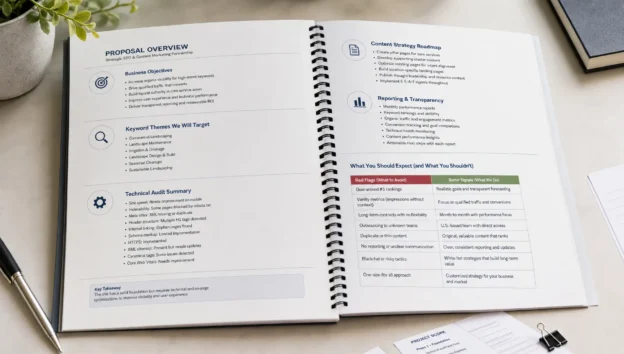
A B2B marketing specialist reviews an on-site SEO checklist beside website wireframes, headings, and conversion notes for an industrial website.

Internal links help search engines discover related content, but their bigger value for B2B sites is guiding buyers through a complex decision. A visitor may enter through an educational article, move to a service page, compare capabilities and then look for a contact form. If the site does not connect those steps, the buyer may leave before taking action.

A good internal link should feel like a natural next step. If a page explains a problem, link to a service page that solves it. If a service page mentions a technical challenge, link to a deeper article that explains your approach. If a blog post attracts local or regional buyers, link to location-relevant service content where appropriate.

This is also where SEO and design overlap. Strong navigation, scannable sections and visible calls to action can improve lead quality as much as rankings. The article on search engine optimization website design for better leads goes deeper into how site structure and conversion design work together.

When on site seo is aligned with conversion paths, the website stops acting like a brochure and starts acting like a guided sales assistant.

Inspect technical signals that affect page performance

Technical checks do not need to be mysterious, but they do need to be consistent. If search engines cannot crawl, index or render key pages correctly, strong content will not reach its full potential.

Begin with indexation. Important pages should be indexable, included in the XML sitemap and free from accidental noindex tags. Check canonical tags to make sure they point to the right version of each page. Review redirects, broken links and duplicate pages that may split ranking signals.

Performance also matters. Slow pages can hurt engagement, especially when B2B buyers are comparing vendors during a busy workday. Core Web Vitals, mobile usability, compressed images and clean code all contribute to a better experience. A responsive website is now basic infrastructure, not a design bonus.

Security is another trust signal. HTTPS should be standard across the entire website. Forms should work properly, especially proposal inquiries, quote requests and contact submissions. A ranking improvement is wasted if a buyer cannot complete the action that creates a lead.

Make local and industry relevance visible

B2B search is often shaped by geography, even when the sales cycle is national or regional. A Houston industrial company may serve clients across Texas, but a local presence can still influence credibility, search relevance and buyer confidence.

Your pages should make location and industry relevance clear where it is true. This may include service areas, facility location, industries served, local project experience or Houston-specific terminology. Do not create thin location pages with copied text. Instead, build pages that explain why your location matters to the buyer.

For companies competing in the Houston market, on site seo should connect local relevance with buyer intent. A manufacturer, distributor or B2B service provider will usually benefit from pages that speak to both the service category and the industries that need it.

For a deeper local perspective, see this guide to SEO Houston for B2B companies, which covers the signals that matter most in a competitive regional market.

Use media, schema and page formatting with purpose

Images, videos, charts and downloadable assets can improve B2B pages when they clarify the buying decision. A product photo, equipment image, process diagram or short explainer can make a technical offer easier to understand. The key is to optimize media without slowing the page.

Use descriptive file names and alt text for important images. Alt text should describe the image accurately, not repeat keywords mechanically. Compress images before publishing and avoid uploading oversized files that force mobile users to wait.

Schema markup can also help search engines understand page elements. Organization, LocalBusiness, FAQ and Article schema may be relevant depending on the page type. Schema does not replace strong content, but it can make structured information easier for search systems to interpret.

Formatting matters too. B2B readers scan before they commit. Short sections, descriptive subheadings, tables and clear CTAs make a page easier to evaluate. Good on site seo supports that behavior instead of forcing visitors through dense blocks of text.

Measure the checks that connect to leads

Rankings are useful, but they are not the finish line. B2B companies should track the metrics that show whether organic traffic is turning into business opportunity.

Look at impressions, clicks, average position and click-through rate in Google Search Console. Then connect those patterns to behavior in analytics: engaged sessions, form submissions, phone clicks, proposal inquiries and visits to high-intent pages. If a page ranks but does not generate action, the issue may be intent mismatch, weak proof, poor CTA placement or an offer that is too vague.

A simple monthly review can catch problems before they become expensive. Prioritize pages that target valuable services, receive impressions but low clicks or attract traffic without conversions. These pages often offer the best improvement opportunities because they already have some search visibility.

The best on site seo programs become part of ongoing marketing operations. They help your team decide what to update, what to consolidate, what to expand and what to promote through PPC or social campaigns.

Frequently Asked Questions

How often should a B2B website run on-site SEO checks? Most B2B websites should review key pages quarterly and run a deeper audit at least twice a year. High-value service pages, PPC landing pages and pages losing rankings may need more frequent attention.

What is the difference between on-site SEO and technical SEO? On-site SEO covers page content, headings, internal links, metadata, user experience and conversion clarity. Technical SEO focuses more narrowly on crawlability, indexation, site speed, redirects, structured data and code-level issues.

Do B2B websites need different SEO checks than consumer websites? Yes. B2B buyers usually have longer decision cycles, more stakeholders and more technical questions. That means pages need stronger proof, clearer industry relevance and conversion paths that support research as well as direct inquiries.

Can on-site SEO improve lead quality? Yes. When pages match buyer intent and explain the offer clearly, they tend to attract visitors who better understand what your company does. That can reduce irrelevant inquiries and improve the quality of sales conversations.

Turn SEO checks into better B2B lead flow

A website audit is only valuable if it leads to action. Fixing titles, headings, internal links, page speed and conversion paths can make a measurable difference, but the work should be prioritized around business value rather than vanity metrics.

If your B2B website needs stronger visibility, cleaner structure or a better path from search to inquiry, Andy Alagappan’s Houston-based inbound marketing services can help with SEO, PPC, content and campaign strategy. Start with the pages that matter most to your pipeline, then build a practical improvement plan that supports qualified lead flow over time.

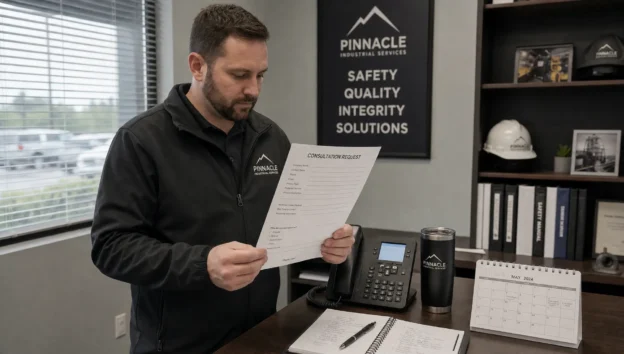
A sales rep reviews a consultation request form beside a phone, notebook, and calendar in the office.

Demand Generation That Creates Sales-Ready Opportunities

A healthy B2B pipeline is not built by collecting every email address you can get. It is built by creating enough trust, relevance and urgency that the right accounts are willing to have a serious sales conversation.

That is the real job of demand generation. For industrial companies, technical service firms and B2B organizations with longer buying cycles, the goal is not simply more leads. The goal is more sales-ready opportunities, meaning opportunities that match your ideal customer profile, show a real business need and give sales a credible reason to follow up.

In 2026, buyers are still doing much of their research before they ever speak with a vendor. Gartner has reported for years that B2B buying groups spend only a small portion of their journey meeting with suppliers. That makes your marketing system responsible for educating, filtering and warming up the market before a salesperson enters the conversation.

Start With the Sales Opportunity, Not the Campaign

Many campaigns begin with the wrong question: Which channel should we use? A better starting point is: What makes an opportunity worth sales time?

A well-run demand generation program defines sales readiness before it builds landing pages, ads or email sequences. Otherwise, marketing may celebrate form fills that sales ignores because the contact has no budget, no urgency or no connection to the buying committee.

For a B2B service company, a sales-ready opportunity usually has five traits:

  • The account fits your target industry, company size, geography or operational profile.
  • The contact has buying authority, technical influence or access to decision makers.
  • The pain point maps to a service your company can credibly solve.
  • Engagement shows intent, such as repeat visits to solution pages, pricing requests, consultation forms or high-value content consumption.
  • The next step is clear enough for sales to act, such as a discovery call, assessment, quote request or site visit.

These criteria keep demand generation tied to revenue instead of activity. They also protect the relationship between marketing and sales. When both teams agree on what deserves follow-up, pipeline conversations become more practical and less political.

Demand Generation Is Not Just Lead Capture

Lead capture is one moment in the buyer journey. Demand generation is the broader system that creates awareness, shapes preference and moves qualified buyers toward action.

A landing page with a form can capture existing interest. It cannot, by itself, create trust with a buyer who has never heard of your company. It also cannot answer every question that comes up in a complex B2B purchase, such as implementation risk, downtime, cost justification, technical compatibility or internal approval.

A demand generation program should include the full path from first discovery to sales acceptance. That path usually includes search visibility, educational content, targeted paid campaigns, retargeting, email nurturing, case-based proof and conversion points designed for different levels of intent.

Strong demand generation does not force every visitor into the same offer. A first-time visitor may need a practical guide. A returning visitor comparing vendors may need a capabilities page or case study. A procurement-driven buyer may need a consultation request or proposal enquiry form. Matching the offer to the buyer's stage is what turns traffic into opportunity.

Build From Your ICP and Buying Triggers

The strongest demand generation programs begin with a precise ideal customer profile. This is especially true for industrial marketing and B2B services, where a smaller number of qualified accounts can be worth far more than a large list of weak leads.

Your ideal customer profile should include the firmographic details that matter, such as industry, revenue range, location, facility type or technology environment. It should also include situational triggers. A company expanding into a new facility, replacing legacy systems, responding to compliance pressure or struggling with poor vendor performance may be more likely to act than a similar company with no urgent trigger.

If you are still defining your foundation, this guide to building a targeted demand generation strategy offers a useful starting point for aligning keywords, PPC, content and nurture emails around a specific audience.

Once you know the account type and trigger, your campaigns become easier to focus. Instead of advertising a broad service message, you can speak to a business situation. Instead of writing generic blog posts, you can answer the questions that appear when a buyer is actively trying to solve a problem.

Buying trigger What the buyer may need Campaign response
Facility expansion Vendors that can scale with operational growth Search pages, project planning content and consultation offers
Compliance pressure Evidence of process discipline and risk reduction Educational guides, checklists and proof of experience
Poor current vendor performance A more reliable partner with clear onboarding Comparison content, case examples and discovery calls
New executive leadership Fresh strategy, cost control or modernization Thought leadership, audits and ROI-focused offers
Budget cycle planning Clear scope, timing and business justification PPC landing pages, proposal forms and nurture sequences

Create Content That Helps Buyers Self-Qualify

B2B buyers do not want more promotional content. They want help making a decision with less risk. Your content should make it easier for good-fit prospects to recognize themselves and easier for poor-fit prospects to opt out.

Demand generation content is not only top-of-funnel blog writing. It should cover the full range of questions that appear across a buying committee. Operations leaders may care about downtime and workflow. Finance may care about total cost. Technical evaluators may care about specifications, integrations or implementation steps. Executives may care about risk, speed and business impact.

Useful content types include service comparison pages, implementation guides, buyer checklists, cost explanation pages, industry-specific landing pages, case stories and objection-handling articles. The more complex the purchase, the more important this content becomes.

The best content also gives sales better conversations. When a prospect has already read about common problems, service options and expected outcomes, sales can spend less time explaining the basics and more time diagnosing the prospect's situation.

Choose Channels by Intent, Not Popularity

Demand generation channels should be chosen based on where your buyers show intent and where your message can be trusted. SEO is valuable when buyers search for a problem, service or comparison. PPC is useful when speed, testing or high-intent search terms matter. LinkedIn can help reach specific roles, industries and accounts. Email nurture can keep your company visible during a long internal evaluation.

For many B2B companies, the strongest approach is a focused mix rather than an attempt to be everywhere. A Houston industrial service company, for example, may get more value from ranking for specialized search terms, running PPC around urgent service needs and nurturing known contacts than from posting daily on every social platform.

The technical foundation also matters. If campaigns drive buyers to slow pages, insecure forms or unreliable email systems, trust can drop before sales ever gets involved. For small and midsized businesses that need stronger operational support behind their marketing stack, partners that provide proactive IT support, cybersecurity and business continuity can help reduce the risk of lost inquiries, downtime and security issues.

A marketing and sales team reviews pipeline stages from anonymous visitor to qualified sales opportunity, with campaign notes and buyer intent signals on the board.

Design Nurture Paths That Move From Interest to Intent

Not every qualified buyer is ready now. Some are researching future projects, waiting for budget approval or gathering information for a larger committee. If your only follow-up is a sales call after a single form submission, you will lose many of these opportunities.

Nurture paths bridge the gap between early interest and active buying intent. The goal is not to push someone into a decision before they are ready. The goal is to keep providing relevant proof, education and next steps until the buyer's need becomes more urgent.

A practical nurture path should change based on behavior. A contact who downloads a beginner guide may receive educational emails. A contact who later visits service pages, watches a webinar or returns to a proposal page should receive stronger calls to action. A target account with multiple engaged contacts may deserve sales outreach even if no single person has requested a quote.

This is where demand generation separates itself from a basic newsletter. Nurture should respond to buyer behavior, not just broadcast company updates.

Use Lead Scoring That Sales Actually Trusts

Lead scoring turns demand generation activity into a qualification system. The score should combine fit, engagement and timing. If it only counts clicks, it may overvalue curious students, vendors or job seekers. If it only counts job titles, it may miss active influencers inside a buying committee.

A trustworthy scoring model gives weight to actions that suggest buying intent. Visiting a careers page should not carry the same value as visiting a service page three times. Opening one email should not carry the same value as requesting a consultation. Negative scoring also matters because it keeps irrelevant contacts from cluttering the pipeline.

Score category Positive signals Negative signals
Account fit Target industry, right geography, relevant company size Student, competitor, vendor or non-serviceable location
Role fit Decision maker, technical evaluator or department leader Unrelated role with no buying influence
Engagement Repeat visits, pricing or proposal page views, webinar attendance One-time visit with no return activity
Stated need Form comments that describe a real problem or timeline Vague inquiry with no business context
Timing Budget planning, urgent issue or active project No planned action, research only

Sales must help define the model. If marketing builds the score alone, it may reflect campaign convenience instead of field reality. Review scored leads with sales every month and adjust thresholds based on acceptance rates, meeting quality and opportunity creation.

Make the Handoff a Process, Not a Notification

A sales-ready opportunity is not just a contact record pushed into a CRM. The handoff should give sales enough context to open the conversation intelligently.

At minimum, the record should include the campaign source, pages viewed, content downloaded, stated pain point, company fit, known buying role and recommended next step. If sales has to research everything from scratch, the handoff is incomplete.

Marketing and sales should also agree on service level expectations. For example, high-intent consultation requests may need same-day follow-up. Lower-intent content leads may stay in nurture until they cross a scoring threshold. Target accounts showing multiple buying signals may be routed for account-based outreach.

This process matters because speed and relevance both affect conversion. A fast generic response can feel careless. A thoughtful response delivered too late can miss the buying window. The best handoff gives sales both urgency and context.

Measure What Proves Opportunity Quality

Demand generation measurement should go beyond impressions, clicks and cost per lead. Those metrics can help diagnose campaign performance, but they do not prove pipeline quality on their own.

The most useful reporting connects marketing activity to sales progress. If a channel produces many low-cost leads but few accepted opportunities, it may be creating noise. If another channel produces fewer leads but better meetings, larger deal sizes or higher close rates, it may deserve more investment.

For a deeper look at reporting structure, this article on how to measure demand gen campaign results explains how to evaluate campaign performance beyond surface metrics.

Metric Why it matters
Target account engagement Shows whether the right companies are paying attention
Lead to MQL conversion Indicates whether offers attract qualified interest
MQL to sales accepted lead Shows whether sales trusts the opportunities
Sales accepted lead to opportunity Measures actual pipeline creation
Opportunity value by source Helps prioritize budget by revenue potential
Pipeline velocity Shows whether marketing-sourced opportunities move efficiently

Reviewing these metrics together prevents overreacting to one number. A lower conversion rate may be acceptable if the resulting opportunities are better fit. A high form-fill rate may be a problem if sales cannot convert the inquiries into real conversations.

Common Gaps That Keep Leads From Becoming Opportunities

Demand generation fails when it creates attention without readiness. The most common gaps are usually practical, not mysterious.

  • Targeting is too broad, so campaigns attract companies that sales cannot serve well.
  • Content answers general questions but avoids the commercial questions buyers actually need answered.
  • Forms ask for information before enough trust has been created.
  • Marketing celebrates MQL volume without checking sales acceptance and opportunity creation.
  • Nurture emails are the same for every contact, regardless of industry, role or behavior.
  • Sales receives too little context and follows up with a generic pitch.

Fixing these gaps often produces better results than simply increasing ad spend. Before scaling budget, confirm that your message, offers, forms, scoring and handoff process are working together.

A Practical 90-Day Framework

A 90-day plan is long enough to improve the system but short enough to keep momentum. Your first demand generation goal should be learning what creates sales-ready behavior, not perfecting every campaign asset.

Timeframe Focus Practical work
Days 1 to 30 Define readiness Align ICP, buying triggers, sales-ready criteria and CRM fields
Days 31 to 60 Build and launch Create focused content, landing pages, PPC or SEO campaigns and nurture paths
Days 61 to 90 Measure and refine Review sales acceptance, opportunity creation, objections and channel quality

This framework works because it forces marketing and sales to collaborate early. Marketing brings audience insight, content and campaign execution. Sales brings the reality of prospect conversations. Together, they can decide whether a campaign is producing true opportunities or only activity.

Frequently Asked Questions

What is the difference between demand generation and lead generation? Lead generation usually focuses on capturing contact information. Demand generation covers the broader process of creating awareness, educating buyers, building trust, nurturing interest and producing opportunities that sales can work.

What makes a lead sales-ready? A lead is sales-ready when the account fits your ideal customer profile, the contact has buying influence, the pain point is relevant, engagement shows intent and there is a clear next step for sales.

How long does it take to see results from a B2B campaign? Paid search can produce inquiries quickly, but opportunity quality often improves over several months as targeting, content, nurture and scoring are refined. SEO and content programs usually require more time but can compound in value.

Should every marketing qualified lead go to sales? No. Some leads should stay in nurture until they show stronger fit or intent. Sending every MQL to sales can reduce trust in the process and waste time on contacts that are not ready.

Which channels work best for sales-ready opportunities? The best channels depend on buyer intent. For many B2B companies, a mix of SEO, PPC, focused landing pages, email nurture and role-specific content works better than relying on one channel alone.

Turn Interest Into Better Sales Conversations

If your campaigns are generating activity but not enough qualified opportunities, the problem may not be traffic. It may be targeting, message alignment, lead scoring, nurture or the sales handoff.

B2B Inbound Marketing helps Houston-area and industrial B2B companies improve visibility, rankings and lead quality through SEO, PPC, inbound strategy, content and web-related marketing services. To build a system that supports real pipeline conversations, visit Andy Alagappan and start turning demand into opportunities sales can use.

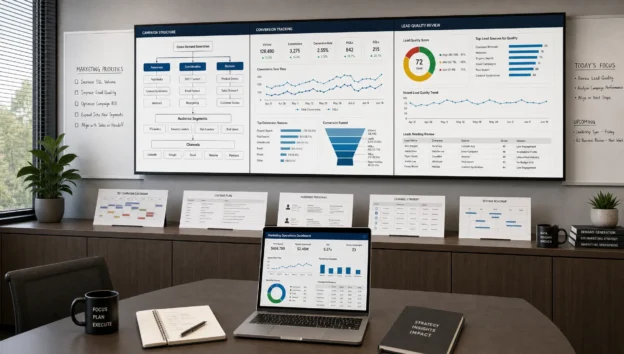
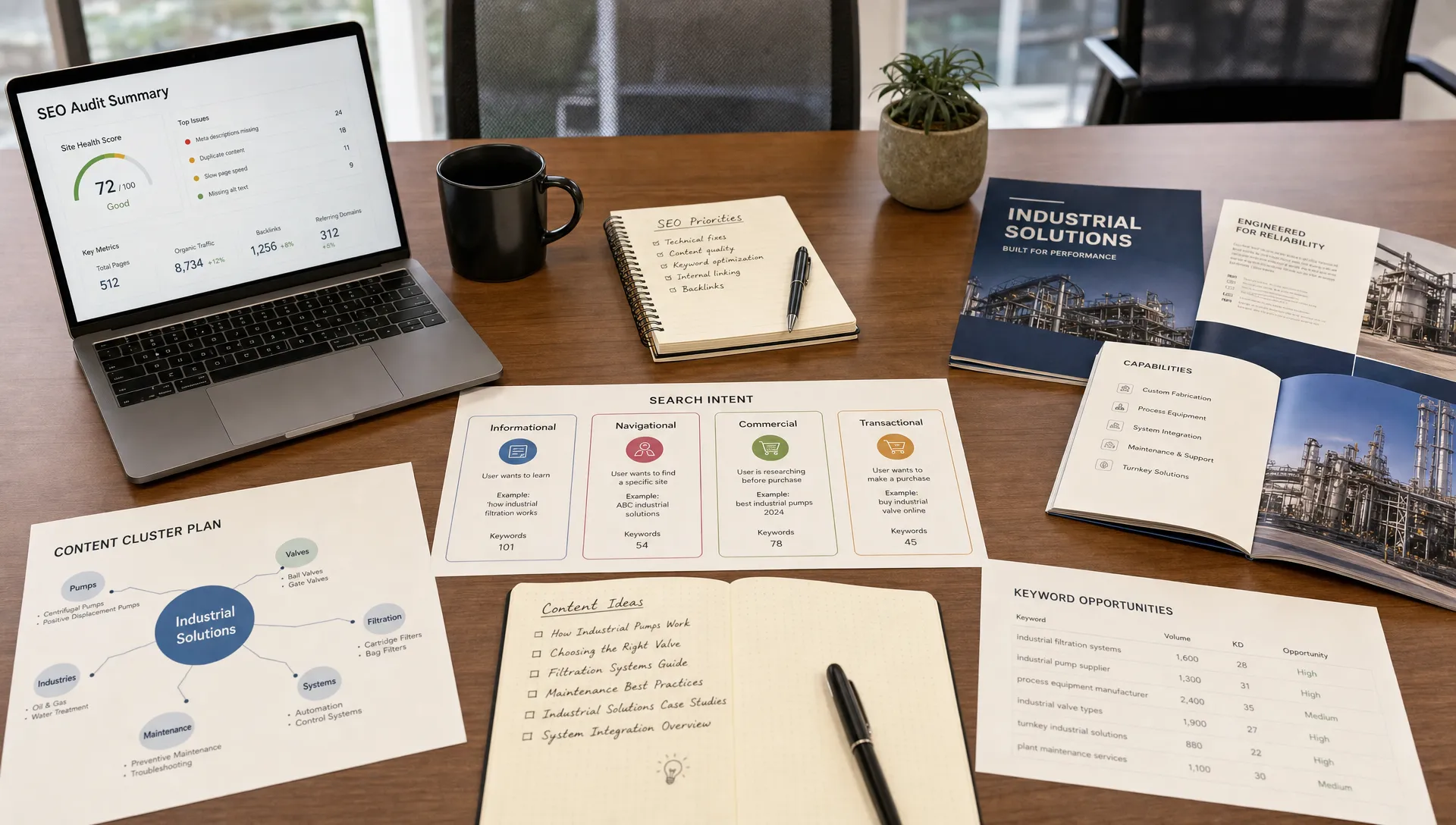
A B2B marketing operations room displays PPC reports, lead quality notes, and pipeline tracking sheets.

PPC Pay Per Click Advertising Metrics That Actually Matter

Most PPC reports are full of numbers, but only a small group of those numbers tell you whether a campaign is creating business value. For B2B and industrial companies, PPC pay per click advertising is rarely about generating the cheapest possible click. It is about getting in front of the right buyer at the right moment, then turning that interest into a qualified conversation, quote request or sales opportunity.

That distinction matters because a campaign can look healthy inside Google Ads and still disappoint the sales team. High click volume, a low average CPC and a strong CTR may feel encouraging, but they do not prove that buyers are moving through the pipeline. The metrics that actually matter connect ad spend to intent, lead quality and revenue potential.

Why many PPC metrics mislead B2B teams

PPC platforms are designed to report activity quickly. They show impressions, clicks, CTR, CPC, conversions and spend in near real time. Those numbers are useful, but they are not all equal.

A manufacturer, distributor, engineering firm or industrial service provider may only need a modest number of high-quality opportunities each month. One quote request from a qualified plant manager can be worth more than hundreds of low-intent visits from students, job seekers or people looking for free information. If your reporting treats every conversion the same, your optimization will drift toward volume instead of value.

The problem gets worse when campaigns use broad conversion goals. A contact form, PDF download, newsletter signup and quote request may all be counted as conversions, but they do not represent the same level of buying intent. Before evaluating performance, make sure your measurement setup separates meaningful sales actions from soft engagement.

Start with tracking accuracy before judging performance

No PPC metric matters if the tracking is wrong. Before analyzing cost per lead or return on ad spend, confirm that your conversion actions reflect real business outcomes.

A strong B2B setup usually distinguishes between primary conversions and secondary signals. Primary conversions are actions you are willing to optimize bids around. Secondary signals help with diagnosis, but they should not carry the same weight as a qualified quote request or direct sales inquiry.

Conversion action What it usually means How to treat it
RFQ or quote request Strong buying intent Primary conversion
Contact form with business details Potential sales inquiry Primary if qualified
Phone call over a meaningful duration Possible live buying conversation Primary if call quality is reviewed
Product catalog or spec sheet download Research intent Secondary signal
Newsletter signup Low or early intent Secondary signal
Simple page view Website activity Diagnostic only

If a campaign is optimized for weak signals, the platform may find more of those weak signals. That can lower your apparent cost per conversion while reducing actual sales value.

Cost per qualified lead

Cost per lead is one of the most common PPC metrics, but raw CPL is often too shallow for B2B. A cheaper lead is not better if it has no budget, no fit or no real buying need.

Cost per qualified lead is more useful because it filters leads through criteria that matter to sales. That might include company type, geography, industry, job role, project timing, minimum order size or fit with your service capabilities.

The basic formula is simple:

Metric Formula What it tells you
Cost per lead Ad spend divided by total leads How efficiently ads generate inquiries
Cost per qualified lead Ad spend divided by qualified leads How efficiently ads generate usable sales conversations
Qualification rate Qualified leads divided by total leads Whether campaigns attract the right audience

For example, a campaign that spends $5,000 and generates 50 leads has a $100 CPL. If only 5 of those leads are qualified, the cost per qualified lead is $1,000. Another campaign may generate 20 leads at a $250 CPL, but if 10 are qualified, the cost per qualified lead is $500. The second campaign is the better business asset.

If you want a deeper breakdown of how lead cost differs from acquisition cost, this guide to Cost per Lead (CPL) and Cost per Acquisition (CPA) explains when each metric should guide decisions.

Lead-to-opportunity rate

Lead-to-opportunity rate shows how many PPC leads become legitimate sales opportunities. This is one of the clearest bridges between marketing performance and sales reality.

The formula is:

Metric Formula Why it matters
Lead-to-opportunity rate Sales opportunities divided by total leads Measures lead quality and sales acceptance
Qualified lead-to-opportunity rate Opportunities divided by qualified leads Shows whether qualification criteria are accurate

A low lead-to-opportunity rate usually points to one of three problems. The keywords may be too broad, the ad copy may be attracting the wrong expectations or the landing page may be converting visitors who are not ready for a sales conversation.

For B2B PPC, this metric should be reviewed with sales feedback, not only platform data. Sales teams can identify patterns that ad dashboards miss, such as companies outside the service area, unqualified job titles or inquiries below the minimum project size.

Cost per opportunity

Cost per opportunity is often more useful than CPL because it measures the cost of creating a real pipeline event. It removes much of the noise from unqualified form fills and low-intent inquiries.

The formula is:

Metric Formula Best use
Cost per opportunity Ad spend divided by accepted opportunities Budget planning and campaign comparison
Opportunity rate Opportunities divided by PPC leads Lead quality diagnosis
Opportunity value per lead Pipeline value divided by PPC leads Prioritizing high-value segments

This metric helps you compare campaigns that have different lead volumes. A high-intent search campaign may have a higher CPC and higher CPL than a broad awareness campaign, but if it produces accepted opportunities at a lower cost, it deserves more attention.

Pipeline generated and pipeline return

Pipeline metrics matter because B2B sales cycles often take weeks or months. Waiting for closed revenue before evaluating PPC can slow decision-making, but judging campaigns only by lead volume can create waste.

Pipeline generated measures the estimated value of opportunities sourced from PPC. Pipeline return compares that value to ad spend.

Metric Formula Use with caution
Pipeline generated Sum of opportunity values attributed to PPC Depends on accurate CRM values
Pipeline return Pipeline value divided by ad spend Should be segmented by campaign and lead source
Closed revenue return Closed won revenue divided by ad spend Most reliable, but slower to mature

Pipeline return is not the same as profit. It is a directional metric that helps you see whether PPC is creating enough potential revenue to justify continued investment. For companies with long sales cycles, it is one of the best ways to avoid overreacting to short-term conversion fluctuations.

A PPC performance dashboard on a conference table shows qualified leads, opportunities, pipeline value, and budget efficiency beside notebooks and a calculator.

Search term quality and budget waste

Search term reports reveal whether your ads are matching the intent you actually want. This is especially important in industrial PPC, where one keyword can have multiple meanings across consumer, educational and commercial contexts.

A useful metric is search term waste ratio. It compares spend on irrelevant or unqualified searches with total search spend.

Metric Formula What to watch
Search term waste ratio Irrelevant search spend divided by total search spend Broad match leakage and weak negatives
Qualified search spend share Spend on relevant terms divided by total spend Budget discipline
Negative keyword impact Waste reduced after exclusions Ongoing campaign hygiene

If a campaign spends heavily on searches that never had buying intent, improving bids will not fix the problem. You need tighter match types, stronger negative keyword lists and clearer ad copy that discourages poor-fit clicks.

For a practical troubleshooting process, this article on how to fix a pay per click campaign that wastes budget covers the areas that usually create unnecessary spend.

Conversion rate by intent segment

Overall conversion rate is helpful, but it becomes far more useful when segmented by search intent. Not every campaign should be expected to convert at the same rate.

Brand searches often convert at a higher rate because the visitor already knows your company. Product or service searches may convert well if the landing page matches the need. Problem-based searches may generate early-stage research traffic. Competitor searches can be expensive and inconsistent, but sometimes valuable if the offer is clearly differentiated.

Segment Typical intent How to evaluate it
Brand terms Navigational and high familiarity Protect visibility and monitor cost
Product or service terms Active solution research Measure qualified leads and opportunities
Problem-based terms Education and early research Use secondary conversions and remarketing context
Competitor terms Comparison shopping Judge by cost per opportunity, not clicks
Broad industry terms Mixed intent Watch waste ratio closely

Segmented reporting prevents unfair comparisons. A campaign targeting emergency repair searches should not be judged the same way as a campaign promoting an educational guide.

Landing page conversion rate

PPC performance does not stop at the ad click. Landing page conversion rate shows whether the page completes the promise made by the keyword and ad.

For B2B campaigns, the landing page should answer practical buying questions quickly. Visitors often want to know whether you serve their industry, provide the specific capability they need, work in their location and offer a credible next step.

A low landing page conversion rate may indicate weak message match, unclear forms, poor mobile experience, slow load time or insufficient proof. A high conversion rate with poor lead quality can indicate the opposite problem: the page makes it too easy for anyone to submit without clarifying fit.

Website conversion metrics are a broader discipline than PPC alone. This article on important website conversion metrics to measure is useful if you want to connect ad traffic with on-site behavior.

Impression share on high-value terms

Impression share tells you how often your ads appear compared with the available impressions you were eligible to receive. In B2B PPC, the metric matters most for your highest-intent keywords.

If you are losing impression share because of budget on valuable terms, you may be spreading spend too thinly. If you are losing impression share because of rank, the issue may involve bids, ad relevance, expected CTR or landing page quality.

Do not chase impression share across every keyword. Focus on the terms that have proven qualified lead or opportunity value. A high impression share on low-value terms only means you are highly visible in places that may not matter.

Metrics that are useful, but not primary

Some PPC metrics are not business outcomes, but they still help explain performance. Treat them as diagnostic signals.

Metric Useful when Dangerous when
CTR Testing ad relevance and message fit Used as proof of lead quality
CPC Monitoring auction pressure and budget needs Optimized lower at the expense of intent
Quality Score Diagnosing keyword, ad and landing page alignment Treated as the main business goal
Click volume Measuring traffic scale Confused with demand quality
Impressions Measuring visibility Reported without lead or pipeline context
Engagement rate Reviewing landing page interest Used instead of conversion quality

A low CPC can be a warning sign if it comes from broad, low-intent traffic. A high CTR can be a warning sign if the ad copy attracts people who are not buyers. These metrics help you ask better questions, but they should not be the final verdict.

A simple B2B PPC scorecard

A useful scorecard should fit on one page and connect campaign activity to sales outcomes. It should also separate weekly optimization metrics from monthly and quarterly business metrics.

Review cadence Metrics to review Main decision
Weekly Spend, conversions, search terms, CPC, CTR, budget pacing Control waste and fix obvious issues
Monthly Qualified leads, cost per qualified lead, opportunity rate, landing page conversion rate Improve targeting and conversion quality
Quarterly Cost per opportunity, pipeline generated, closed revenue, customer acquisition cost Decide budget allocation and strategy

This structure keeps teams from making big decisions based on small weekly changes. It also prevents monthly reports from becoming a dump of every available metric.

Busy teams often need help turning campaign exports, call notes, PDFs and competitor research into decisions people can understand. Tools that turn dense content into clearer understanding can support that process when PPC reporting needs to be simplified for sales, operations or leadership.

What to do when the numbers change

Metrics are only useful if they lead to action. The pattern matters more than any single number.

What you see Likely issue Practical response
CPL falls, but qualified lead rate falls too Campaign is attracting easier, lower-quality conversions Tighten keywords, forms and ad copy
CTR rises, but conversion rate drops Ads may be overpromising or attracting poor-fit traffic Align ad message with landing page and qualification needs
CPC rises, but opportunity quality improves More competitive traffic may still be worth the cost Judge by cost per opportunity and pipeline
Impression share drops on proven terms Budget or rank is limiting visibility Reallocate spend or improve relevance
Landing page conversion rate is low on high-intent traffic Page is not matching the searcher need Improve offer clarity, proof and form design
Many leads never become opportunities Sales fit is weak or qualification is unclear Add CRM feedback and adjust targeting

For companies with complex sales cycles, the strongest PPC programs are built around pipeline feedback, not isolated ad metrics. That is why pay per click management that improves B2B pipeline needs to include keyword discipline, landing page relevance and sales follow-up data.

The metrics that deserve executive attention

Executives do not need every keyword fluctuation. They need to know whether PPC is creating profitable growth opportunities. A strong executive summary should focus on a short set of metrics:

  • Spend against budget
  • Qualified leads generated
  • Cost per qualified lead
  • Sales opportunities created
  • Cost per opportunity
  • Pipeline value generated
  • Closed revenue when available

This keeps the conversation centered on business outcomes. If a campaign is underperforming, the supporting diagnostic metrics can explain why. If a campaign is performing well, the same structure helps justify increased budget.

Frequently Asked Questions

What is the most important PPC pay per click advertising metric? For B2B campaigns, cost per qualified lead or cost per opportunity is usually more meaningful than clicks or raw conversions. The best metric depends on how closely your CRM and sales process are connected to ad data.

Is CTR a good PPC metric? CTR is useful for judging ad relevance, but it does not prove lead quality. A high CTR can still produce poor results if the ad attracts visitors who are not a good fit.

How often should B2B PPC metrics be reviewed? Budget pacing, search terms and obvious tracking issues should be reviewed weekly. Qualified lead quality, opportunity rate and landing page performance usually make more sense monthly. Pipeline and revenue metrics often need quarterly review.

Should PPC campaigns optimize for form fills or phone calls? They should optimize for whichever action produces qualified sales conversations. Many B2B companies need to track both, then review call quality and form quality before deciding which conversions deserve bidding weight.

Why does my campaign have a good CPL but poor sales results? The campaign may be generating low-fit leads, tracking soft conversions as primary goals or using keywords that attract research traffic instead of buyers. Review qualified lead rate, lead-to-opportunity rate and search term waste before increasing budget.

Turn PPC reporting into better decisions

PPC pay per click advertising works best when performance is judged by business value, not platform activity alone. Clicks, CTR and CPC help explain what is happening, but qualified leads, opportunities, pipeline and revenue show whether the campaign is worth scaling.

If your reports are heavy on activity metrics but light on sales insight, start by cleaning up conversion tracking, separating qualified from unqualified leads and reviewing performance with the sales team. For B2B and industrial companies in competitive markets, that discipline can make the difference between buying traffic and building pipeline.

An industrial facility entrance connected to search visibility and inquiry routes, showing the place where serious buyers find a supplier.

A Practical Lead Generation Strategy for Industrial Firms

Industrial firms do not need a bigger pile of random form fills. They need a practical lead generation strategy that attracts the right engineers, plant managers, procurement teams and executives before a purchasing decision is already locked in.

That matters because industrial buying is rarely impulsive. A prospect may search for a supplier months before a capital project is approved. A maintenance manager may compare vendors after a production issue. A purchasing team may only contact companies that already look technically credible online. If your marketing does not support that full path, your sales team ends up chasing weak inquiries or competing on price at the last minute.

A strong industrial lead generation strategy should do four things well: make your firm findable, prove your technical fit, convert serious buyers and give sales enough context to follow up intelligently. The framework below keeps those goals practical.

Why industrial lead generation is different

Industrial marketing has a different rhythm from consumer marketing or many professional services. The audience is smaller, the stakes are higher and the buying process often includes multiple decision makers.

An industrial buyer may care about uptime, tolerances, compliance, delivery windows, replacement part availability, integration with existing equipment, safety documentation or total cost of ownership. The person who first finds your company may not be the final signer. An engineer may shortlist suppliers, operations may judge practicality, procurement may compare pricing and leadership may approve the spend.

That is why a successful lead generation plan cannot rely on one generic contact form or a handful of ads. It needs clear paths for different levels of intent. Some visitors want to learn. Some want to compare. Some are ready to request a quote. Your website, SEO, PPC and follow-up process should support all three.

If your current inbound activity produces sporadic leads, low-fit contacts or quote requests with missing information, the issue is usually not one tactic. It is a system problem. Andy Alagappan has also covered this from the troubleshooting angle in this guide to fixing inconsistent inbound leads generation.

Start by defining the right industrial lead

Before choosing channels, define the type of company you actually want to attract. This sounds basic, but many industrial firms skip it and then wonder why they are receiving inquiries from students, distributors, tiny one-off buyers or prospects outside their service area.

A useful industrial ideal customer profile should include more than company size. It should capture the conditions that make a buyer profitable, serviceable and likely to move forward.

ICP element What to clarify Why it matters
Industry segment Chemical, energy, food processing, aerospace, construction, manufacturing or another vertical Industry language affects search behavior and content topics
Application or use case Repair, replacement, custom fabrication, automation, parts supply, compliance support or installation Buyers search by problem and application, not just by vendor category
Geography Local, regional, national or export market Determines SEO targeting, PPC settings and sales coverage
Technical requirements Certifications, materials, tolerances, safety standards or equipment compatibility Filters out poor-fit leads before sales spends time
Buying trigger Breakdown, expansion, regulatory change, new project, cost reduction or supplier issue Helps content match urgency and intent
Deal value Minimum project size, recurring revenue potential or lifetime value Keeps marketing focused on profitable opportunities

Once this profile is clear, use it everywhere. It should shape your keyword strategy, landing pages, ad copy, downloadable resources, CRM fields and qualification questions. Your goal is not to attract every possible visitor. It is to attract the buyers who match the work your firm wants more of.

Build a conversion path for each buyer stage

Industrial buyers do not all arrive with the same level of readiness. A plant engineer searching for causes of pump failure is at a different stage than a procurement manager searching for a vendor that can quote a replacement assembly by Friday.

Your website should give both visitors a logical next step. That means creating offers and conversion points that match intent.

For early-stage visitors, useful offers might include troubleshooting guides, application explainers, maintenance checklists or comparison articles. These assets help buyers understand the issue and associate your firm with practical expertise.

For mid-stage visitors, stronger conversion points include specification sheets, capability pages, case studies, product comparison pages, project planning guides or engineering consultation requests. These help a buyer decide whether your company belongs on the shortlist.

For late-stage visitors, make the action direct. Use clear request for quote forms, phone numbers, project intake forms, sample requests, CAD file requests or appointment scheduling where appropriate. The conversion should feel easy, not hidden behind vague navigation.

The principle applies across service industries. A site like Gentle Dental Geelong makes key services and appointment paths easy to identify, which is the same conversion lesson industrial firms can apply to quote requests, service pages and buyer contact options.

The practical question is simple: when a serious buyer lands on your website, can they immediately see what you do, where you fit, why you are credible and how to take the next step?

Make SEO the foundation of industrial lead generation

Organic search is especially important for industrial firms because buyers often begin with a technical problem, not a brand name. They search for symptoms, specifications, product categories, replacement options, vendors near a location or ways to solve a production issue.

A practical SEO plan for industrial companies should include five types of pages:

  • Core service or product pages that explain what you offer, who it is for and what technical factors matter
  • Application pages that connect your capabilities to specific use cases, industries or equipment types
  • Problem-solving content that answers real operational, engineering or maintenance questions
  • Location pages where geography affects service, logistics or buyer preference
  • Trust content such as case studies, certifications, process pages, quality documentation and team expertise

For industrial firms, the best SEO content is rarely fluffy. It should answer the questions buyers ask before contacting sales. Can this supplier handle my industry? Do they understand my equipment? Can they meet a specific tolerance, material, timeline or compliance need? Have they solved similar problems before?

This is also where many firms underinvest. They may have a clean website with broad claims, but no depth for search engines or buyers to evaluate. If you want a deeper look at why search still matters in long-cycle industrial sales, read this article on organic SEO for industrial companies.

Use PPC to capture high-intent demand

SEO builds durable visibility, but PPC can help you reach buyers who are actively searching right now. The key is to use paid search with discipline. Industrial PPC campaigns can waste money quickly if they are built around broad terms, vague landing pages or consumer-style copy.

Start with high-intent keywords tied to your actual offering. These may include service terms, equipment categories, repair phrases, emergency needs, quote terms, material-specific terms or location-based searches. Use negative keywords to filter out irrelevant traffic such as jobs, training, definitions, free templates or consumer products.

Each campaign should send traffic to a focused landing page rather than a generic homepage. The landing page should match the search query, explain your capabilities, provide proof and make conversion simple. For example, a campaign for industrial pump repair should lead to a pump repair page, not a general services page that forces the visitor to hunt.

Track calls, form submissions and quote requests by campaign. More importantly, connect those conversions to lead quality. A campaign that produces ten weak inquiries may be less valuable than one that produces two qualified opportunities.

Create content that helps buyers justify action

Many industrial buyers already know they have a problem, but they still need to justify action internally. Your content can help them build that case.

Strong industrial content often focuses on cost of downtime, maintenance risk, replacement timing, product selection, safety considerations, compliance requirements or performance tradeoffs. It should make the buyer smarter and give them language they can use with their own team.

Examples include:

  • A guide to choosing the right material for a harsh operating environment
  • A checklist for deciding whether to repair or replace equipment
  • A comparison of custom fabrication versus off-the-shelf components
  • A case study showing how a production bottleneck was reduced
  • A technical FAQ that answers common pre-sales questions

This is where lead generation and demand generation overlap. Demand generation builds awareness and trust before a buyer is ready to convert, while lead generation captures and qualifies interest. If you want to compare the two more directly, this related article explains lead generation strategies and demand generation strategies in more detail.

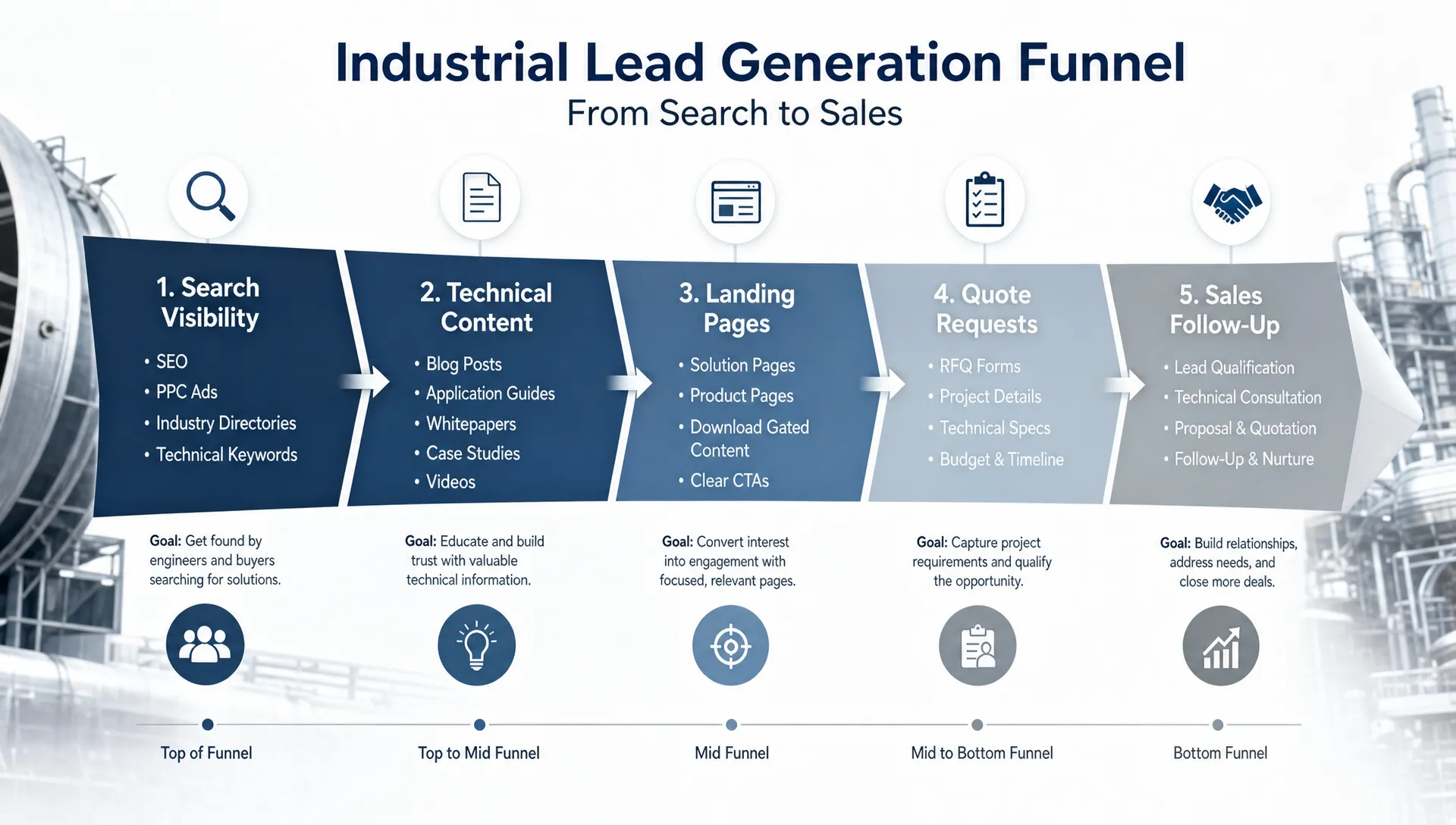
An industrial lead generation funnel connects search visibility, technical content, landing pages, quote requests, and sales follow-up.

Add LinkedIn and account-based outreach for targeted reach

Search captures active demand, but not every ideal account is searching today. LinkedIn and account-based outreach can help you stay visible to the companies and roles that matter most.

For industrial firms, this does not mean blasting generic messages to every operations manager in a region. It means identifying target accounts, mapping likely decision makers and sharing useful material that speaks to their responsibilities.

A practical LinkedIn and outreach plan may include thought leadership from technical leaders, posts that explain real project considerations, promoted content aimed at narrow job titles, connection requests to relevant buyers and follow-up emails tied to specific industry pain points.

The best outreach feels informed. A message to a food processing plant should not sound identical to a message to an oilfield services company. Personalization does not need to be long, but it should prove that you understand the account and the business context.

Improve landing pages before increasing traffic

Many firms try to solve lead generation by buying more traffic. That only works if the website can convert the right visitors once they arrive.

A strong industrial landing page should answer the buyer's first questions quickly. It should state the service or product clearly, list relevant capabilities, show industries served, address technical requirements and provide proof. It should also make the next step obvious.

Useful page elements include concise service descriptions, application examples, technical specifications, photos of real work or facilities where appropriate, certifications, customer types, FAQs, quote forms and phone numbers. Avoid filling the page with broad claims like quality solutions or industry-leading service unless those claims are backed by specifics.

Forms should be long enough to qualify the lead but not so long that serious buyers abandon them. For RFQ forms, ask for the information sales needs to respond well, such as application, part number, timeline, quantity, location, material or project notes. For softer conversion offers, keep the form shorter.

Align sales follow-up with marketing intent

Lead generation does not end at the form submission. The handoff to sales often determines whether the opportunity progresses or disappears.

Industrial buyers expect informed follow-up. If someone downloads a maintenance checklist, they should not receive the same response as someone requesting an urgent repair quote. If someone fills out a detailed RFQ, sales should have the context before making contact.

Create a simple lead handling process:

  • Route urgent quote requests and service inquiries quickly
  • Assign leads by territory, product line, industry or account owner
  • Use CRM fields that capture source, page visited, offer downloaded and stated need
  • Create email templates for common inquiry types, but personalize the technical details
  • Nurture early-stage leads instead of forcing a sales call too soon

Speed matters, but relevance matters more. A fast generic response can still lose a serious buyer. A timely response that references the buyer's application, timeline or question signals competence.

Measure lead quality, not just lead count

Industrial firms often have smaller lead volumes than consumer companies, so the metrics must reflect quality and revenue potential. A monthly report that celebrates form fills without showing qualified opportunities is incomplete.

Use a mix of marketing and sales metrics. This gives you a clearer view of which channels create real pipeline.

Metric What it tells you Why it matters
Organic search traffic to service pages Whether qualified buyers are finding core offerings Service-page traffic is often closer to buying intent
Conversion rate by page Which pages persuade visitors to act Helps prioritize redesign and content improvements
Cost per qualified lead Paid media efficiency after filtering poor-fit inquiries Prevents budget from shifting toward low-quality volume
RFQ completion rate Whether quote forms are clear and usable Friction here directly affects sales opportunities
Lead to opportunity rate How many inquiries become serious sales conversations Connects marketing activity to pipeline quality
Source by closed deal Which channels influence actual revenue Helps budget decisions become more objective

You should also review lost opportunities. If leads often fail because of budget, geography, timeline or wrong-fit requests, marketing can be adjusted to filter earlier. If leads are qualified but do not close, the issue may be sales process, pricing, response speed or proof.

A practical 90-day rollout plan

A lead generation strategy is easier to implement when you break it into short phases. The goal is not to fix every channel at once. The goal is to build momentum without losing focus.

Days 1 to 30: Audit and focus

Start with your current website, analytics, CRM notes, search rankings and sales feedback. Identify the lead sources that already work, the pages that attract traffic and the inquiries that waste time. Interview sales or account managers to learn what buyers ask before purchasing.

Use this phase to define your ideal customer profile, choose priority services or product lines and identify the highest-value buyer problems. If your firm serves many markets, pick the segments with the best fit instead of spreading content and ad spend too thin.

Days 31 to 60: Build the core assets

Create or improve the pages that matter most. This usually includes service pages, application pages, RFQ forms, one or two high-value educational resources and landing pages for paid campaigns.

At the same time, clean up tracking. Make sure form submissions, calls and campaign sources are visible. Add basic CRM fields so sales can report which leads are qualified. Without this foundation, you will not know which improvements are working.

Days 61 to 90: Launch, test and optimize

Begin with a manageable SEO and PPC plan. Publish technical content around priority buyer questions. Launch paid campaigns only for the most relevant high-intent terms. Start a focused LinkedIn or email outreach effort for target accounts.

Review performance weekly at first. Look for search terms that do not fit, landing pages with low engagement, forms that are abandoned and leads that sales rates as weak. Then adjust. Industrial lead generation improves through iteration, not one big campaign launch.

Common mistakes to avoid

The most common mistake is treating all leads as equal. A student requesting information, a vendor trying to sell you something and a plant manager with an urgent need should not sit in the same reporting bucket.

Another mistake is building content only around what the company wants to say. Industrial buyers care about their application, risk, cost and timeline. Your content should connect your capabilities to those concerns.

Many firms also underuse their sales knowledge. Sales teams hear objections, technical questions and buying triggers every week. Those insights should shape SEO pages, PPC keywords, FAQs, case studies and email follow-up.

Finally, avoid separating marketing metrics from revenue conversations. A campaign is not successful because it generated traffic. It is successful when it attracts the right accounts, supports the buying process and contributes to qualified pipeline.

Frequently Asked Questions

What is the best lead generation strategy for industrial firms? The best strategy combines SEO, PPC, technical content, conversion-focused landing pages and a clear sales follow-up process. Industrial firms need quality over volume because buying cycles are longer and decisions often involve multiple stakeholders.

How long does industrial lead generation take to work? PPC can generate inquiries quickly when campaigns are well targeted, but SEO and content usually take longer to build momentum. A practical plan should show early learning within 30 to 90 days, then improve as data and content assets compound.

Should industrial companies gate their content? Gate only the assets that have enough value to justify a form, such as detailed guides, calculators or technical resources. Keep core service pages, application pages and trust-building information open so buyers and search engines can access them easily.

How can we improve lead quality instead of lead volume? Tighten your ideal customer profile, refine keywords, improve landing page messaging, add qualifying form fields and connect marketing data to sales outcomes. Lead quality improves when every channel is designed to attract the right buyer and filter poor-fit inquiries.

Build a lead generation system that sales can trust

A practical lead generation strategy for industrial firms is not about chasing every channel. It is about building a connected system where SEO, PPC, content, website conversion and sales follow-up all support the same buyer journey.

If your industrial company needs help improving visibility, lead flow or campaign performance, B2B Inbound Marketing can help with SEO, PPC, inbound strategy, web content and related digital marketing services. You can also explore these SEO optimization strategies that support better lead flow as a next step toward a stronger pipeline.

Two teammates review a search report, landing page draft, and pipeline summary during a B2B lead-quality meeting.

Search Engine Marketing Services That Deliver Better Leads

More website traffic is not a growth strategy if the people arriving are students, job seekers, price shoppers or companies outside your service area. For B2B and industrial firms, the real goal is narrower and more valuable: get found by buyers who understand the problem, have a business reason to act and are willing to start a sales conversation.

That is where search engine marketing services should earn their budget. Done well, search marketing connects SEO, paid search, landing pages, content and analytics around one question: which searchers are most likely to become qualified opportunities?

For a Houston manufacturer, distributor, engineering firm or B2B service provider, better leads usually come from precision rather than volume. The campaign has to target the right intent, explain the right value and measure the right outcome.

What “better leads” means in search engine marketing

A better lead is not simply a contact form submission. It is a prospect with a relevant need, a reasonable fit and enough intent to justify sales follow-up.

In B2B search marketing, lead quality usually depends on four factors. The first is fit, such as industry, company type, location, project size or application. The second is intent, meaning the searcher is looking for a solution, vendor, quote or technical answer that suggests a buying process is underway. The third is context, including what page they viewed, which query brought them there and what information they shared. The fourth is measurability, because marketing cannot improve lead quality if every form fill is treated the same.

This matters because B2B search behavior is often technical and specific. A maintenance manager searching for “industrial pump repair Houston” is in a different stage than someone searching “how does a centrifugal pump work.” Both searches can be useful, but they should not receive the same campaign, landing page or success metric.

Why many search campaigns generate weak leads

Poor lead quality rarely comes from one mistake. It is usually the result of disconnected decisions: broad keywords, generic ad copy, thin landing pages and reporting that rewards activity instead of revenue potential.

A common problem is targeting keywords that are too broad. Terms like “automation,” “coatings,” “software” or “industrial services” may have search volume, but they also attract mixed audiences. A stronger SEM strategy separates educational searches from commercial searches and gives each one a realistic role in the funnel.

Another issue is conversion tracking that counts every action as equal. A newsletter signup, careers page inquiry, vendor solicitation and RFQ request should not sit in the same bucket. If they do, campaign optimization tools receive the wrong signals and budgets drift toward cheap conversions instead of qualified opportunities.

Landing pages also play a major role. If a paid search ad promises a specific capability but sends visitors to a broad homepage, the visitor has to do the work. In technical B2B markets, that friction can be enough to lose a serious buyer.

The search engine marketing services that improve lead quality

Effective search engine marketing services are not limited to running ads. They combine demand research, organic visibility, paid media, conversion design and sales feedback. Each service should contribute to a cleaner path from search query to qualified conversation.

SEM service How it improves lead quality Warning sign when it is missing
Search intent research Separates researchers, buyers and comparison shoppers Campaigns chase high-volume keywords with weak fit
SEO strategy Builds visibility for technical and commercial searches over time Traffic grows without stronger inquiries
PPC management Captures high-intent demand quickly and controls spend Ad budget is spent on irrelevant clicks
Landing page optimization Matches the visitor’s need with proof, clarity and a next step Visitors bounce or submit vague inquiries
Conversion tracking Shows which campaigns produce sales-ready leads Reports focus only on clicks and impressions
Sales feedback loops Helps marketing optimize for opportunity quality Marketing celebrates leads sales does not want

For many companies, SEO and PPC are treated as separate projects. That is a missed opportunity. PPC data can reveal which terms convert quickly, while SEO can build durable visibility around high-value topics that would be expensive to buy every month. If you want a deeper look at the organic side, this guide on how an SEO marketing service improves lead quality explains why intent and qualification matter more than rankings alone.

Paid search is useful when a prospect is ready to compare vendors, request pricing or solve an urgent problem. SEO is often stronger for building trust earlier in the process, especially when buyers need technical explanations, application guidance or proof that a provider understands their industry.

The best results usually come when both channels share the same strategy. A paid campaign can test messaging before a company invests in a full content buildout. Organic search can reduce dependency on paid clicks for recurring informational and mid-funnel topics. Retargeting can bring prior visitors back when they are closer to a decision.

That is why search should not be managed in a silo. It works better when connected to web design, content, social media, video and sales enablement. The same principle is covered in more detail in this article on how SEO and online marketing work better together.

Companies with limited internal bandwidth also need to decide how campaign execution will be managed. Some use a local SEM partner, some build in-house and others supplement their team with managed digital marketing support when they need help coordinating ongoing execution, reporting and optimization.

A B2B search marketing workflow connects search intent, paid ads, organic content, landing pages, CRM feedback, and qualified sales conversations in one path.

A lead-focused SEM process should look like this

Strong search engine marketing services start before ads go live. The early work determines whether the campaign will attract the right buyers or simply spend budget on available traffic.

  1. Audit current visibility and lead sources: Review organic rankings, paid search data, analytics, form submissions, call sources and CRM notes. The goal is to see which channels already produce meaningful conversations.
  2. Map keywords by intent: Group search terms by problem, application, service, industry, location and buying stage. This prevents educational keywords from being judged like RFQ keywords.
  3. Fix conversion tracking: Track forms, calls, quote requests, downloads and other actions separately. If possible, connect marketing data to CRM outcomes so campaigns can optimize for qualified leads.
  4. Build focused campaigns and pages: Match each campaign to a clear offer, service line or buyer need. Specific pages usually outperform general pages because they reduce confusion.
  5. Review search terms and lead quality regularly: Remove irrelevant queries, refine match types, update negative keywords and compare lead data with sales feedback.
  6. Improve the website around buyer questions: Use search data to strengthen service pages, FAQs, case-oriented content and calls to action.

This process is especially valuable for industrial and technical firms because the buying journey often includes multiple stakeholders. The person searching may be an engineer, plant manager, procurement lead or business owner. SEM has to make sense to each of them without watering the message down.

Landing pages can make or break lead quality

Even the best search campaign will struggle if the website does not support the buyer’s next step. A visitor who clicked an ad for a specific service should not have to navigate through unrelated pages to find capabilities, service areas, technical fit or contact options.

A strong SEM landing page usually includes a clear headline, concise service explanation, proof of experience, relevant industries served, trust signals and a direct call to action. For B2B services, the page should also qualify the inquiry without creating a form so long that serious buyers abandon it.

This is where SEO and web design overlap. Search engines need crawlable, relevant pages, but buyers need clarity and confidence. If the site structure, speed or message is weak, both paid and organic performance can suffer. For more on that connection, see this breakdown of search engine optimization website design for better leads.

Metrics that reveal whether lead quality is improving

Clicks and impressions are useful diagnostic metrics, but they do not prove lead quality. A campaign can have a strong click-through rate and still fail commercially if the inquiries are unqualified.

The most useful SEM reporting connects visibility to pipeline behavior. At minimum, B2B firms should separate raw lead volume from qualified lead volume. Over time, the reporting should show which campaigns, keywords and pages are producing serious opportunities.

Metric What it tells you How to use it
Cost per qualified lead How much it costs to generate a lead sales accepts Compare campaigns by business value, not only cost
Lead-to-opportunity rate Whether inquiries become real sales opportunities Identify weak targeting or landing page gaps
Search term relevance Whether ads appear for the right queries Add negative keywords and refine match types
Form quality Whether prospects provide useful project details Adjust form fields and page messaging
Call quality Whether phone leads match target customers Review call recordings or sales notes where allowed
Assisted conversions Whether search helps buyers before final contact Avoid undervaluing educational SEO or remarketing

Google Ads and analytics platforms can report many of these signals, but the most important insight often comes from sales. If the sales team says leads are too small, too far away, outside the target industry or not ready to buy, that feedback should shape the next round of keyword, ad and landing page decisions.

How to choose search engine marketing services for better leads

When evaluating a provider, ask how they define success. If the answer focuses only on rankings, traffic or cost per click, the strategy may not be mature enough for B2B lead generation.

A stronger partner should be able to explain how they will identify buyer intent, protect budget from irrelevant searches, improve landing pages and report on lead quality. They should also ask about your sales process, margins, ideal customers, service areas and disqualifying factors.

Look for practical answers to questions like these:

  • How will campaigns distinguish between research searches and buying searches?
  • Which conversions will be treated as primary goals?
  • How often will search terms, negative keywords and lead quality be reviewed?
  • Will SEO and PPC insights be shared across channels?
  • How will landing pages be tested or improved?
  • What information does sales need to provide for optimization?

The right provider does not need to promise instant results. They should offer a clear operating rhythm: research, launch, measure, refine and connect results to business outcomes.

Common mistakes B2B companies should avoid

The first mistake is assuming more traffic will automatically create more sales. In specialized markets, a smaller number of qualified visitors can outperform a large audience with weak fit. Search strategy should be built around profitable demand, not vanity metrics.

The second mistake is letting campaigns run without sales input. Marketing data shows what people clicked and submitted. Sales data shows whether those people were worth pursuing. Both are needed.

The third mistake is using the same message for every buyer. A plant manager may care about downtime. A procurement lead may care about supplier reliability. An owner may care about total cost and responsiveness. Search pages should address the buyer’s immediate concern while still supporting the broader decision.

The fourth mistake is stopping too early. SEO takes time to compound, and PPC campaigns need enough data to filter waste and find stronger pockets of demand. The key is not patience by itself, but disciplined iteration.

Frequently Asked Questions

What are search engine marketing services? Search engine marketing services help businesses get found through paid search, SEO, landing pages, content and analytics. For B2B companies, the goal is usually to attract qualified inquiries rather than general traffic.

How do SEM services improve lead quality? They improve lead quality by targeting higher-intent keywords, filtering irrelevant searches, matching landing pages to buyer needs and using conversion data to optimize campaigns around qualified prospects.

Is PPC or SEO better for B2B leads? PPC can generate visibility quickly for high-intent searches, while SEO builds long-term visibility and trust. Many B2B companies get better results when both channels support the same buyer journey.

How long does it take to see better leads from SEM? Paid search can begin producing data quickly, but improving lead quality usually requires several rounds of search term review, landing page refinement and sales feedback. SEO often takes longer but can create lasting visibility.

What should a B2B company track besides clicks? Track qualified leads, lead-to-opportunity rate, cost per qualified lead, call quality, form quality and which keywords or pages produce sales conversations.

Turn search visibility into stronger sales conversations

If your campaigns are generating clicks but not the right conversations, the issue may not be search itself. It may be the way search intent, landing pages and lead tracking are connected.

B2B Inbound Marketing helps companies improve online visibility through SEO, PPC, inbound strategy, web content and related digital marketing services. To discuss search engine marketing services built around better leads, visit Andy Alagappan and start with a focused conversation about your goals, market and current lead flow.

A marketing operations room displays PPC campaign tracking, lead quality, and B2B reporting.

How to Choose a Pay Per Click Agency for B2B Growth

Choosing a pay per click agency for B2B growth is not the same as hiring someone to buy traffic. In B2B, especially in industrial, technical and professional service markets, the real goal is not a cheaper click. It is more qualified conversations with the right companies, from the right search intent, at a cost that makes sense for long sales cycles and high-value deals.

A strong PPC partner should understand how your buyers search, how your sales team qualifies opportunities and how paid search fits into the rest of your marketing system. A weak partner may still produce clean reports, but those reports can hide wasted spend, poor lead quality or campaigns optimized for form fills that never become pipeline.

This guide will help you evaluate a pay per click agency with a B2B growth mindset, so you can choose a partner that connects advertising spend to real business outcomes.

Why B2B PPC requires a different agency mindset

B2B search marketing has a narrower margin for error than many consumer campaigns. Search volume is often lower, keywords are more specialized and the buying committee may include engineers, operations leaders, finance teams, procurement and executives. A person who clicks today may not be the final decision-maker, but that click can still begin a serious buying process.

That is why a B2B PPC agency should care about much more than clicks, impressions and cost per click. Those numbers matter, but they are only early indicators. The more useful questions are tied to lead quality, opportunity creation, cost per sales-qualified lead and revenue influence.

For Houston industrial companies, manufacturers, energy firms, logistics providers and B2B service businesses, paid search often works best when it captures demand from buyers who are already trying to solve a specific operational problem. If you are still deciding whether the channel fits your market, this breakdown of when ads pay per click delivers better B2B leads can help frame the decision before you start comparing agencies.

In some industrial categories, the paid search topic touches regulations or operations rather than simple product comparison. A company selling efficiency equipment, for example, may attract buyers researching subsidies, grid constraints and practical decarbonization steps. Resources such as REE's independent energy advice for entrepreneurs show how much context can surround a seemingly simple energy query. A capable agency recognizes that context and builds campaigns around buyer intent, not just keyword volume.

Start with the business outcome before the media plan

Before you ask an agency how it will manage your Google Ads account, ask what business outcome it is trying to support. B2B PPC can support several different growth objectives, and each one requires a different strategy.

A campaign built to win urgent quote requests should look different from a campaign built to introduce a niche industrial solution to a market that does not know what to search yet. A campaign for a local Houston service area should be built differently from a national campaign targeting enterprise accounts across multiple regions.

A good pay per click agency will ask questions about revenue, margins, sales cycle length, lead quality and close rates before recommending budget. If the agency starts with channel tactics before understanding your economics, it may optimize for the wrong target.

Your internal preparation matters too. Before speaking with agencies, gather a few basics: your highest-value services, most profitable customer segments, average deal size, sales qualification criteria, geographic priorities and any known reasons leads fail to convert. You do not need perfect data, but even rough sales feedback gives the agency a better starting point than keyword research alone.

What a strong pay per click agency should understand

A B2B PPC partner does not need to know every technical detail of your industry on day one. It does need a process for learning quickly and turning that learning into sharper targeting, ad copy, landing pages and reporting.

The agency should be able to explain how it separates informational searches from commercial searches. It should know how to use negative keywords to reduce irrelevant clicks. It should understand the difference between a student researching a topic, a plant manager comparing vendors and a procurement team searching for a quote.

It should also care about landing page relevance. In many B2B campaigns, the ad account gets blamed for poor performance when the bigger problem is a landing page that does not match the searcher's need. A buyer searching for emergency industrial repair does not need a general company history page. A buyer comparing custom manufacturing partners needs proof of capability, applications served, quality standards and a clear next step.

The best PPC agencies also connect paid search to sales feedback. If every form fill is treated as equal, the campaign will drift toward cheap leads. When sales teams share which inquiries became qualified opportunities, the agency can adjust keywords, audiences, ad copy and offers based on real commercial value.

Evaluation area What a good agency should show Why it matters for B2B growth
Buyer intent Clear distinction between research, comparison and buying searches Prevents spend from chasing low-value traffic
Industry learning A discovery process for products, applications, buyer roles and objections Helps ads speak to real customer problems
Conversion tracking Setup for forms, calls and meaningful lead actions Makes optimization more reliable
Sales feedback A process for reviewing lead quality with your team Aligns campaigns with pipeline, not just volume
Landing pages Recommendations tied to message match and conversion Improves results without only increasing budget
Reporting Metrics connected to qualified leads and opportunities Keeps the program accountable to growth

Questions to ask before hiring a PPC agency

Discovery calls are where many companies focus too much on pricing and not enough on fit. Fees matter, but an inexpensive agency can become costly if it wastes media spend for months. A more useful conversation tests how the agency thinks.

Ask questions that reveal the agency's process, not just its promises. You want to hear how it diagnoses problems, builds strategy and learns from sales outcomes.

  • How do you define a qualified B2B conversion for our type of business?
  • What information do you need from our sales team before launching campaigns?
  • How will you separate high-intent searches from informational searches?
  • How do you handle low search volume in specialized industrial markets?
  • What will you report besides clicks, cost per click and conversions?
  • How often do you review search terms, negative keywords and lead quality?
  • What would make you recommend not increasing budget?
  • How do you improve campaigns when lead volume is acceptable but quality is weak?

The last question is especially important. Many agencies know how to scale what is already working. Fewer know how to diagnose the gap between lead volume and lead value. In B2B, that gap is often where profitability is won or lost.

How to evaluate the agency's proposal

A proposal should not feel like a generic media package with your company name added. It should reflect what the agency learned about your market, your sales process and your growth priorities. If every recommended campaign is organized around broad service categories, the agency may not have done enough work to understand buyer intent.

Look for signs of strategic thinking. Does the proposal explain which services or products should receive priority and why? Does it distinguish between branded, competitor, problem-based and solution-based keywords? Does it discuss landing page needs? Does it mention how sales feedback will influence optimization?

A conference table holds keyword cards, funnel stages, conversion goals, and sales notes for a B2B PPC plan.

Budget recommendations should also be grounded in reality. A responsible agency will explain what the budget can and cannot prove. If your industry has expensive clicks and low search volume, the first phase may be about learning which search terms produce qualified conversations, not instantly maximizing lead volume.

Be cautious with proposals that overemphasize account activity. New campaigns, new ad groups and frequent bid changes sound productive, but activity is not the same as strategy. What matters is whether changes are tied to a testable reason, such as improving message match, filtering unqualified searches or increasing conversion rates from a specific buyer segment.

Red flags when choosing a pay per click agency

Some warning signs appear before a contract is signed. Others show up in the first few months. Either way, the sooner you identify them, the easier it is to protect your budget.

A pay per click agency may not be the right fit if it talks mainly about traffic growth without discussing lead quality. In B2B, more traffic can make performance worse if it attracts the wrong people. The agency should be comfortable narrowing the audience, excluding poor-fit searches and sacrificing volume to improve commercial relevance.

  • Guarantees of immediate results without reviewing your market, website or sales cycle
  • Heavy focus on clicks and impressions with little discussion of qualified leads
  • No clear plan for conversion tracking before launch
  • Reluctance to share search term insights or explain optimization decisions
  • Generic ad copy that could apply to any competitor in your category
  • No process for reviewing CRM outcomes or sales feedback
  • Pressure to increase budget before fixing targeting, tracking or landing pages

If you already have campaigns that are generating spend but not useful leads, the first step may be an audit rather than a new launch. This guide on how to fix a pay per click campaign that wastes budget covers the types of issues an agency should be able to uncover, including tracking gaps, poor search terms and weak landing page alignment.

What the first 90 days should look like

The first 90 days with a new PPC agency should not be chaotic. There should be a clear sequence: understand the business, audit or build the account, launch with proper tracking, review early data and refine based on both platform performance and sales feedback.

During the first month, the agency should focus on discovery, account structure, conversion tracking and landing page readiness. If an existing account is in place, it should audit search terms, match types, negative keywords, conversion actions, ad copy, bidding strategy and campaign segmentation. If the account is new, it should build a structure that makes performance easier to interpret later.

In the second month, the agency should be watching for signal quality. Which keywords are spending? Which queries are triggering ads? Which conversions appear meaningful? Which leads are sales rejecting? In B2B, this early period is often less about declaring success and more about removing noise.

By the third month, the agency should be able to explain what it has learned and what it recommends next. That may include reallocating budget to stronger intent segments, pausing weak campaigns, testing new landing page messaging or expanding into related keyword groups. The key is that recommendations should be based on evidence, not habit.

First 90 day phase Agency focus What you should expect
Days 1 to 30 Discovery, tracking, structure and launch readiness Clear strategy, clean setup and agreed conversion definitions
Days 31 to 60 Search term review, lead quality review and early optimization Removal of waste and sharper targeting
Days 61 to 90 Performance analysis and next-step planning Clear recommendations tied to qualified lead data

How PPC should fit into the larger B2B marketing system

Paid search performs best when it is not treated as a separate silo. PPC can reveal which problems buyers search for, which offers attract serious inquiries and which messages fail to convert. That information can improve SEO, content strategy, website messaging and sales enablement.

For example, if a high-intent keyword produces expensive but qualified leads, it may deserve both a paid campaign and a long-term organic content strategy. If a landing page converts well for paid traffic, its messaging may help improve core service pages. If sales repeatedly says that leads misunderstand a service, the ads and website content may need clearer qualification language.

This is where B2B companies should look for an agency that understands both immediate demand capture and long-term visibility. PPC can bring faster market feedback, but SEO and content can reduce dependence on paid traffic over time. The most practical strategy often combines both, using paid search to learn quickly and organic content to build durable search presence.

A PPC agency does not have to manage every channel, but it should be willing to collaborate with whoever handles your website, SEO, content and sales operations. If the agency protects its own channel at the expense of the bigger growth system, performance will eventually plateau.

How to compare pricing without choosing on price alone

PPC agency pricing can vary based on scope, ad spend, account complexity, reporting needs and strategy involvement. The cheapest option is not always the riskiest, and the most expensive option is not automatically the best. The more important question is what level of thinking and accountability is included.

A low-fee provider may be fine for a simple local campaign with limited complexity. A B2B company with multiple services, long sales cycles, high cost per click and strict qualification standards usually needs deeper strategic management. That includes regular search term analysis, landing page recommendations, lead quality reviews and reporting that goes beyond platform conversions.

Also clarify who owns the ad account, landing pages, tracking setup and creative assets. Your company should retain access to its advertising accounts and data. If an agency makes it difficult to see performance details or transfer ownership later, that creates unnecessary risk.

When comparing proposals, separate media spend from management fees. Media spend goes to the ad platform. Management fees pay for the agency's strategy, setup, optimization, reporting and communication. Both should be judged by the value they create, but they are not the same cost.

The best agency fit is strategic, not just technical

Technical PPC skill matters. Your agency should know campaign structure, match types, bidding strategies, conversion tracking and platform changes. But technical skill alone is not enough for B2B growth.

The better fit is an agency that can think like a marketer and listen like a sales partner. It should be interested in why customers buy, why bad-fit prospects contact you, what objections slow deals and which segments create the best revenue. Those insights turn a paid search account into a growth tool instead of a traffic source.

For industrial and B2B companies, the right partner will often be the one that asks more detailed questions at the beginning. That curiosity can feel slower than a quick launch, but it usually saves budget and improves the odds of reaching buyers who are actually worth pursuing.

Frequently Asked Questions

How do I know if my company needs a pay per click agency? You may need a pay per click agency if your team lacks time or expertise to manage search campaigns, analyze lead quality, maintain tracking and improve landing page performance. B2B companies with high-value deals often benefit from specialized management because small improvements in lead quality can have a large revenue impact.

What should a B2B PPC agency report each month? Monthly reporting should include spend, conversions, cost per conversion, search term insights, keyword performance, landing page performance and lead quality feedback. Stronger reports also connect campaigns to sales-qualified leads, opportunities and pipeline when that data is available.

How long does it take to see results from B2B PPC? Some campaigns can generate inquiries quickly, but meaningful B2B learning usually takes 60 to 90 days. The timeline depends on search volume, budget, sales cycle length, tracking quality and how quickly your sales team can provide feedback on lead quality.

Should a PPC agency also understand SEO? Yes, at least strategically. PPC and SEO inform each other because both depend on search intent, content relevance and conversion paths. Even if different teams manage each channel, your PPC agency should understand how paid search fits into the broader search marketing plan.

What is the biggest mistake companies make when hiring a PPC agency? The biggest mistake is choosing an agency based only on cost, platform certifications or promised lead volume. B2B companies should prioritize strategic fit, industry learning process, tracking discipline and the agency's ability to connect campaigns with qualified sales opportunities.

Choose a PPC partner that understands B2B growth

The right pay per click agency should help you spend with more discipline, learn from the market faster and create a clearer path from search intent to qualified opportunity. That requires more than campaign maintenance. It requires strategy, tracking, sales alignment and a willingness to refine the program based on what actually becomes revenue.

If your business needs PPC support that fits a broader inbound marketing strategy, B2B Inbound Marketing works with companies that want to improve online visibility, lead generation and search marketing performance. A focused conversation about your market, goals and current campaigns can help determine whether paid search is the right next step for growth.

Search results branch into organic listings, ads, maps, videos, and an inquiry card in one flow.

7 SEO Strategies That Still Move Rankings in 2026

Rankings still matter in 2026, but the work that moves them has become more selective. Search results now blend organic listings, ads, maps, videos, AI-assisted summaries, forums and product results. A page does not win because it repeats a keyword more often. It wins when it gives search engines and buyers the clearest reason to trust it.

For Houston B2B and industrial companies, that distinction matters. Traffic is useful only if it brings engineers, plant managers, procurement teams, distributors or business owners closer to a conversation. The strongest SEO strategies in 2026 are not shortcuts. They are practical habits that make your website easier to understand, easier to verify and easier to choose.

What still moves rankings in 2026

Google continues to reward pages that match intent, demonstrate usefulness and provide a strong user experience. The difference is that weak content has less room to hide. Generic posts, thin service pages and outdated keyword pages are easier to ignore when search engines have more ways to compare quality.

A modern SEO plan needs to connect five areas: buyer intent, topical depth, technical performance, trust signals and lead outcomes. If one is missing, rankings may stall even when the rest of the site looks active.

Ranking driver Why it still matters in 2026 What to check first
Buyer intent Search engines need to match pages to the real task behind the query Does the page answer the buyer's next question?
Content depth Thin pages struggle against more complete resources Does the site cover the topic from problem to purchase?
Technical clarity Crawlers need clean access and users need fast pages Are priority pages indexable, fast and mobile friendly?
Trust Buyers compare claims before contacting sales Are proof points visible and specific?
Lead quality Rankings should support revenue, not vanity traffic Do ranking pages generate qualified inquiries?

1. Map every important page to buyer intent

The first strategy is also the easiest to overlook. A keyword is not a strategy. A keyword is a clue about what the buyer is trying to do.

A search for industrial pump repair cost has a different intent than emergency pump repair Houston. One query suggests budgeting and evaluation. The other suggests urgency. If both land on the same generic service page, the site misses a chance to be more useful than competitors.

Start by separating priority search terms into intent groups such as problem research, product or service evaluation, supplier validation and contact-ready searches. Then make sure the page format matches the job. A blog article may work for a troubleshooting query. A detailed service page may work better for a high-intent local search. A comparison guide may fit a buyer who is choosing between technologies, vendors or service models.

The search result itself is a useful brief. If the top results are service pages, publishing another educational post may not move rankings. If the top results are guides, forcing a sales page into that result may underperform. Let intent shape the page before writing a word.

2. Build topical authority around revenue categories

Topical authority is not the same as publishing more blog posts. It means your site gives complete, organized coverage of the subjects that matter to your buyers and your business.

For a B2B or industrial company, one strong category may include a core service page, supporting technical explainers, application pages, maintenance content, location pages and FAQs. These pages should connect naturally so a visitor can move from early research to vendor evaluation without leaving your site.

A practical content cluster might include:

  • A primary service page that explains the offer, industries served and next step.
  • A technical guide that answers common buyer questions before a sales call.
  • A comparison page that helps buyers understand options without exaggeration.
  • A troubleshooting article that captures early research demand.
  • A FAQ section that addresses procurement, timing, capabilities and fit.

This approach helps search engines see that your site is not covering a topic randomly. It also helps human buyers build confidence. If your website only has one short page on a high-value service, a competitor with a stronger content ecosystem has an advantage.

3. Refresh existing pages before adding more content

Many websites do not need another batch of blog posts. They need better versions of the pages they already have.

Content refreshes still move rankings because search intent changes, competitors improve and older pages often collect small issues over time. Titles become vague. Introductions get dated. Internal links point to old URLs. FAQs miss the questions sales teams hear every week. A page that once ranked well may lose ground simply because it no longer gives the best answer.

A strong refresh starts with pages that already have impressions, backlinks, conversions or strategic value. Improve the title tag and meta description so they match the searcher’s intent. Replace broad claims with specific information. Add missing details that buyers need to evaluate the offer. Remove duplicate sections that compete with other pages. Strengthen internal links to and from the page.

For a step-by-step way to audit these basics, this comprehensive SEO checklist is a useful companion to a refresh project. The goal is not to change content for the sake of activity. The goal is to make the page more accurate, complete and conversion ready.

4. Fix technical SEO issues that block performance

Technical SEO rarely gets attention until something breaks, but rankings depend on it. Search engines need to crawl, render, understand and index your pages without unnecessary friction. Users need pages that load quickly and work well on phones, tablets and desktops.

For B2B and industrial sites, technical issues often appear in predictable places. Product filters create duplicate URLs. Old PDF resources compete with newer HTML pages. Service pages sit too deep in the navigation. Images are oversized. Redirect chains slow down the crawl path. Important pages lack clear schema or have title tags that repeat across the site.

The most important technical checks include indexation, site speed, mobile usability, internal link depth, canonical tags, XML sitemaps, broken links and redirect hygiene. If your website has been redesigned, migrated or expanded over several years, a technical audit can reveal problems that content alone cannot solve.

Technical SEO does not replace good messaging. It makes sure good messaging can be found, crawled and used.

A conference table with SEO audit notes, search intent cards, industrial brochures, and content cluster diagrams arranged for planning.

5. Put trust signals close to the claims they support

Trust is not only a branding issue. It affects how buyers behave on ranking pages. If a visitor cannot verify who you serve, what you do, where you operate or why your team is qualified, they may return to the search results and choose another supplier.

For industrial and B2B companies, trust signals should be specific. Mention industries served, real capabilities, service areas, standards, certifications, safety requirements, project types or measurable outcomes only when they are accurate. A vague claim like experienced team is weaker than a clear description of the equipment, process or market you support.

Trust architecture appears in many sectors, not just industrial marketing. The Colegio Pioneros in Chicureo website is a useful example of clear positioning because it communicates its bilingual model, adaptive approach and institutional recognition upfront. The SEO lesson is simple: when a visitor can quickly understand identity, credibility and fit, uncertainty drops.

Apply the same idea to your own ranking pages. Put proof near the claim it supports. If you say you serve manufacturers, show the relevant services or use cases. If you say you work in Houston, make your location and service area clear. If your product requires technical evaluation, give buyers enough detail to know whether a conversation is worth their time.

6. Strengthen internal linking around priority pages

Internal links are one of the most controllable ranking levers on your site. They help search engines understand which pages matter, how topics relate and what each page is about. They also guide buyers toward the next useful step.

The mistake is treating internal links as an afterthought. A priority service page should not sit alone. It should receive relevant links from educational articles, industry pages, FAQs, case-oriented content and related service pages. The anchor text should describe the destination naturally. A link that says industrial valve repair services is more informative than one that says learn more.

Internal linking also helps reduce content waste. If you publish a useful article but never connect it to a commercial page, the article may generate traffic without helping the business. If you have an important service page but no supporting content points toward it, the page may struggle to gain topical strength.

Review your site from the buyer’s perspective. After someone reads an article, where should they go next? After they land on a service page, what supporting proof or explanation would help them decide? Strong internal linking answers those questions without forcing the journey.

7. Use PPC and lead data to improve organic pages

SEO should not operate in isolation. PPC campaigns, sales conversations and lead quality data can reveal the exact language buyers use when they are close to action.

Search term reports from paid campaigns can show which phrases produce inquiries, not just clicks. Sales teams can identify recurring objections and missing information. Form submissions can show whether visitors are asking for the service your page intended to promote. These insights can improve titles, headings, FAQs, calls to action and page structure.

This is where search engine marketing still supports SEO. Paid search can test messaging faster than organic SEO can. If a PPC landing page converts well for a specific offer, that language can inform the organic service page. If paid traffic reveals irrelevant queries, organic content can be adjusted to filter better.

The same principle is discussed in more detail in what search engine marketing still gets right in 2026. The main point for SEO is that rankings are not the finish line. Qualified leads, better conversations and lower friction are the real measures of progress.

How to prioritize these SEO strategies

Not every site needs the same first move. The right priority depends on where rankings are stuck and what kind of lead flow the business needs.

If your site has this problem Start with this strategy Main metric to watch
Pages get impressions but few clicks Refresh titles, meta descriptions and intent alignment Click-through rate and ranking movement
Traffic is growing but leads are weak Rework pages around buyer intent and stronger calls to action Qualified form submissions and calls
Important pages are not indexed Fix technical SEO and crawl access Indexed priority URLs
Competitors look more credible Add specific trust signals and proof Engagement, conversions and sales feedback
Blog posts are disconnected from services Improve internal linking and content clusters Assisted conversions and page paths

The companies that see durable ranking gains usually treat SEO as an operating system, not a one-time campaign. They improve existing assets, publish with purpose, keep technical issues under control and use lead feedback to sharpen the next round of optimization.

Frequently Asked Questions

Are backlinks still important for SEO strategies in 2026? Yes, but quality matters more than volume. Relevant mentions, industry citations, local credibility and links from trusted sources are more valuable than generic link building that has no relationship to your market.

How long does it take for SEO rankings to improve? It depends on competition, site health, content quality and authority. Technical fixes can sometimes show impact faster, but competitive B2B rankings usually require consistent work over several months.

Should B2B companies use AI content for SEO? AI can help with research, outlines and content repurposing, but expert review is essential. Pages that affect buyer trust should include accurate details, real experience and clear positioning that generic AI output cannot provide on its own.

What is the biggest SEO mistake in 2026? The biggest mistake is chasing isolated keywords without connecting them to buyer intent, content depth, technical quality and lead outcomes. Rankings that do not support business goals are not enough.

Do SEO and PPC work better together? Yes. PPC can test offers, headlines and high-intent search terms quickly. SEO can turn those insights into durable organic pages that continue attracting qualified buyers over time.

Build rankings that support real lead flow

If your rankings have stalled or your traffic is not turning into qualified inquiries, the next step is not more random content. It is a focused SEO plan built around intent, technical health, trust and conversion.

B2B Inbound Marketing helps Houston and industrial companies improve online visibility through SEO, PPC, inbound strategy, content and web-related marketing services. A practical audit of your priority pages is often the best place to start.

An opened SEO proposal packet shows business goals, technical notes, and reporting sections on a desk.

What to Look for in SEO Optimization Companies

Choosing an SEO company is not a small marketing decision. For many B2B, industrial and local service companies, organic search affects how buyers discover your expertise, compare you against competitors and decide whether to submit a quote request or call your sales team.

Many businesses search for SEO optimization companies when traffic is flat, leads are inconsistent or competitors seem to appear everywhere in Google. The mistake is hiring the first firm with a polished pitch. A better approach is to evaluate whether the company can connect search visibility to business outcomes, especially in markets with technical products, long sales cycles and multiple decision-makers.

The right SEO partner should be able to explain what they will do, why it matters and how progress will be measured. They should also be comfortable telling you what SEO cannot fix by itself, such as weak positioning, poor sales follow-up or a website that does not convert qualified visitors.

Start with your business goal, not an SEO package

Before comparing proposals, define what success should look like. Ranking higher is useful only if those rankings bring the right audience. A manufacturer, distributor, engineering firm or B2B service provider may care more about qualified RFQs, consultation requests and search visibility for specific product categories than overall traffic volume.

Good SEO optimization companies will ask questions about margin, target industries, geography, sales cycle length, lead quality and current conversion paths. If the conversation starts and ends with keyword volume, backlinks and blog post counts, the strategy is probably too generic.

For B2B companies in the Houston area, local market context can also matter. Search demand, competitor density and buyer expectations often differ by city and industry. If local relevance is part of your growth strategy, review how Houston B2B SEO priorities affect technical optimization, service pages and content planning.

Look for buyer intent expertise

SEO is not just about attracting visitors. It is about matching your website to what buyers need at each stage of their decision process.

A strong SEO company should be able to separate broad informational searches from commercial, comparison and purchase-intent searches. For example, a search for how industrial filtration works has a different purpose than a search for industrial filtration supplier Houston. Both may be valuable, but they need different pages, calls to action and measurement.

Ask how the company maps keywords to the customer journey. You want to hear a clear explanation of which terms should support educational content, which should support product or service pages and which may deserve landing pages for paid search or remarketing. This is especially important for B2B companies because high-value buyers often research quietly before they ever contact sales.

If your company sells complex solutions, the SEO team should also understand the difference between traffic and influence. A technical article may not convert immediately, but it can establish credibility with engineers, plant managers, procurement teams or executives who later return through branded search.

Evaluate technical SEO depth

Technical SEO is where many proposals sound similar but differ sharply in quality. Nearly every agency can run an audit tool. Fewer can explain what the audit findings mean for crawlability, indexation, site speed, structured data, internal linking and conversion performance.

The company should review your website architecture, URL structure, mobile usability, duplicate content risks, page templates, metadata, redirects and Core Web Vitals. They should also know how to prioritize fixes. A long list of minor warnings is less useful than a focused plan for resolving the issues that block growth.

For established B2B websites, technical SEO often involves cleaning up years of accumulated problems: old product pages, thin service pages, inconsistent title tags, broken internal links and outdated redirects from previous redesigns. For newer websites, the priority may be building a scalable structure before content growth begins.

A capable firm will also collaborate with your developer or web team. SEO recommendations that cannot be implemented are not strategy. They are paperwork.

Check their content process, not just their writing samples

Content quality has become one of the clearest separators between average and effective SEO work. Google encourages site owners to create helpful, reliable, people-first content through its Search Central guidance. For B2B companies, that usually means content informed by subject matter expertise, not generic articles assembled from search results.

Ask how the SEO company gathers expertise from your team. Do they interview salespeople, engineers, founders, product managers or customer service staff? Do they review proposals, spec sheets, FAQs, sales objections and customer questions? Do they understand how to turn technical knowledge into pages that are both searchable and useful?

This matters because your best SEO content often comes from the questions prospects already ask before buying. A good agency should help turn those questions into service pages, comparison pages, industry pages, case-based articles and practical resources that support lead generation.

If the company promises a fixed number of posts every month without discussing topic selection, search intent or your sales process, be cautious. More content is not automatically better. Better content, placed in the right structure, is what compounds over time.

Test their ability to learn your industry

No SEO firm begins as an expert in every field. What matters is whether they have a disciplined process for learning specialized markets.

Ask the company to walk through how they would approach unfamiliar terminology, competitive research and buyer objections. A firm working with an industrial manufacturer should know how to handle product specifications, standards, applications and distributor relationships. A firm working with a professional service company should know how to build trust around expertise, outcomes and proof.

You can also test range by asking how they would optimize a niche ecommerce or specialty product site. For instance, a page offering professional-grade recovery and wellness devices requires a different content strategy than a local service page or an industrial product category. The SEO team should be able to explain how they would address product education, trust signals, technical details, internal links and conversion intent without forcing the same template onto every business.

That adaptability is a practical signal. SEO companies that rely on one playbook often struggle when a market requires nuance.

Demand reporting that ties to business results

Ranking reports have value, but they are not enough. You need to know whether SEO is creating better business opportunities.

Useful reporting should connect organic visibility to traffic quality, engagement, conversions and lead sources. For B2B companies, this may include form submissions, phone calls, quote requests, consultation bookings, gated content downloads or other meaningful actions. If your sales team qualifies leads manually, the SEO company should help you connect marketing data to lead quality over time.

The best reports do not bury clients in metrics. They explain what changed, why it changed, what was completed and what should happen next. They should also distinguish between early indicators and outcomes. Indexation improvements, keyword movement and impressions may matter in the first few months, but qualified lead flow becomes the real test over time.

For more on connecting organic search activity to pipeline outcomes, see these SEO optimization strategies for better lead flow.

Watch for ethical authority building

Backlinks still influence SEO, but link quality matters far more than volume. Be wary of any company that sells packages based on a fixed number of links without explaining relevance, placement quality or risk.

A credible SEO partner should talk about earning authority through useful content, digital PR, industry directories where appropriate, partner relationships, local citations, thought leadership and strong internal linking. They should avoid link schemes, private blog networks and tactics that exist only to manipulate rankings.

This is especially important for companies that depend on trust. A short-term bump from risky tactics is not worth long-term damage to your domain, brand or search visibility.

Compare red flags with better signals

A practical way to compare SEO optimization companies is to look for patterns in how they sell, diagnose and communicate. The table below summarizes common warning signs and what you should expect instead.

Red flag Better signal
Guarantees #1 rankings Explains realistic scenarios, constraints and timelines
Starts with a package before discovery Begins with business goals, website review and buyer intent
Sends only automated audit exports Interprets technical issues and prioritizes fixes
Focuses on traffic alone Connects SEO work to qualified leads and sales opportunities
Uses vague link-building language Explains authority strategy, relevance and risk management
Produces generic content at scale Builds content from subject matter expertise and search intent
Reports activity only Reports outcomes, next steps and business impact

Two marketers review an SEO performance dashboard, a keyword map, and website structure notes on a conference table.

Ask better questions before signing

The quality of your questions will often reveal the quality of the SEO company. Instead of asking only about price, ask questions that force the firm to explain its thinking.

Useful questions include:

  • How will you decide which keywords and pages matter most for our business?
  • What technical issues would you evaluate before recommending new content?
  • How do you incorporate input from our internal subject matter experts?
  • What does success look like in the first 90 days, 6 months and 12 months?
  • How do you report on lead quality, not just traffic?
  • What SEO work will require our team or developer to participate?
  • How do you approach links and off-page authority?
  • What would make you recommend PPC, web design or conversion improvements alongside SEO?

Strong companies welcome these questions. Weak companies often retreat into buzzwords or promises.

Review the proposal for strategic clarity

A good SEO proposal should not feel like a mystery. It should identify your current situation, explain the opportunity and outline the work required to improve performance.

Look for specific recommendations tied to your website and market. A proposal that could be sent to any company with only the logo changed is not enough. Even if the full strategy is developed after onboarding, the proposal should show that the company has done real thinking.

Proposal element What it should clarify
Business objectives Which outcomes SEO is expected to support
Website findings Key technical, content and conversion issues
Keyword and intent focus Which search themes matter and why
Initial priorities What will happen first and what can wait
Content direction How topics, pages and expertise will be developed
Reporting plan Which metrics will be reviewed and how often
Roles and responsibilities What the agency handles and what your team must provide

The proposal should also be honest about timeline. SEO can produce meaningful gains, but competitive markets rarely change overnight. If a company promises fast results without explaining the work behind them, the claim deserves scrutiny.

Consider whether you need a generalist or a specialist

Some businesses need a broad digital marketing partner. Others need a highly specialized SEO firm. The right choice depends on your internal resources and growth goals.

If you already have strong developers, writers and marketing operations, you may need senior SEO direction and technical oversight. If your team is small, you may need an agency that can support SEO, content, PPC, website improvements and inbound strategy together.

For B2B companies, specialization often matters because the buying process is more complex than simple ecommerce or consumer lead generation. If your audience includes engineers, facility managers, procurement teams or executive buyers, the agency must understand how search behavior changes across roles. This is why evaluating what to look for in a B2B SEO agency can help you assess fit beyond general SEO capabilities.

The goal is not to hire the biggest name. The goal is to hire the partner most capable of improving your search presence in the market where you actually compete.

Frequently Asked Questions

What should I look for first in SEO optimization companies? Start with strategy fit. The company should understand your business goals, target buyers, sales cycle and lead quality standards before recommending tactics.

How can I tell if an SEO company is using ethical methods? Ask how they build authority, create content and earn links. Ethical SEO companies explain their process clearly and avoid guaranteed rankings, private blog networks and vague link packages.

How long does it take to see SEO results? Timelines vary by competition, website condition and resources. Many companies see early movement within a few months, but meaningful lead growth often takes consistent work over 6 to 12 months.

Should an SEO company also understand PPC and web design? It helps, especially for lead generation. SEO brings qualified visitors, but PPC data, landing pages, site speed and conversion design can all influence whether those visitors become leads.

Is the cheapest SEO company usually a bad choice? Not always, but low-cost SEO often limits research, technical work, content quality and strategic attention. Compare value, clarity and accountability rather than price alone.

Ready to evaluate your SEO options?

If your business needs more qualified visibility in search, take time to evaluate fit before signing a contract. Look for a partner that understands buyer intent, technical SEO, content quality, reporting and how organic search supports lead generation.

B2B Inbound Marketing helps Houston and industrial companies improve online visibility through SEO, PPC, inbound marketing strategy, web content and related digital marketing services. If you want a practical conversation about where your website stands and what opportunities may exist, visit Andy Alagappan to start the discussion.

A Houston industrial corridor shows search terms and qualification markers pointing toward a facility entrance for B2B leads.

How SEO Services Help B2B Firms Win Better Leads

B2B firms do not need traffic for its own sake. They need the right people to find them at the right time, understand why they are credible and take a useful next step. That is where SEO services become more than a ranking exercise.

For industrial suppliers, technical service companies, manufacturers and professional B2B firms, the search journey is often long and specific. A buyer may start with a problem, compare approaches, look for compliance or capability details, then narrow the list before ever speaking with sales. If your website is absent or unclear during those searches, better positioned competitors get the first conversation.

Good SEO services help B2B firms win better leads by aligning search visibility with buyer intent, technical credibility and conversion paths that support real sales conversations.

What “better leads” means in B2B SEO

A better lead is not simply a form submission. In B2B, one high-fit inquiry can be worth more than hundreds of casual visitors. Lead quality depends on whether the prospect matches your ideal customer profile, understands the problem, has a serious business need and can move a buying process forward.

For many B2B firms, better leads share several traits:

  • They come from companies that match your target industries, service areas or account profiles.
  • They search with language tied to a real problem, specification, application or buying need.
  • They land on pages that explain relevant capabilities, not generic marketing claims.
  • They take an action that sales can follow up on with context.
  • They are easier to qualify because the website already answered basic questions.

This is why SEO for B2B should be judged by more than keyword rankings. Rankings matter, but only when they connect qualified searchers to pages that help them decide.

SEO services use search intent to filter in the right buyers

The biggest mistake B2B companies make with SEO is chasing broad search volume. A high-volume keyword may look attractive in a report, but it can bring students, job seekers, homeowners or businesses outside your service scope.

A B2B SEO strategy starts by separating informational, commercial and decision-stage intent. Someone searching “what is industrial automation” is in a different stage than someone searching “industrial automation integrator Houston” or “PLC programming services for manufacturing lines.” Each query deserves a different type of page.

SEO services help map this intent to the right content structure. Educational pages can build awareness, application pages can show expertise and service pages can capture prospects who are closer to contacting a vendor. This approach gives sales teams better context because the page that generated the lead often reveals what the buyer cares about.

For example, a company that serves oil and gas, logistics or specialty manufacturing may need separate pages for each use case. Those pages should not be thin copies with swapped keywords. They should explain real problems, constraints, outcomes and proof points that matter to each audience.

A deeper breakdown of how this works is covered in this guide on how search engine optimization services drive B2B leads, especially when technical SEO and conversion-focused pages work together.

Technical SEO makes your expertise easier to find

Technical SEO does not directly close a deal, but poor technical performance can prevent qualified buyers from ever reaching the right page. B2B websites often have years of old service pages, PDFs, duplicate content, outdated plugins and confusing navigation. Search engines and users both struggle when the site architecture is unclear.

Strong SEO services typically review the foundation first. That includes crawlability, indexation, page speed, mobile usability, internal links, metadata, schema where appropriate and whether key service pages are easy to reach. These details sound basic, but they influence whether your best pages can compete.

Technical cleanup also helps buyers. If an engineer, procurement manager or operations leader lands on your site from search, they need fast access to relevant information. Slow pages, broken links and vague menus create friction. In B2B, friction often means the prospect leaves and adds another vendor to the shortlist instead.

Content turns search visibility into trust

Search visibility can bring a buyer to your website, but content determines whether they stay. B2B buyers are usually not persuaded by slogans. They look for signs that you understand their environment, constraints and decision criteria.

That is why effective B2B SEO content should answer practical questions, such as:

  • What problem does this service solve?
  • Which industries or applications does it fit?
  • What technical, operational or compliance factors matter?
  • What should a buyer know before requesting a quote?
  • Why should this company be trusted over a similar provider?

Google's Search Central guidance consistently emphasizes helpful, reliable content created for people first. For B2B firms, that means pages should be useful to real buyers, not written only to satisfy keyword tools.

This principle applies across many professional services markets. A legal practice such as Janssen Van den Biezenbos Advocaten presents clear practice areas and contact paths, which reflects the same broader need B2B firms have: make expertise easy to understand before a prospect reaches out.

For industrial and technical companies, credibility can come from application details, certifications, case examples, process explanations, product compatibility, industry terminology and clear next steps. Content should reduce uncertainty, not add marketing fog.

SEO service area How it improves lead quality What B2B firms should look for
Search intent research Targets buyers with specific problems and commercial intent Keywords grouped by buyer stage, industry and service fit
Technical SEO Helps search engines crawl and rank important pages Clean architecture, fast pages and indexable service content
Content strategy Builds trust before the sales conversation Pages that answer real buyer questions with specific expertise
Conversion optimization Turns qualified visits into inquiries Clear calls to action, proof points and low-friction forms
Reporting Connects SEO to sales outcomes Lead quality, opportunity data and pipeline contribution

A B2B marketing team reviews search intent, service pages, and lead quality notes around a conference table with laptops and keyword maps.

Better SEO improves the path from visit to inquiry

A page can rank well and still fail if it does not guide the visitor toward action. This is common on older B2B websites where service pages describe capabilities but never explain who the service is for, what happens next or why the company is qualified.

SEO services that focus on lead quality pay attention to conversion paths. The goal is not to pressure every visitor into filling out a form. The goal is to make the next step obvious for the buyer's stage.

A decision-stage service page may need a proposal request, phone number, short form or consultation prompt. A research-stage article may need a related service page, downloadable guide or comparison resource. A technical page may need specifications, frequently asked questions or links to supporting capabilities.

This is where SEO and web design overlap. A site must be visible, but it also needs to load quickly, organize information clearly and make trust signals easy to find. For B2B firms planning a redesign, it is worth considering how search engine optimization website design supports better leads before visual decisions are finalized.

Local and industry relevance can increase fit

Many B2B firms serve a specific region, even when their services are specialized. A Houston industrial marketing strategy, for example, may need to reflect local industries, regional search behavior and the way buyers look for nearby partners.

Local SEO for B2B is not just about appearing on a map. It can include location-specific service pages, consistent business information, locally relevant case language and content that speaks to regional market needs. A company serving Houston manufacturers should not sound like a generic national directory listing.

Industry relevance matters too. If your firm serves chemical processing, energy, construction, medical manufacturing or logistics, your SEO content should show that understanding. Buyers often search for vendors who already know their operating environment. Pages that speak in precise industry language tend to attract better-fit inquiries than pages written for everyone.

For Houston-based firms, this article on SEO Houston for B2B companies explains why local relevance, technical clarity and buyer intent matter more than broad visibility alone.

SEO services make PPC and sales smarter

SEO does not have to work in isolation. In fact, some of the best B2B marketing improvements happen when SEO, PPC and sales data are reviewed together.

PPC campaigns can reveal which search terms convert quickly, which offers attract serious buyers and which landing pages create friction. SEO can use that insight to prioritize organic content. At the same time, SEO data can show which topics generate repeated interest over time, helping PPC teams focus paid spend where demand is proven.

Sales feedback is just as important. If organic leads are unqualified, the answer may not be “do more SEO.” The answer may be to adjust targeting, rewrite pages, clarify service fit or remove misleading language. A good SEO provider should want to know which leads became real opportunities.

This feedback loop helps B2B firms avoid vanity metrics. More sessions can be useful, but more qualified conversations are the point.

What to measure if you want better B2B leads

Rankings and organic traffic are still worth tracking, but they do not tell the whole story. B2B firms should measure SEO in a way that reflects revenue potential.

Useful metrics include organic leads by service line, form submissions from high-intent pages, phone calls from organic search, conversion rate by landing page, qualified lead percentage, lead to opportunity rate and influenced pipeline. If your sales cycle is long, assisted conversions and first-touch organic visits can also reveal how search supports deals over time.

The key is to separate activity from progress. Publishing four blog posts per month is activity. Increasing qualified inquiries for a priority service is progress. Ranking for a broad keyword is activity. Ranking for terms that bring serious buyers to a strong service page is progress.

Common signs your SEO is attracting the wrong leads

If your SEO program is active but lead quality is weak, the issue may be strategic rather than tactical. Common warning signs include high traffic to low-intent blog posts, service pages with few conversions, inquiries from the wrong company size, leads outside your geography or visitors who do not understand what you offer.

Another sign is a gap between the language your buyers use and the language on your website. Internal teams often describe services in brand or technical terms that prospects do not search. SEO services can bridge that gap by comparing customer language, sales call themes, keyword data and competitor positioning.

Generic content is another problem. If your pages could apply to any company in any industry, they are unlikely to persuade a specific B2B buyer. Better content takes a position, explains fit and gives the reader confidence that your firm understands their situation.

When B2B firms should invest in SEO services

SEO services make sense when your buyers use search to research vendors, compare solutions or validate credibility. They are especially useful when your sales team depends on inbound inquiries, your paid search costs are rising or your website does not reflect your strongest capabilities.

They are also valuable when your market is technical. Industrial and B2B buyers often search with detailed terms, including part types, applications, problems, standards, materials and locations. Those long-tail searches may not show huge volume in keyword tools, but they can produce highly qualified leads.

The strongest SEO programs are built around business priorities. If a firm wants more leads for a specific service, region or industry, SEO should support that objective rather than publishing random content. Strategy comes before execution.

Frequently Asked Questions

How do SEO services improve B2B lead quality? SEO services improve lead quality by targeting buyer-intent searches, building pages around real customer problems and guiding qualified visitors toward relevant next steps. The focus is not just more traffic, but better-fit inquiries.

How long does B2B SEO take to generate leads? Timelines vary based on competition, website condition, content depth and the sales cycle. Some improvements can appear after technical fixes and page updates, but sustained B2B SEO usually builds momentum over several months.

Should B2B firms use SEO or PPC? Many B2B firms benefit from both. PPC can create faster visibility and test high-intent terms, while SEO builds long-term organic visibility and lowers dependence on paid traffic over time.

What makes industrial SEO different from general SEO? Industrial SEO often requires more precise terminology, technical content, application-specific pages and a clear understanding of how engineers, procurement teams and operations leaders search for solutions.

Turn search visibility into better sales conversations

SEO services help B2B firms win better leads when strategy, content, technical performance and conversion paths work together. The goal is not to rank for every possible keyword. The goal is to be found by the right buyers, answer their questions and make it easy for them to start a meaningful conversation.

If your B2B or industrial company wants stronger search visibility and more qualified inbound leads, B2B Inbound Marketing can help with SEO, PPC, inbound strategy, web content and related digital marketing support.