


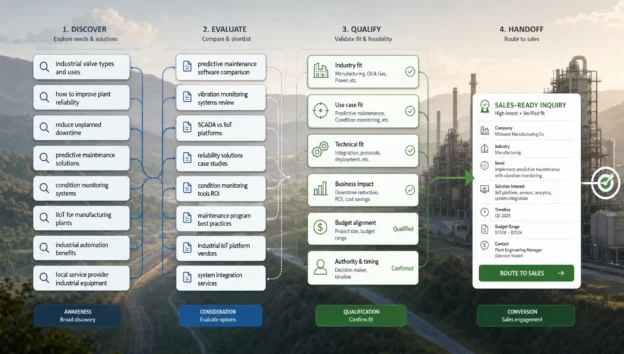
Most B2B teams do not have a lead problem. They have a lead-fit problem.
A website can generate form fills, phone calls, demo requests, and newsletter subscribers while still leaving sales frustrated. If those leads lack budget, do not match your ideal customer profile, or are too early in the buying process, more traffic simply creates more follow-up work.
That is where an SEO marketing service changes the conversation. Strong SEO is not just about ranking for more keywords. It is about attracting the right searches, answering the right questions, and guiding qualified prospects toward the right next step. For B2B, industrial, and technical businesses, that difference can have a direct impact on sales efficiency and revenue quality.
What Lead Quality Actually Means in SEO
Lead quality measures how closely an inquiry matches the kind of customer your sales team can realistically win and serve profitably. A high-quality lead is not always ready to buy today, but it should have a real business problem, a relevant need, and a reasonable fit with your offer.
In SEO, quality starts before a visitor ever reaches your website. It begins with the words they search, the intent behind those searches, and the content they choose to engage with.
| Lead quality factor | What it means | How SEO influences it |
|---|---|---|
| Ideal customer fit | The company matches your best-fit industries, size, geography, or use case | Keyword and content strategy focus on relevant buyer segments |
| Search intent | The visitor is looking for a solution, not just general education | Pages are built around commercial and problem-aware queries |
| Problem clarity | The prospect understands the pain point they need to solve | Content helps buyers diagnose and define the issue |
| Engagement depth | The visitor views meaningful pages or takes a qualified action | Internal linking and conversion paths guide deeper evaluation |
| Sales readiness | The lead is ready for a quote, consultation, audit, or proposal | Calls-to-action match the buyer stage |
| Revenue potential | The opportunity is large enough to justify sales effort | SEO prioritizes profitable services, products, and markets |
When an SEO campaign is built around these signals, it attracts fewer casual visitors and more serious buyers.
Why SEO Sometimes Generates Low-Quality Leads
SEO gets blamed when organic traffic does not convert into strong sales opportunities, but the real issue is usually strategy. Many campaigns focus on visibility without enough attention to buyer fit.
A common mistake is targeting broad keywords because they have higher search volume. For example, a manufacturer might rank for a general educational term that attracts students, job seekers, and DIY researchers. Traffic increases, but the sales pipeline does not. A better approach is to target specific commercial searches tied to the company’s capabilities, applications, materials, industries, or service area.
Another problem is content that answers a question but does not guide the visitor anywhere useful. A blog post may bring in traffic, but if it does not connect to a relevant service page, case study, quote request, or technical resource, the visitor leaves without becoming a qualified lead.
Low-quality leads also happen when the website makes no distinction between different buyer types. A procurement manager, plant engineer, operations leader, and business owner may all influence the same buying decision, but they look for different information. A generic page rarely satisfies all of them.
How an SEO Marketing Service Improves Lead Quality
An effective SEO marketing service improves lead quality by aligning search visibility with business value. Instead of asking only which keywords can we rank for, it asks which searches are most likely to become profitable conversations.
It Targets Buyer Intent, Not Just Search Volume
Search intent is one of the strongest predictors of lead quality. Someone searching what is industrial automation is likely in research mode. Someone searching industrial automation company for food processing plant is much closer to evaluating vendors.
A qualified SEO marketing service separates keywords by intent and business priority. It identifies informational, comparison, local, problem-based, and transactional searches, then builds content for the right stage of the buying journey.
For B2B companies, this often means prioritizing keywords that include:
- Industry-specific applications
- Product or service categories
- Technical problems and failure points
- Location modifiers, especially for regional service businesses
- Commercial phrases such as provider, consultant, supplier, quote, service, or company
This is why SEO for B2B lead generation should be planned differently from SEO for a high-volume consumer website. The goal is not the largest possible audience. The goal is the most relevant audience.
If you want a broader look at how intent, technical SEO, and content work together, this guide on how search engine optimization services drive B2B leads explains the lead generation side of the process in more detail.
It Builds Content for Real Buying Committees
B2B buyers rarely make decisions alone. Industrial purchases, software evaluations, consulting engagements, and specialized services often involve multiple stakeholders. Each one brings different concerns.
An engineer may care about specifications and reliability. A purchasing manager may care about lead time and vendor risk. An executive may care about ROI and operational impact. A safety manager may care about compliance and documentation.
A strong SEO marketing service turns those concerns into a content roadmap. Instead of publishing random articles, it creates a search-driven library that supports the buying committee at different stages.
That may include comparison pages, service pages, FAQ-driven content, technical explainers, case-study style pages, application pages, and location-specific pages. The more accurately that content reflects buyer concerns, the more qualified the inquiries tend to become.
It Qualifies Visitors Before They Contact Sales
Good SEO does not try to convert everyone. It helps the right visitors understand whether your business is a fit.
This happens through clear positioning, specific service descriptions, industry language, proof points, and conversion paths. A page that says we help businesses grow is too vague. A page that explains which industries you serve, which problems you solve, and what kind of engagement you offer does a better job of filtering visitors.
The same principle applies to calls-to-action. A generic contact us button may produce more inquiries, but a more specific CTA such as request a consultation, ask for a quote, schedule an SEO assessment, or submit a project inquiry gives visitors a clearer expectation.
For companies that already have traffic but are not seeing enough conversions, website optimization services that improve conversion rates can help connect SEO traffic to better on-page performance.
It Improves the Technical Foundation Behind Qualified Traffic
Technical SEO may not sound connected to lead quality, but it matters. If search engines cannot properly crawl, understand, or index your most valuable pages, the wrong pages may rank instead.
For example, a blog post may rank for a service-related query while the actual service page remains buried. Visitors land on an informational page, do not see a clear next step, and leave. Technical optimization helps make sure the right page is eligible to rank for the right query.
A technical SEO review often looks at page structure, internal links, crawlability, indexation, page speed, mobile usability, metadata, duplicate content, and content hierarchy. These improvements do not just support rankings. They help buyers reach the most relevant information faster.
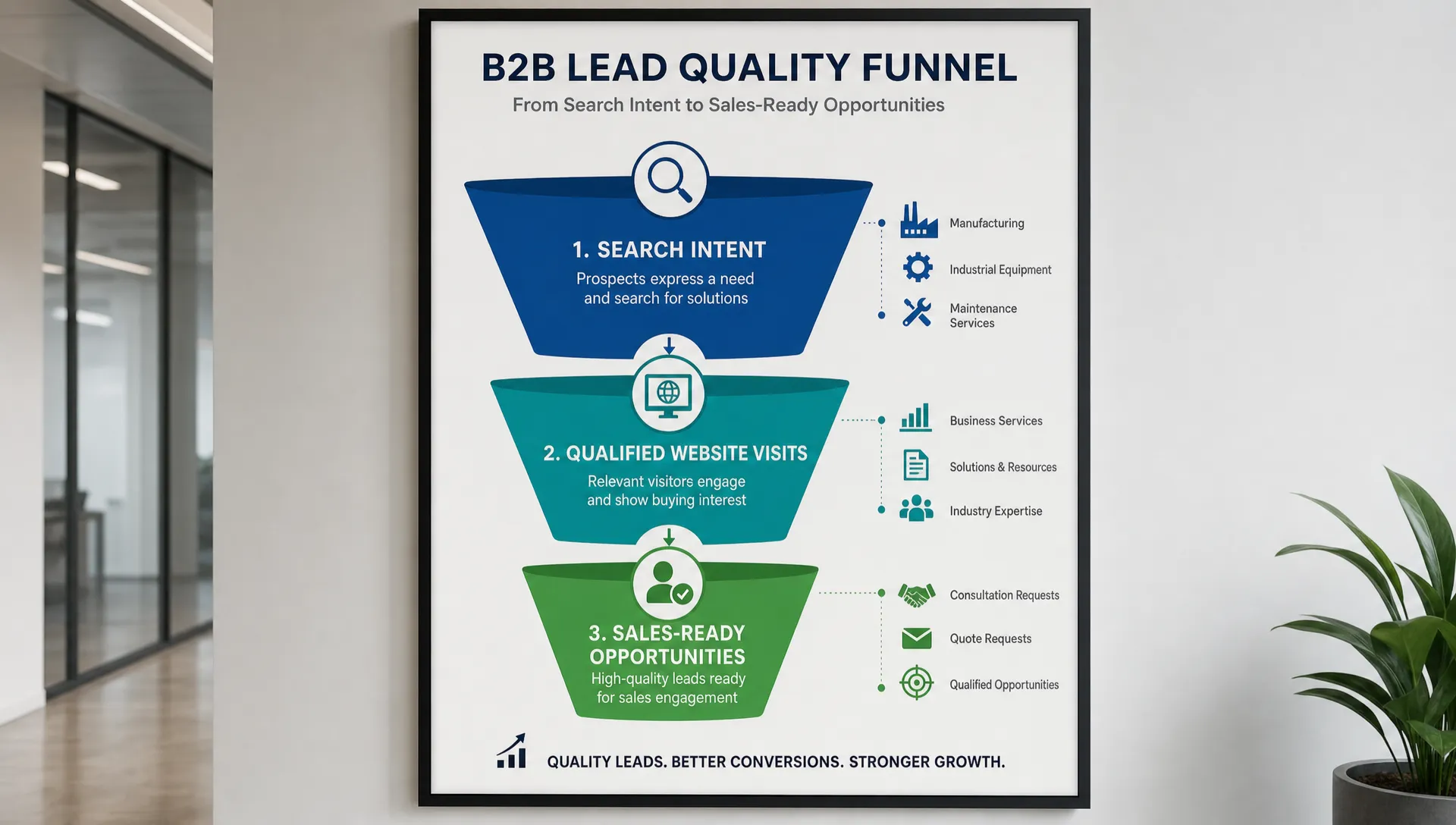
Better SEO Creates a Better Sales Feedback Loop
Lead quality improves fastest when marketing and sales share information. SEO data can show which pages and keywords attract leads, but sales teams know whether those leads are actually valuable.
A smart SEO marketing service uses that feedback to refine the campaign. If organic leads from one page are consistently too small, too early, or outside your service area, that page may need stronger qualification language. If another page produces fewer leads but more serious opportunities, it may deserve more internal links, content support, or paid search reinforcement.
This feedback loop can include notes from sales calls, CRM status updates, form field analysis, call tracking insights, and close-rate data by landing page. Over time, the SEO strategy becomes more precise because it is based on revenue signals, not just rankings.
Because improving lead quality touches content writers, sales teams, web developers, and subject-matter experts, campaign coordination matters. Teams working inside Google Workspace can keep SEO tasks, page updates, and sales feedback organized with Google Workspace project management software, especially when multiple people are responsible for moving optimization work forward.
SEO Marketing Service vs. Basic SEO: The Lead Quality Difference
Not all SEO work is designed to improve lead quality. Basic SEO may focus on rankings, metadata, and traffic growth. Those are useful, but they are incomplete if the business needs better sales opportunities.
A lead-quality-focused SEO service connects optimization to pipeline outcomes.
| Basic SEO focus | Lead-quality SEO focus |
|---|---|
| Increase organic traffic | Increase qualified organic inquiries |
| Rank for high-volume keywords | Rank for buyer-intent keywords |
| Publish general blog content | Build content around ICP pain points and buying stages |
| Track keyword positions | Track lead source, conversion rate, MQL rate, and sales outcomes |
| Optimize pages for clicks | Optimize pages for fit, trust, and action |
| Treat all visitors the same | Segment content by industry, need, geography, or decision role |
This does not mean traffic is unimportant. Traffic is still the top of the funnel. But in B2B marketing, the best SEO campaigns measure traffic in context. One hundred visits from the right buyers can be more valuable than ten thousand visits from people who will never purchase.
The Metrics That Reveal Lead Quality
If you only measure organic sessions and keyword rankings, you may miss whether SEO is improving the pipeline. Lead quality requires a more complete measurement system.
Useful metrics include organic conversion rate, qualified lead rate, MQL-to-SQL conversion rate, sales accepted leads, proposal requests, close rate, average deal value, and revenue influenced by organic search. For local or regional companies, phone calls, service-area matches, and form submissions by geography can also be important.
| Metric | Why it matters |
|---|---|
| Organic conversions by landing page | Shows which pages generate inquiries |
| Qualified lead rate | Separates useful leads from low-fit submissions |
| MQL-to-SQL rate | Measures whether marketing leads become sales opportunities |
| Pipeline value from organic search | Connects SEO to revenue potential |
| Close rate by source | Shows whether organic leads turn into customers |
| Form completion quality | Reveals whether prospects share enough useful information |
The key is to judge SEO by business progress, not vanity metrics alone. A campaign that increases qualified opportunities by 20 percent may be more valuable than a campaign that doubles traffic but creates no new revenue.
For more practical ideas on improving fit after a lead enters your funnel, these actionable tips to improve lead quality are a helpful next step.
How SEO Supports B2B and Industrial Sales Cycles
Industrial and B2B buyers often take longer to convert. They research quietly, compare vendors, involve internal stakeholders, and revisit the website multiple times before contacting sales.
That makes SEO especially valuable. Paid campaigns can create immediate visibility, but organic content can support the long research process. A well-structured SEO strategy ensures your company appears when buyers first define the problem, when they compare options, and when they are finally ready to speak with a provider.
This is particularly important in competitive markets like Houston, where industrial services, engineering firms, manufacturers, logistics providers, and B2B technology companies may all compete for specialized searches. An SEO marketing service with B2B and industrial experience can help translate complex services into search-friendly content without oversimplifying the buyer’s needs.
The result is not just more website activity. It is more informed prospects who already understand your expertise before they fill out a form or make a call.
Signs Your SEO Is Attracting the Wrong Leads
If your sales team is busy but frustrated, your SEO may need a lead-quality review. Warning signs include a high number of form fills with low sales acceptance, inquiries from outside your service area, prospects asking for services you do not provide, repeated price-shopping behavior, or organic traffic growth with flat pipeline value.
Another sign is a mismatch between your best customers and your highest-traffic pages. If your most visited pages target broad educational topics but your strongest buyers search for specific services, your content strategy may be upside down.
A lead-quality-focused SEO review should examine which pages generate leads, what those leads look like, whether the messaging filters for fit, and where qualified buyers may be dropping off. Sometimes the fix is keyword strategy. Sometimes it is landing page clarity. Often, it is both.
What to Expect From a Lead-Quality SEO Strategy
A strong SEO marketing service should be able to explain how its work supports qualified lead generation. That means connecting research, content, technical improvements, analytics, and conversion strategy into one system.
The process typically starts with understanding your ideal customer profile, profitable services, sales cycle, competitive landscape, and current website performance. From there, the SEO team can prioritize pages and keywords that are more likely to attract buyers with real intent.
Over time, you should see stronger alignment between organic traffic and sales conversations. You may not always see overnight lead volume growth, especially in specialized B2B markets, but you should see better page engagement, more relevant inquiries, and clearer data on which SEO activities influence pipeline.
Frequently Asked Questions
How does an SEO marketing service improve lead quality? It improves lead quality by targeting buyer-intent keywords, creating content for the right audience, optimizing conversion paths, and using sales feedback to refine the strategy over time.
Is lead quality more important than traffic volume? For most B2B and industrial companies, yes. Traffic matters, but qualified traffic is what creates sales opportunities. A smaller number of high-fit visitors can be more valuable than a large audience with no buying intent.
How long does it take for SEO to improve lead quality? Some improvements, such as clearer landing pages and better calls-to-action, can help quickly. Broader gains from keyword targeting, content development, and authority building usually take several months.
Can SEO reduce unqualified leads? Yes. SEO can reduce unqualified leads by clarifying who your services are for, targeting more specific searches, improving page messaging, and using forms or calls-to-action that set better expectations.
What should a B2B company track besides rankings? B2B companies should track qualified lead rate, organic conversions by page, MQL-to-SQL rate, pipeline value, close rate, and feedback from the sales team.
Turn Organic Traffic Into Better Sales Conversations
An SEO marketing service improves lead quality when it is built around buyer intent, website clarity, technical performance, and sales feedback. Rankings are still important, but they are only one part of the bigger goal: attracting prospects who are more likely to become customers.
If your website is getting traffic but not enough qualified inquiries, B2B Inbound Marketing can help align SEO, inbound strategy, content, and conversion improvements around the leads your sales team actually wants. The right SEO strategy should not just make your business easier to find. It should make your best buyers more likely to choose you.