

Tag Archives: SEO Houston

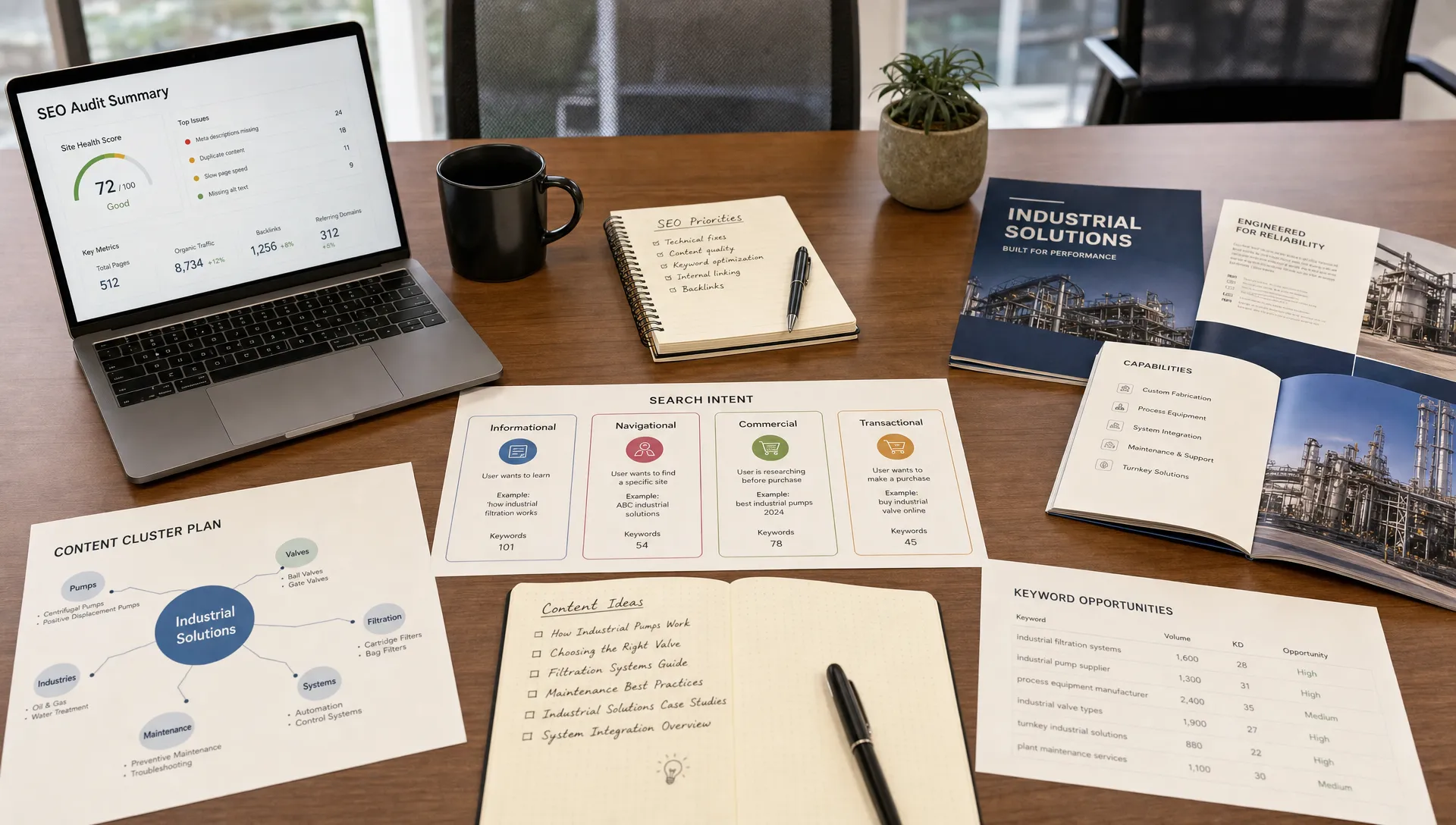
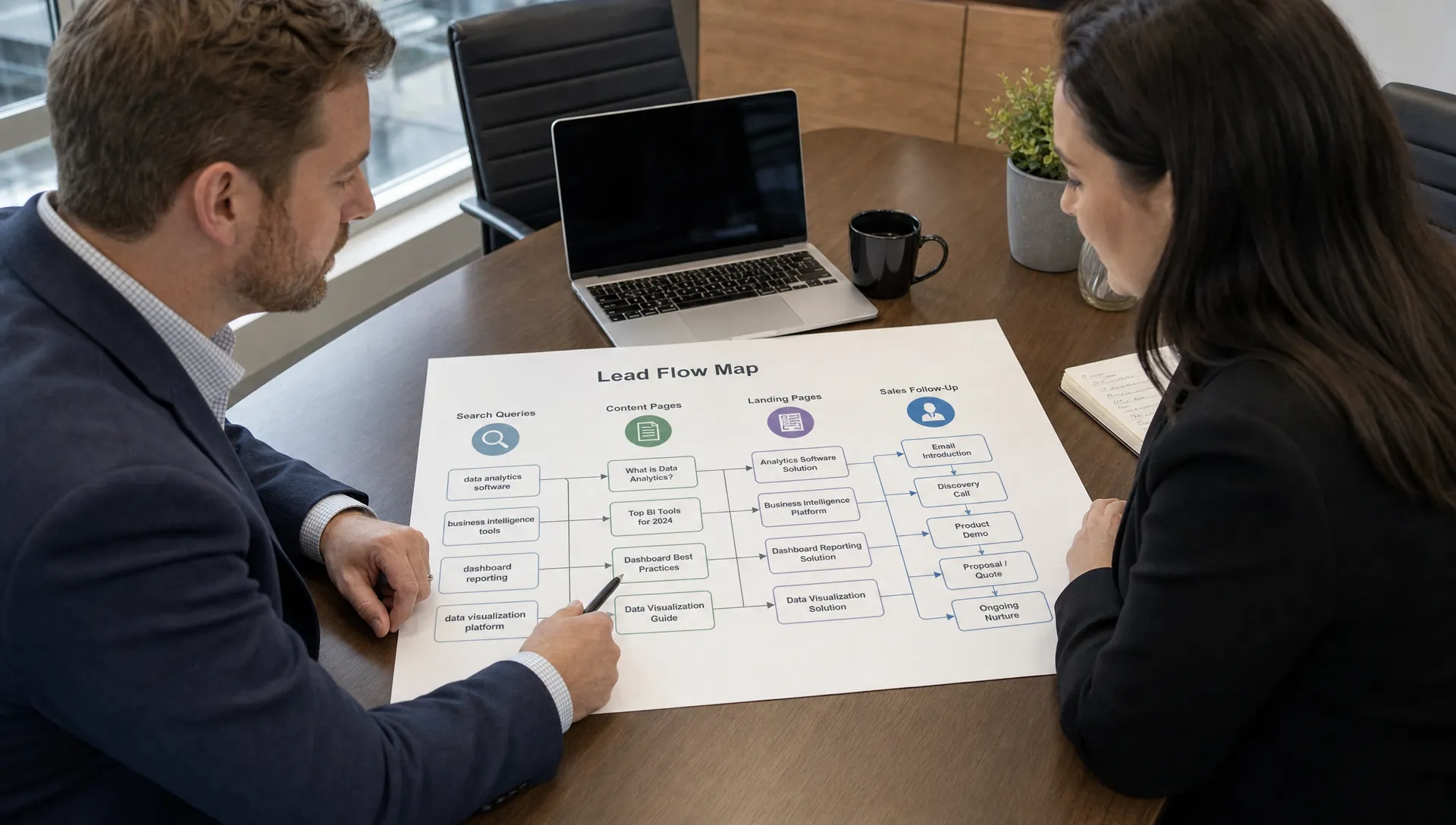
A Houston industrial marketing planning room shows page outlines, conversion notes, and a worktable for website checks.

On-Site SEO Checks Every B2B Website Needs

A strong B2B website depends on a disciplined on site seo process, not just publishing more pages and hoping Google sorts them out. For industrial suppliers, professional service firms and Houston-area B2B companies, the real goal is not traffic alone. The goal is to help the right buyer understand what you do, trust your expertise and take the next step without friction.

Many B2B websites underperform because the problems are hiding in plain sight. A product page may have a vague title tag. A service page may target the wrong intent. A case study may have no internal links to a proposal form. A technically sound website can still lose qualified leads if the page structure, content and calls to action do not match how buyers search.

That is why on site seo should be treated as a revenue-supporting audit, not a one-time publishing task. The checks below focus on the areas that most often affect B2B visibility, lead quality and conversion readiness.

Start with the search intent behind each page

Every page should have a clear job. In B2B marketing, that job usually fits one of three intent categories: educate, evaluate or convert. A blog post may help an engineer compare options, while a service page may need to reassure a purchasing manager that your company can handle a specific project scope.

Before editing tags or adding keywords, ask whether the page satisfies the buyer’s actual search. A visitor searching for “industrial pump repair Houston” probably wants service coverage, response capability, technical qualifications and a way to request help. A visitor searching for “how to reduce downtime in manufacturing” may need a guide, checklist or diagnostic article before they are ready to speak with sales.

This is where many B2B sites drift. They write for internal language rather than customer language. Your checks should confirm that each page has one primary topic, one search intent and one next step.

The on site seo checks that matter most

Once page intent is clear, the practical checks become much easier. Title tags, headings, internal links and body copy should all reinforce the same topic without repeating the same phrase unnaturally.

Start with the title tag. It should identify the subject of the page and give buyers a reason to click. For B2B pages, that often means combining the service, market or location with a value signal. A title like “Industrial Valve Repair in Houston for Processing Facilities” is more useful than “Services” because it tells both search engines and buyers what the page is about.

Meta descriptions do not directly control rankings, but they influence click behavior. A good description should summarize the page in plain language, include a relevant benefit and avoid generic claims. Headings should then support the page structure. Use one clear H1, followed by H2s and H3s that break the topic into decision-friendly sections.

If you want a broader audit framework, this comprehensive SEO checklist can help you organize additional page-level and technical reviews.

Check whether the content proves expertise

For B2B buyers, thin content is a trust problem. A page that says “we provide quality solutions” does not help a plant manager, procurement team or technical buyer decide whether you understand their situation.

Effective on site seo connects search relevance with evidence. That evidence may include process details, industries served, service limitations, standards followed, project examples, FAQs or comparison points. The more specialized the service, the more important specificity becomes.

For example, a niche event service such as large champagne glass pyramid displays needs to communicate the offer, visual impact, logistical credibility and proof of execution quickly because the buyer is evaluating something highly specific. B2B and industrial websites face a similar challenge, even when the subject is less visual. Buyers want to know whether your company can deliver in their environment.

Avoid adding filler just to increase word count. Instead, add the details a real buyer would need before contacting sales.

Page element What to check Why it matters for B2B SEO
Title tag Clear service, product or topic focus Improves relevance and click clarity
H1 and headings Logical structure with buyer-focused sections Helps readers scan and search engines understand the page
Body content Specific proof, examples and useful explanations Builds trust with technical and business buyers
Internal links Relevant links to supporting pages Guides buyers through the decision path
Calls to action Clear next step based on intent Turns qualified visits into inquiries

A B2B marketing specialist reviews an on-site SEO checklist beside website wireframes, headings, and conversion notes for an industrial website.

Internal links help search engines discover related content, but their bigger value for B2B sites is guiding buyers through a complex decision. A visitor may enter through an educational article, move to a service page, compare capabilities and then look for a contact form. If the site does not connect those steps, the buyer may leave before taking action.

A good internal link should feel like a natural next step. If a page explains a problem, link to a service page that solves it. If a service page mentions a technical challenge, link to a deeper article that explains your approach. If a blog post attracts local or regional buyers, link to location-relevant service content where appropriate.

This is also where SEO and design overlap. Strong navigation, scannable sections and visible calls to action can improve lead quality as much as rankings. The article on search engine optimization website design for better leads goes deeper into how site structure and conversion design work together.

When on site seo is aligned with conversion paths, the website stops acting like a brochure and starts acting like a guided sales assistant.

Inspect technical signals that affect page performance

Technical checks do not need to be mysterious, but they do need to be consistent. If search engines cannot crawl, index or render key pages correctly, strong content will not reach its full potential.

Begin with indexation. Important pages should be indexable, included in the XML sitemap and free from accidental noindex tags. Check canonical tags to make sure they point to the right version of each page. Review redirects, broken links and duplicate pages that may split ranking signals.

Performance also matters. Slow pages can hurt engagement, especially when B2B buyers are comparing vendors during a busy workday. Core Web Vitals, mobile usability, compressed images and clean code all contribute to a better experience. A responsive website is now basic infrastructure, not a design bonus.

Security is another trust signal. HTTPS should be standard across the entire website. Forms should work properly, especially proposal inquiries, quote requests and contact submissions. A ranking improvement is wasted if a buyer cannot complete the action that creates a lead.

Make local and industry relevance visible

B2B search is often shaped by geography, even when the sales cycle is national or regional. A Houston industrial company may serve clients across Texas, but a local presence can still influence credibility, search relevance and buyer confidence.

Your pages should make location and industry relevance clear where it is true. This may include service areas, facility location, industries served, local project experience or Houston-specific terminology. Do not create thin location pages with copied text. Instead, build pages that explain why your location matters to the buyer.

For companies competing in the Houston market, on site seo should connect local relevance with buyer intent. A manufacturer, distributor or B2B service provider will usually benefit from pages that speak to both the service category and the industries that need it.

For a deeper local perspective, see this guide to SEO Houston for B2B companies, which covers the signals that matter most in a competitive regional market.

Use media, schema and page formatting with purpose

Images, videos, charts and downloadable assets can improve B2B pages when they clarify the buying decision. A product photo, equipment image, process diagram or short explainer can make a technical offer easier to understand. The key is to optimize media without slowing the page.

Use descriptive file names and alt text for important images. Alt text should describe the image accurately, not repeat keywords mechanically. Compress images before publishing and avoid uploading oversized files that force mobile users to wait.

Schema markup can also help search engines understand page elements. Organization, LocalBusiness, FAQ and Article schema may be relevant depending on the page type. Schema does not replace strong content, but it can make structured information easier for search systems to interpret.

Formatting matters too. B2B readers scan before they commit. Short sections, descriptive subheadings, tables and clear CTAs make a page easier to evaluate. Good on site seo supports that behavior instead of forcing visitors through dense blocks of text.

Measure the checks that connect to leads

Rankings are useful, but they are not the finish line. B2B companies should track the metrics that show whether organic traffic is turning into business opportunity.

Look at impressions, clicks, average position and click-through rate in Google Search Console. Then connect those patterns to behavior in analytics: engaged sessions, form submissions, phone clicks, proposal inquiries and visits to high-intent pages. If a page ranks but does not generate action, the issue may be intent mismatch, weak proof, poor CTA placement or an offer that is too vague.

A simple monthly review can catch problems before they become expensive. Prioritize pages that target valuable services, receive impressions but low clicks or attract traffic without conversions. These pages often offer the best improvement opportunities because they already have some search visibility.

The best on site seo programs become part of ongoing marketing operations. They help your team decide what to update, what to consolidate, what to expand and what to promote through PPC or social campaigns.

Frequently Asked Questions

How often should a B2B website run on-site SEO checks? Most B2B websites should review key pages quarterly and run a deeper audit at least twice a year. High-value service pages, PPC landing pages and pages losing rankings may need more frequent attention.

What is the difference between on-site SEO and technical SEO? On-site SEO covers page content, headings, internal links, metadata, user experience and conversion clarity. Technical SEO focuses more narrowly on crawlability, indexation, site speed, redirects, structured data and code-level issues.

Do B2B websites need different SEO checks than consumer websites? Yes. B2B buyers usually have longer decision cycles, more stakeholders and more technical questions. That means pages need stronger proof, clearer industry relevance and conversion paths that support research as well as direct inquiries.

Can on-site SEO improve lead quality? Yes. When pages match buyer intent and explain the offer clearly, they tend to attract visitors who better understand what your company does. That can reduce irrelevant inquiries and improve the quality of sales conversations.

Turn SEO checks into better B2B lead flow

A website audit is only valuable if it leads to action. Fixing titles, headings, internal links, page speed and conversion paths can make a measurable difference, but the work should be prioritized around business value rather than vanity metrics.

If your B2B website needs stronger visibility, cleaner structure or a better path from search to inquiry, Andy Alagappan’s Houston-based inbound marketing services can help with SEO, PPC, content and campaign strategy. Start with the pages that matter most to your pipeline, then build a practical improvement plan that supports qualified lead flow over time.
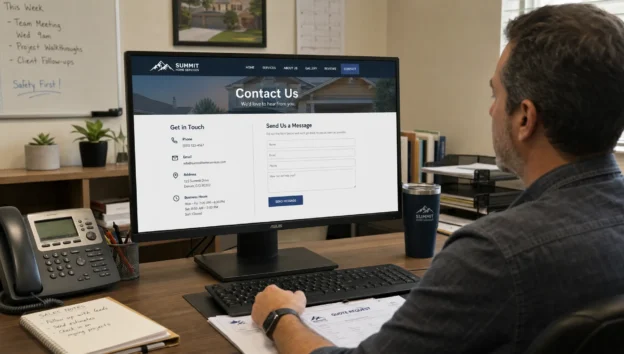

A manager reviews a website contact page beside quote request forms and a sales notebook in a small office.

What an SEO Specialist Should Prioritize First

The first priority for an SEO specialist is not keyword research, a technical crawl or a new blog calendar. Those matter, but they come after one decision: which business outcomes should search traffic support first?

For B2B, industrial and professional service companies, SEO can quickly become busywork if it starts with rankings alone. A page can rank, attract visitors and still fail if the wrong people land on it. The best early work connects search demand to revenue, sales conversations, quoting activity and lead quality.

That means an SEO specialist should begin by identifying the highest-value search opportunities closest to the buyer journey, then remove the obstacles that keep those pages from being discovered, trusted and acted on.

Start With the Business Goal, Not the SEO Tool

SEO tools are useful, but they do not know your margins, sales cycle, best-fit customers or capacity constraints. Before auditing title tags or exporting keyword lists, an SEO specialist should ask what the business actually needs from organic search.

For a Houston industrial supplier, that may mean more quote requests for a specific product line. For a B2B service company, it may mean attracting decision-makers who are comparing vendors. For a manufacturer, it may mean supporting distributors with technical content that reduces sales friction.

The priority changes depending on the business model. An SEO specialist working on a professional-services site, for example a firm offering tax and accounting services in Australia, would likely prioritize service intent, location relevance and trust signals before broad educational content. An industrial marketing program may need product categories, specifications, applications and RFQ paths first.

If your team has not aligned on what SEO is supposed to influence, revisit a practical SEO definition marketing teams can use to make decisions before moving into execution.

Prioritize Pages That Can Produce Leads

Once the business goal is clear, the next priority is mapping the site’s existing pages to buyer intent. Not every page deserves equal attention. The homepage, service pages, product category pages, local landing pages and high-intent comparison content usually deserve review before informational blog posts.

A useful first pass is to separate pages into three groups:

  • Revenue pages: Service, product, industry, application and location pages that can directly support an inquiry.
  • Support pages: Case studies, FAQs, technical articles, buying guides and resource pages that help prospects move forward.
  • Awareness pages: Educational content that introduces a problem, trend or method to early-stage visitors.

For most B2B companies, revenue pages should be fixed before publishing more awareness content. If core service pages are thin, slow, poorly structured or unclear, additional blog traffic may not improve lead flow. Organic growth should create better paths toward contact forms, phone calls, quote requests or proposal inquiries.

This is where an SEO specialist earns trust internally. Instead of saying, “We need more content,” the stronger recommendation is, “We need to improve the pages that buyers already use when they are close to taking action.”

Diagnose Search Intent Before Choosing Keywords

Keyword research is still essential, but it should be guided by intent. A keyword’s volume matters less than what the searcher is trying to accomplish.

A person searching “what is industrial SEO” may want an explanation. A person searching “industrial SEO agency Houston” is likely evaluating providers. A person searching for a specific product, certification or application may be closer to a purchasing conversation.

A good SEO specialist looks beyond keyword volume and studies the current search results. The ranking pages reveal what Google believes users want. Are the results mostly service pages, product pages, local businesses, tutorials, videos, directories or comparison articles? If your page format does not match that pattern, ranking becomes harder even if the page is technically optimized.

Priority question What it reveals SEO action
Who is searching? Buyer, researcher, engineer, owner or job seeker Adjust page language and depth
What do they need next? Quote, explanation, specification, vendor shortlist or local provider Match the content format to the task
What pages rank now? Google’s interpretation of intent Build or revise the right page type
What would make them trust us? Proof, experience, location, technical detail or responsiveness Add credibility signals and conversion paths

This intent-first approach is especially important in B2B and industrial SEO because one lead may be worth far more than thousands of low-fit visitors.

Fix Indexing, Crawling and Technical Barriers Early

After business priorities and intent are clear, the technical audit becomes more focused. The goal is not to chase every possible technical score. The goal is to find issues that prevent important pages from being crawled, indexed, understood or used.

An SEO specialist should review whether search engines can access the right pages, whether important pages are accidentally blocked, whether redirects are clean and whether duplicate or thin pages dilute authority. They should also check site speed, mobile usability, internal linking, schema markup where useful and basic on-page structure.

Technical SEO becomes urgent when revenue pages are affected. A slow blog archive is not as serious as a service page that fails on mobile. A missing meta description is not as serious as a product category hidden from search engines.

Google’s own public guidance has long emphasized making pages accessible, helpful and understandable to users and search engines. In practice, that means technical SEO should support visibility and usability, not become a separate checklist with no commercial context.

Strengthen the Pages Closest to Conversion

Once technical blockers are handled, improve the pages that should convert. This is often where SEO, messaging and web design overlap.

A high-priority service or product page should make the following clear within a few seconds: what the company provides, who it serves, where it operates, what problems it solves and what the visitor should do next. Many underperforming B2B pages fail because they speak in generalities. “Quality solutions for your business” is weaker than specific language about equipment, processes, industries, certifications or measurable outcomes.

Strong conversion-focused pages usually include:

  • A clear headline aligned with the searcher’s need
  • Specific service, product or application details
  • Internal links to related capabilities and resources
  • Proof points such as experience, markets served or examples
  • A visible next step, such as a consultation, RFQ or enquiry form

If the site is being redesigned, SEO should be involved before wireframes are finalized. Page architecture, navigation, content hierarchy and conversion paths influence whether search traffic turns into pipeline. The case for planning these pieces together is covered in more detail in why web design and SEO should be planned together.

An SEO specialist reviews a B2B website map, keyword intent notes, and lead conversion paths with a laptop and printed page outlines on a desk.

Build Internal Linking Around Buyer Paths

Internal linking is one of the most practical early wins because it helps both search engines and users understand which pages matter. For B2B sites, internal links should not be random. They should guide prospects from a problem to a service, from a service to proof and from proof to contact.

For example, an educational article about reducing downtime should link naturally to the relevant maintenance service or equipment solution. A product category page should link to application pages, technical guides or industries served. A case study should point readers toward the service that produced the result.

This structure helps distribute authority to important pages and gives visitors a reason to continue exploring. It also prevents the common problem of publishing blog posts that rank but never support lead generation.

Use Content Gaps Carefully

Content gaps matter, but they should not be treated as a command to publish everything competitors have published. A competitor may rank for topics that do not fit your offer, geography or sales process.

An SEO specialist should look for gaps that meet three conditions. The topic must match real search demand, connect to the company’s expertise and support a useful next step. If a topic checks only one of those boxes, it may not deserve early attention.

For industrial and B2B companies, useful content gaps often include application pages, industry-specific pages, technical FAQs, comparison resources, local service pages and problem-solving articles tied to buyer pain points. Broad trend content can work, but it is rarely the first priority when core commercial pages are weak.

This is also where PPC data can help. Paid search campaigns reveal which queries, messages and landing pages generate inquiries. An SEO specialist can use that information to prioritize organic pages with stronger commercial evidence instead of guessing from keyword volume alone.

Measure the Right SEO Signals First

Early SEO measurement should focus on whether the program is moving toward business impact. Rankings are useful, but they are not enough. Organic sessions are useful, but they can mislead if traffic quality is poor.

A practical first dashboard for an SEO specialist should include:

Metric Why it matters
Organic leads or enquiries Shows whether traffic supports sales activity
Rankings for high-intent terms Tracks visibility where buying intent is stronger
Impressions and clicks for revenue pages Reveals whether commercial pages are gaining traction
Conversion rate by landing page Identifies pages that need message or UX improvement
Indexed pages and crawl issues Confirms that important pages remain discoverable
Assisted conversions Captures SEO’s role in longer B2B buying journeys

For B2B companies, lead quality should be reviewed with sales input. A form submission from the wrong industry or geography may look good in analytics but add little value. SEO specialists should build a feedback loop with sales teams so optimization is based on actual opportunities, not vanity metrics.

If the goal is better lead flow rather than traffic for its own sake, the strategy should connect rankings, content, landing pages and conversion paths. That broader approach is discussed in SEO optimization strategies that support better lead flow.

What Should an SEO Specialist Do in the First 30 Days?

The first month should produce clarity, not just reports. A good SEO specialist should be able to tell the business which pages matter most, what is blocking performance and what actions should happen first.

A strong first 30 days usually includes an intake with leadership or sales, a review of analytics and search data, a crawl of the site, a high-intent keyword and intent review, a conversion path assessment and a prioritized roadmap. The deliverable should separate urgent fixes from strategic opportunities.

The roadmap should also name what not to do yet. For example, launching a large blog program may be premature if the service pages do not explain the offer. Redesigning page visuals may not help if the site architecture hides the most important capabilities. Adding backlinks may be less urgent than fixing indexation problems on revenue pages.

Prioritization protects budget. It also helps business leaders see SEO as a growth system rather than a collection of isolated tasks.

A Simple Priority Order for Most B2B SEO Work

Every site is different, but many B2B and industrial SEO projects benefit from this sequence:

  1. Clarify the business objective: Define which products, services, industries or locations SEO should support first.
  2. Identify high-intent pages: Find the pages most likely to generate leads, quotes or sales conversations.
  3. Match pages to search intent: Confirm whether each priority page fits what searchers expect to find.
  4. Remove technical blockers: Fix crawl, indexation, mobile, speed and structural issues affecting important pages.
  5. Improve content and conversion paths: Make pages clearer, more specific and easier to act on.
  6. Build supporting content and links: Use internal links, FAQs, guides and proof pages to strengthen the buyer journey.
  7. Measure lead quality: Review organic performance against inquiries, opportunities and sales feedback.

This order keeps SEO practical. It avoids the common mistake of treating technical fixes, content production and link building as equal priorities at all times.

Frequently Asked Questions

What is the first thing an SEO specialist should do? The first step is to clarify the business outcome SEO should support. For B2B companies, that usually means identifying which services, products, industries or locations should generate better organic visibility and leads.

Should technical SEO come before content? Technical SEO should come early if crawl, indexation, speed or mobile issues affect important pages. If the site is technically accessible but the content does not match search intent, content and conversion improvements may be the higher priority.

How long does it take to see SEO results? Some technical and on-page improvements can produce early movement within weeks, but meaningful B2B SEO results often take several months. Timelines depend on competition, site condition, content quality and how quickly recommendations are implemented.

What should an SEO specialist avoid prioritizing first? They should avoid starting with low-intent blog content, vanity keywords or cosmetic changes before understanding business goals, search intent, technical barriers and conversion paths.

Need a Clearer SEO Priority Plan?

If your website has traffic but not enough qualified leads, the issue may not be effort. It may be priority. B2B Inbound Marketing helps companies focus SEO, PPC, inbound strategy, content and web improvements around visibility that supports real business conversations.

Start by identifying which pages should drive growth, then fix the obstacles that keep them from ranking and converting. A focused SEO specialist will not try to do everything first. They will find the work that matters most and build from there.

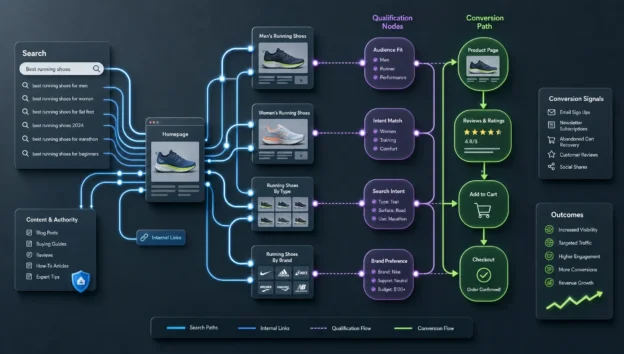
Intersecting search paths and conversion markers form a network for website optimization and leads.

How to Improve SEO Optimization for Your Website

Improving SEO optimization for your website is not a one-time task or a quick keyword edit. For B2B, industrial and local service businesses, it is a practical process of making your site easier to find, easier to understand and easier to act on.

Search engines need to crawl your pages, interpret what each page is about and decide whether your content deserves to appear for a specific query. Visitors need something more direct: a page that answers their question, builds confidence and makes the next step obvious.

The strongest SEO work happens when both needs are handled together. Rankings matter, but qualified inquiries, quote requests, calls and sales conversations are the real goal.

Start With Search Intent, Not Keywords Alone

Keywords still matter, but they are only useful when they match the reason someone is searching. A visitor searching “industrial pump repair Houston” is not in the same mindset as someone searching “how centrifugal pumps work.” One is likely comparing vendors or looking for immediate help. The other is learning.

Before optimizing a page, decide what job that page should do. A homepage should usually explain who you serve and what you offer. A service page should show capability, process, proof and a conversion path. A blog article should answer a specific question and guide the reader toward a relevant next step.

This is where many websites lose momentum. They publish content around broad topics but do not connect that content to buyer intent. A better approach is to map each page to a searcher need:

Search intent Example query Best page type Primary goal
Informational how to reduce manufacturing downtime Blog article or guide Educate and introduce expertise
Commercial best SEO company for industrial business Comparison or service page Support evaluation
Local B2B marketing agency Houston Local service page Generate inquiry
Transactional request PPC management proposal Landing page or form page Convert lead

When every page has a clear role, SEO becomes easier to manage. You can choose better titles, create more useful content and measure performance against the right outcome.

Make Your Site Structure Easy to Crawl and Understand

A search-friendly website starts with a logical structure. Search engines follow links to discover pages, but visitors also depend on menus, breadcrumbs and internal links to understand where they are.

For B2B and industrial companies, a simple structure often works best: homepage, main service pages, industry pages, case studies or proof pages, educational articles and contact or proposal pages. Each important service should have its own page instead of being hidden inside a general paragraph on the homepage.

Internal links also help search engines understand which pages matter most. If you publish a blog post about improving lead quality, it should naturally connect to the relevant service page or related article. For example, a deeper discussion of SEO optimization strategies that support better lead flow can help connect SEO work to measurable business outcomes.

Your site structure should avoid three common problems:

  • Orphan pages that are not linked from menus, related content or service pages
  • Duplicate pages that target nearly the same search phrase without a distinct purpose
  • Deep pages that require too many clicks to reach from the homepage

A clean structure helps search engines index your content, but it also helps buyers move from awareness to action without confusion.

Improve On-Page SEO Fundamentals

On-page SEO is the part most people recognize: titles, headings, URLs, body copy and image descriptions. These elements help search engines classify a page and help visitors decide whether they are in the right place.

Start with the page title. It should include the main topic naturally and set a clear expectation. A title like “Industrial SEO Services for Manufacturers” is stronger than “Our Solutions” because it tells both Google and the reader what the page covers.

The meta description does not directly guarantee rankings, but it can improve clicks from search results when it is specific and compelling. It should summarize the value of the page, not repeat a list of keywords.

Headings should organize the page around useful questions and decision points. A service page might cover problems solved, industries served, process, proof, FAQs and a call to action. A blog post might move from explanation to checklist to next steps.

Also review these basic elements:

  • Use short, descriptive URLs that reflect the page topic
  • Add unique title tags and meta descriptions to important pages
  • Include the primary topic in the H1 and related wording in subheadings
  • Write alt text for meaningful images so they support accessibility and image search
  • Link to related pages using natural anchor text, not generic phrases

These edits are not glamorous, but they compound over time. Many websites underperform simply because important pages have vague titles, weak headings and no internal links pointing to them.

Create Content That Proves Expertise

Content should answer real buyer questions better than a thin sales page can. That does not mean every article must be long. It means each page should be complete enough to help the reader make progress.

For B2B and industrial marketing, useful content often explains process, selection criteria, cost factors, risks, standards, timelines or common mistakes. Buyers may not convert on the first visit, especially for high-value services. Good content gives them a reason to trust your company before they speak to sales.

A practical content plan should include:

  • Core service pages for your most important offerings
  • Industry-specific pages when different markets have different needs
  • Educational articles that answer early-stage questions
  • Comparison or evaluation content for buyers choosing between options
  • Case studies, project examples or proof points when available

Avoid publishing content only because a keyword tool shows volume. A phrase with modest search volume but strong buying intent can produce better leads than a broad phrase that attracts unqualified visitors.

For example, “SEO for industrial distributors” may bring fewer searches than “what is SEO,” but the first visitor is far more likely to fit an industrial marketing agency’s business goals.

Fix Technical SEO Issues That Hold Pages Back

Technical SEO makes your website easier for search engines to crawl and easier for users to experience. It does not replace strong content, but technical problems can limit how well strong content performs.

Start with indexability. Important pages should be crawlable, indexable and included in your XML sitemap. Pages blocked by robots.txt, marked noindex by mistake or buried behind scripts may struggle to appear in search.

Page speed also matters because users abandon slow sites. Google’s Core Web Vitals focus on loading performance, interactivity and visual stability. A site does not need to be perfect, but slow templates, oversized images, excessive scripts and unstable layouts can hurt both search visibility and conversions.

Mobile performance should be checked carefully. Many B2B websites are reviewed first on a desktop inside an office, but decision-makers often revisit pages on a phone between meetings or while traveling. If forms are hard to use, menus are cramped or calls to action disappear on mobile, SEO traffic can leak before it becomes a lead.

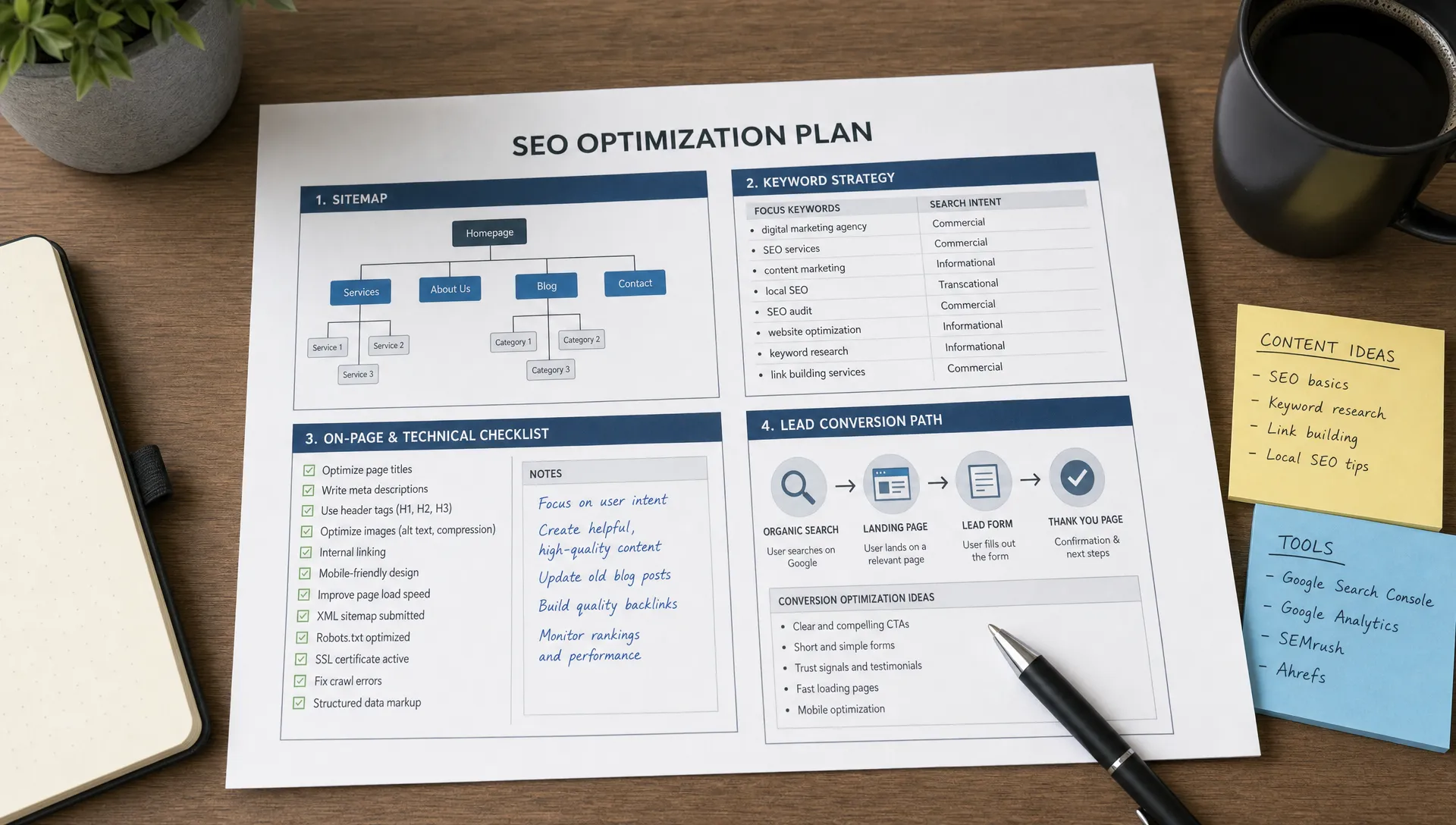
A printed SEO optimization plan on a desk with a sitemap, keyword notes, a performance checklist, and a lead conversion path arranged for review.

A technical SEO review should look at crawl errors, broken links, redirects, duplicate title tags, canonical tags, schema markup, mobile usability, page speed and security. If that sounds like a lot, prioritize pages that already receive impressions or support key services. Fixing a high-value page is usually more useful than polishing a page no one needs.

Strengthen Local and Industry Relevance

If your business serves a defined region, local SEO should be part of your website optimization plan. A Houston-based B2B agency, for example, should make its location and service area clear without stuffing city names into every sentence.

Local relevance comes from consistent business information, location-specific service pages where appropriate, a complete Google Business Profile, reviews, local citations and content that reflects the market you serve. A local service provider has to show relevance, proximity and trust. For instance, a dental clinic in Pakenham needs a different local SEO approach than a national industrial supplier because patients are usually searching for nearby care, appointment availability and service-specific trust signals.

The same principle applies to B2B. If you serve manufacturers, energy companies, distributors, medical suppliers or engineering firms, your content should reflect those buyers’ language and concerns. Generic marketing copy rarely performs as well as content that shows real understanding of the market.

Industry relevance can be strengthened through service examples, terminology, FAQs, project types, regulatory considerations and problem-specific pages. You do not need to overload the site with jargon, but you should sound credible to the people you want to reach.

Align SEO With Website Design and Conversion Paths

Traffic alone does not pay for marketing. Once the right visitor arrives, the page has to help them take the next step. That is why SEO and web design should not be treated as separate projects.

A high-performing SEO page needs a clear headline, fast loading experience, scannable structure, trust signals and a relevant call to action. It should be obvious whether the visitor should request a proposal, call, download a resource, view a service page or read a related guide.

This is especially important for industrial and B2B companies with longer sales cycles. Visitors may need to understand your capabilities, evaluate your experience and share the page internally before making contact. Strong page design supports that process by reducing friction.

If you are planning a redesign, include SEO before wireframes are finalized. Page hierarchy, navigation, content depth and calls to action all affect search performance. The article on planning SEO and website design together explains why design decisions can either support or weaken organic visibility.

Conversion-focused SEO asks two questions at the same time: can this page rank, and can this page persuade the right visitor to act? Both have to be true for SEO to become a reliable lead source.

Build Trust Signals Into Important Pages

Search visibility is stronger when your website looks credible to both users and search engines. Trust signals help visitors decide whether your company is real, experienced and capable.

For service pages, trust signals may include years in business, industries served, client types, certifications, testimonials, case studies, project photos, process details, team experience and clear contact information. Use only proof you can stand behind. Thin claims like “best in the industry” are less persuasive than specific experience and visible evidence.

Authoritative content also needs accuracy. If you discuss technical topics, cite known standards or name reputable sources when relevant. If regulations, platforms or best practices change, update older content so it does not mislead visitors.

For B2B marketing pages, trust can also come from transparency. Explain who your service is best for, what the process involves and what a prospect should expect after submitting a form. The more uncertainty you remove, the easier it is for qualified buyers to start a conversation.

Measure SEO Performance Beyond Rankings

Rankings are useful, but they are not the whole picture. A page can rank for the wrong query and deliver little business value. Another page may rank lower but attract visitors with stronger intent.

Track performance across the full path from search impression to lead. Google Search Console can show which queries produce impressions and clicks. Analytics tools can show engagement and conversion behavior. Your CRM or inquiry tracking can show whether those leads are qualified.

Useful SEO metrics include organic impressions, click-through rate, ranking movement, engaged sessions, form submissions, phone calls, proposal requests and lead quality. For B2B companies, lead quality should carry more weight than raw traffic.

Review your data monthly and look for practical decisions. If a page has many impressions but few clicks, improve the title and meta description. If a page gets traffic but no inquiries, review the offer, layout and call to action. If a page converts well but has low visibility, build supporting content and internal links around it.

For companies that want better performance from existing traffic, website optimization services that improve conversion rates can be just as important as adding new content.

A Simple SEO Improvement Checklist

If you want to improve SEO optimization for your website without getting overwhelmed, focus on the highest-impact areas first.

Priority Action Why it matters
Page intent Match each page to a clear searcher need Helps attract qualified visitors
Site structure Organize services, industries and resources logically Improves crawling and user navigation
On-page SEO Optimize titles, headings, URLs and internal links Clarifies page relevance
Content quality Answer buyer questions with useful detail Builds trust and supports rankings
Technical health Fix speed, mobile, crawl and index issues Removes performance barriers
Conversion path Add clear calls to action and proof Turns traffic into inquiries
Measurement Track leads, not only rankings Connects SEO to revenue potential

You do not need to fix everything in one week. Start with pages that matter most to revenue: core services, high-intent landing pages and pages already gaining impressions. Then build outward with supporting content and technical improvements.

Frequently Asked Questions

How long does it take to improve SEO optimization for a website? Some technical and on-page improvements can help quickly, especially if a site has obvious issues. Competitive organic growth usually takes several months because search engines need time to crawl changes, compare content quality and respond to new signals.

Should I optimize existing pages or create new content? Start with existing pages if they target important services or already receive impressions. Improving a page that has potential is often faster than publishing a new article. Create new content when you identify a real buyer question or search intent that your current site does not answer.

Is technical SEO more important than content? Technical SEO and content support each other. A technically clean website with weak content will struggle to persuade visitors. Strong content on a slow, confusing or poorly indexed site may not reach its audience. Prioritize the issue that is currently limiting performance most.

How often should SEO work be reviewed? Review core metrics monthly and perform deeper audits at least a few times per year. Also review SEO whenever you redesign the site, add major services, change business focus or notice a drop in impressions, clicks or leads.

Need Help Improving Your Website SEO?

If your website is not producing the visibility or leads your business needs, a structured SEO plan can help identify what is blocking performance. B2B Inbound Marketing helps businesses improve online visibility through SEO, PPC, inbound strategy, web content and related digital marketing services.

To discuss how your website can attract more qualified traffic and support better lead generation, visit Andy Alagappan and start with a practical review of where your site stands today.

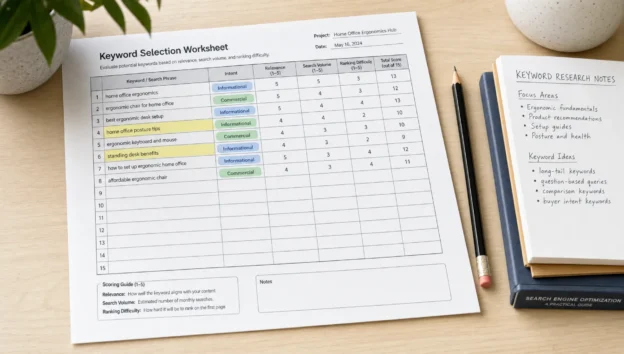
A keyword selection worksheet shows search phrases, intent labels, and a scoring grid beside a pencil and reference notes.

How to Choose Keywords for Search Engine Optimization

Choosing keywords for search engine optimization is not simply a research task. It is a business decision. The keywords you target influence the pages you create, the buyers you attract, the sales conversations you start and the leads your website can realistically generate.

For B2B, industrial, SaaS and professional service companies, the best keyword is rarely the one with the biggest search volume. A broad phrase may bring traffic, but a specific phrase tied to a service, problem, industry or location is often much closer to revenue. The goal is to choose keywords that connect search demand with your offer and your buyer’s stage of decision making.

Start With the Business Goal, Not the Keyword Tool

Before opening a keyword research platform, define what the website needs to achieve. A keyword list built without a business goal usually turns into a collection of disconnected phrases. Some may be popular, but they may not support sales.

Ask what kind of demand you want to capture. Are you trying to generate local service inquiries in Houston? Build authority in an industrial niche? Support a PPC campaign with organic landing pages? Educate early-stage buyers before they speak with sales?

A keyword can only be valuable if it supports a measurable outcome.

Business goal What to look for in keywords Best page type
Generate service leads Service, location and problem phrases Service page or local landing page
Educate early-stage buyers Questions, definitions and process phrases Blog article or guide
Support complex B2B sales Comparison, cost, ROI and use case phrases Decision-stage article or solution page
Improve lead quality Industry, application and buyer-role qualifiers Specialized landing page

This is especially important in industrial marketing, where a phrase with 50 monthly searches can be more valuable than a broad phrase with thousands if the searcher is looking for a specific capability.

Separate Search Intent From Search Volume

Search volume tells you how often a phrase is searched. Search intent tells you what the searcher wants to accomplish. Intent matters more because it determines whether your page can satisfy the searcher and produce a useful business result.

For example, someone searching for what is SEO may be learning. Someone searching for B2B SEO agency Houston is likely comparing providers. Someone searching for industrial SEO services may already understand the problem and want a vendor with specific experience.

Intent type What the searcher wants Example keyword pattern Best content approach
Informational Learn or define a concept What is keyword research Clear educational article
Commercial investigation Compare options or approaches Best SEO strategy for manufacturers Guide, comparison or checklist
Service intent Find a provider or solution Industrial SEO agency Houston Service page with proof and CTA
Problem-solving Fix a specific issue Why industrial website traffic is not converting Diagnostic article with next steps

When choosing keywords, open the search results and study what currently ranks. If most results are service pages, Google is likely interpreting the query as vendor-driven. If the results are mostly tutorials or definitions, an educational article is a better fit.

Build a Seed List From Real Buyer Language

Keyword tools are useful, but they should not be your first source. Start with the language buyers already use when they talk to your sales team, submit forms, send RFQs or describe problems in discovery calls.

A strong seed keyword list can come from:

  • Sales call notes and proposal requests
  • Questions prospects ask before buying
  • Product or service categories on your website
  • Industry standards, applications and materials
  • Customer pain points and objections
  • PPC search term reports and Google Search Console data
  • Competitor page titles and navigation labels

If you need a deeper foundation, this guide on what keyword research is and why it matters explains how keyword research connects search behavior with content planning.

At this stage, do not worry about perfect phrasing. Capture broad topics, service names, customer problems, industry terms and location modifiers. Refinement comes later.

Evaluate Keywords Using Business Value Criteria

A keyword is not good or bad in isolation. It is good if your company can create the right page, satisfy the searcher and convert some portion of that demand into a qualified next step.

Use these criteria before adding a keyword to your SEO plan.

Criterion What to ask Why it matters
Relevance Does this phrase match what we sell or want to be known for? Prevents traffic that will not convert
Intent Is the searcher learning, comparing or ready to contact a provider? Determines content format and CTA
Specificity Does the keyword include an industry, problem, location or use case? Helps qualify visitors
Ranking difficulty Can our site realistically compete for this term? Keeps priorities practical
SERP fit Can we create the type of page Google is rewarding? Improves ranking potential
Conversion value Would a lead from this search be worth pursuing? Aligns SEO with revenue

This approach keeps keyword selection grounded. It also helps prevent the common mistake of chasing impressive traffic numbers while ignoring sales fit.

Favor Specificity in B2B and Industrial SEO

Broad keywords are tempting because they look important. The problem is that they often attract mixed audiences. A phrase like manufacturing marketing could include students, job seekers, agencies, software vendors or manufacturers trying to solve a lead generation problem.

Specific keywords reduce ambiguity. They may include a location, industry, process, material, software category, application or buyer role.

Broad keyword More qualified keyword Why the qualified version is stronger
SEO services industrial SEO services Houston Adds industry and location intent
inbound marketing B2B inbound marketing agency Filters for business buyers
website redesign manufacturing website redesign Connects to a specific market
PPC management PPC management for industrial companies Signals service fit and buyer need

The same principle applies outside industrial markets. For example, a company in a specialized category such as music IP enforcement would not build its SEO strategy around a broad phrase like music marketing. A platform built to monitor IP usage across social platforms would choose keywords tied to rights holders, licensing workflows, unauthorized music use, sync opportunities and social UGC because those phrases reflect the buyer’s real problem.

Specificity does not mean using awkward, overlong phrases everywhere. It means choosing keywords that reflect how serious buyers describe their needs.

Create a Simple Keyword Priority Score

Once you have a keyword list, score each term so priorities are not based on opinion. A simple 1 to 5 score works well for most teams.

Scoring factor 1 point 3 points 5 points
Business relevance Weak connection to offer Related to a service area Directly tied to revenue
Search intent Mostly informational and broad Mixed intent Clear buyer or problem intent
Competition Very difficult Moderate Realistic opportunity
Content fit Hard to answer well Possible with research Strong internal expertise
Conversion potential Unlikely to produce leads Some lead potential Strong lead potential

Add the scores and rank the terms. A lower-volume keyword with a high business score should often outrank a high-volume keyword with poor relevance.

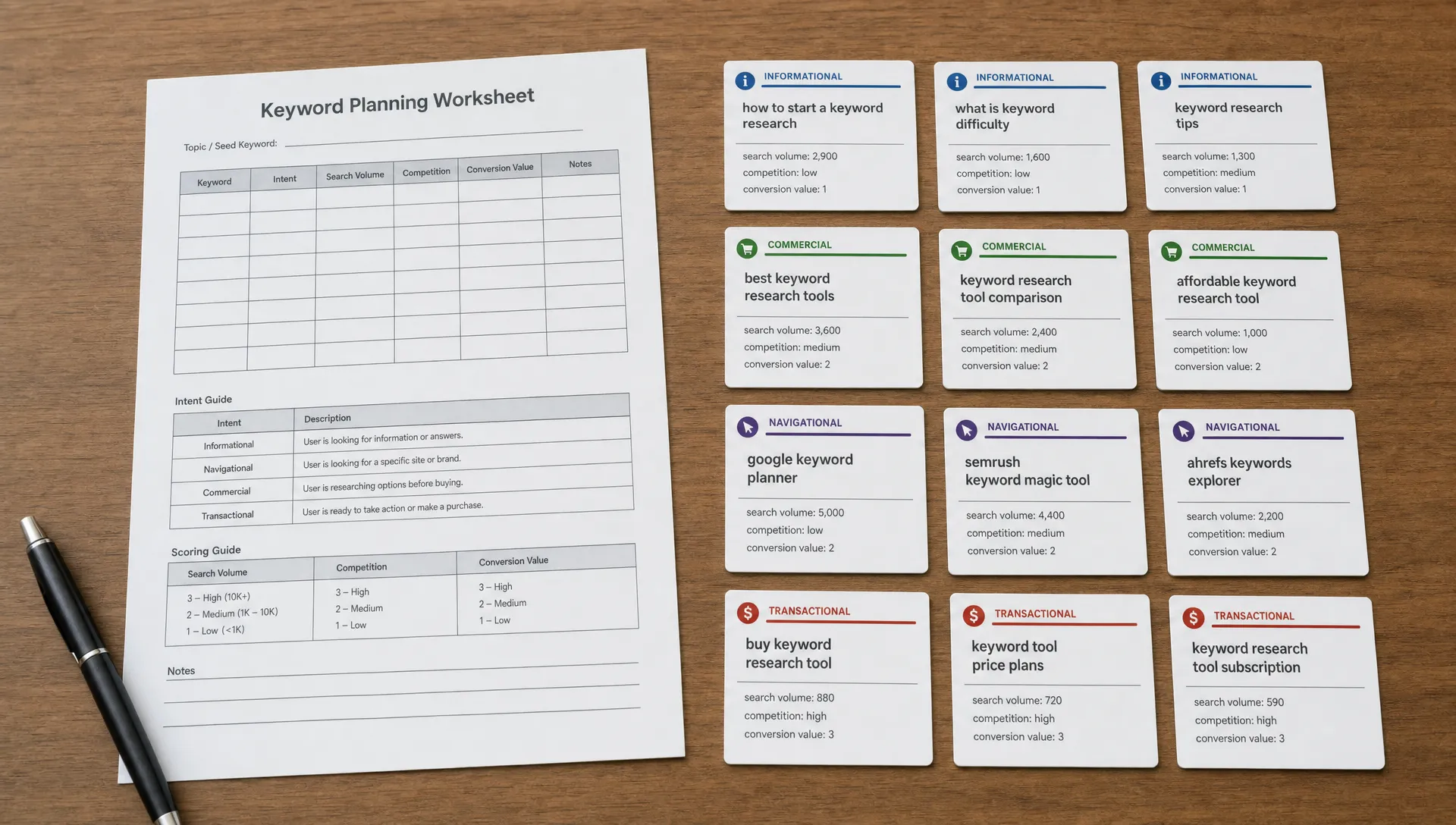
Printed keyword cards sit beside a page planning worksheet, grouped by buyer intent, search volume, competition, and conversion value.

Match Each Keyword to the Right Page Type

Choosing the keyword is only half the work. The next step is deciding what kind of page should target it. A keyword with service intent should not usually be buried inside a blog post. A definition keyword should not be forced onto a sales page.

Google Search Central recommends creating helpful, reliable, people-first content, and that starts with matching the page to the searcher’s task. The page should answer what the searcher came to solve, then guide them to the next logical step.

If the search result shows The searcher likely wants Create this type of page
Guides and definitions Education Blog article or resource page
Service providers A vendor or quote Service landing page
Comparison articles Evaluation help Comparison or buying guide
Local map results Nearby provider Local service page
Videos and visual results Demonstration Video-supported article or landing page

If your keyword requires a content page, focus on depth, structure and usefulness rather than repeating the phrase. This article on search engine optimization content writing that ranks offers practical guidance on turning keyword intent into content that can compete.

Group Keywords Into Topics, Not Isolated Pages

Modern SEO works best when related keywords support each other. Instead of creating one thin page for every variation, group similar phrases into topical clusters.

For example, a company offering industrial SEO might build a topic cluster around industrial digital marketing. Supporting pages could cover industrial SEO, PPC for manufacturers, technical website audits, lead generation for manufacturers and website redesign for industrial companies. Each page has its own primary intent, but the cluster signals topical depth.

A practical cluster should include:

  • One primary page for the main service or topic
  • Supporting articles for common questions and objections
  • Internal links between related pages
  • Clear conversion paths from educational content to service pages

This prevents keyword cannibalization, where several pages compete against each other for the same search intent. It also makes your website easier for buyers to navigate.

Account for Local and Regional Search Intent

For Houston businesses, location can be a major keyword qualifier. A local modifier often signals that the buyer wants a provider with regional knowledge, availability or market familiarity.

That does not mean every page should repeat Houston unnaturally. Use location when it reflects genuine buyer intent. A phrase like B2B marketing Houston may deserve a service page. A national educational topic, such as how to choose keywords for SEO, may not need heavy local optimization.

Local keyword modifiers can include city names, nearby regions, industrial corridors, service areas and industry-specific local terms. Use them where they help the reader understand fit.

Validate Keywords With Real Performance Data

Keyword selection should improve over time. After publishing or optimizing pages, use performance data to refine your choices.

Review Google Search Console to see which queries generate impressions, clicks and position changes. Compare that with form submissions, calls, proposal requests or CRM data. The best SEO keyword is not always the one with the highest click-through rate. It is the one that attracts visitors who take meaningful next steps.

PPC data can also help. Paid search campaigns show which terms convert faster than organic SEO can. If a paid keyword consistently produces qualified leads, it may deserve an organic landing page or supporting article.

Sales feedback matters too. If your SEO content is producing leads that are too small, outside your service area or mismatched to your offer, the keyword strategy needs refinement.

Common Keyword Selection Mistakes to Avoid

Even experienced teams can choose the wrong SEO keywords when they rely too heavily on tools or assumptions.

Watch for these mistakes:

  • Choosing keywords only because they have high search volume
  • Targeting the same keyword with multiple pages
  • Ignoring the type of content already ranking in search results
  • Using internal jargon that buyers do not search for
  • Treating every blog post as a lead generation page
  • Forgetting local, industry or application qualifiers
  • Building a keyword list once and never updating it

The strongest keyword strategies are reviewed regularly. Markets change, competitors publish new content, buyers use new language and your own services may evolve.

A Practical Keyword Selection Framework

If you want a simple process, use this sequence:

  1. Define the business goal for SEO.
  2. Identify your ideal buyers and the problems they search for.
  3. Build a seed list from customer language, sales data and existing pages.
  4. Expand the list with keyword tools and search result analysis.
  5. Score each keyword for relevance, intent, difficulty and conversion value.
  6. Map keywords to page types based on search intent.
  7. Group related keywords into topic clusters.
  8. Measure rankings, traffic and lead quality after publishing.

This framework keeps keyword selection practical. It also helps marketing and sales teams agree on which search opportunities deserve investment.

Frequently Asked Questions

How many keywords should I target on one page? Target one primary keyword or search intent per page, then include closely related variations naturally. A page can rank for many related terms, but it should have one clear purpose.

Should I choose high-volume or low-competition keywords? Choose keywords with the best mix of relevance, intent, realistic competition and conversion value. High volume is useful only when the traffic matches your business goals.

Are long-tail keywords better for B2B SEO? Long-tail keywords are often valuable in B2B because they reveal a more specific problem, industry or buying need. They usually attract less traffic, but the traffic can be more qualified.

How often should I update my keyword list? Review priority keywords at least quarterly, and update them whenever your services, market, competitors or sales feedback change. SEO keyword selection is an ongoing process, not a one-time task.

Do keywords still matter for search engine optimization? Yes. Keywords still help define topics, intent and page structure. The difference is that successful SEO uses keywords to serve the searcher, not to stuff repeated phrases into a page.

Turn Keyword Research Into Better Leads

Choosing the right keywords is the starting point. The real value comes from turning those keywords into useful pages, strong calls to action and a content strategy tied to qualified leads.

If your company needs help connecting SEO, PPC and inbound marketing strategy, B2B Inbound Marketing can help you build a practical search plan focused on visibility, rankings and lead generation.

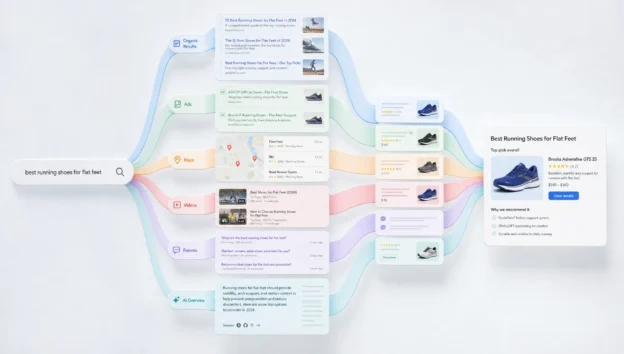
Two professionals review search queries, ad notes, and lead markers beside a campaign flow for SEO and online marketing.

How SEO and Online Marketing Work Better Together

SEO gets the credit for rankings, but rankings are only one part of how a business wins online. A potential customer still has to recognize your company, trust your expertise, understand your offer, compare options and decide to take the next step. That is where SEO and online marketing work better as one system rather than separate activities.

For B2B and industrial companies, this matters even more. Buyers often research quietly before contacting sales. They search for technical answers, visit several vendor websites, compare capabilities and look for proof that a company understands their industry. SEO helps them find you. Online marketing helps keep them engaged long enough to become a qualified lead.

The difference between SEO and online marketing

SEO, or search engine optimization, focuses on improving organic visibility in search engines. It includes keyword research, technical optimization, content planning, on-page improvements, internal linking, local signals and authority building. A clear SEO program helps your pages appear when prospects search for problems, products, services or suppliers related to your business.

Online marketing is broader. It includes SEO but also pay-per-click advertising, social media marketing, inbound campaigns, video marketing, landing pages, web content, email nurturing, conversion optimization and website design. These channels work together to move a prospect from initial awareness to a sales conversation.

If your team is still treating SEO as a technical checklist, it may help to rethink the role of search in business decisions. A practical SEO definition marketing teams can use connects keywords, content and rankings to lead quality, sales intent and revenue opportunities.

Why SEO alone rarely captures the full opportunity

SEO is powerful because it compounds over time. A strong technical foundation and useful content can continue attracting qualified visitors long after the page is published. The challenge is that organic traffic does not automatically become pipeline.

A visitor may read one article and leave. A purchasing manager may bookmark your page and return weeks later. An engineer may share a product page internally but never fill out a form. A business owner may search your company name after seeing your ad, social post or video. If your marketing systems are disconnected, those touchpoints are easy to miss.

SEO brings search intent into your website. Online marketing turns that intent into a connected experience. Paid campaigns can test messages quickly. Social media can reinforce credibility. Video can explain complex services. Web design can guide visitors toward the right action. Content can answer objections before sales gets involved.

The real advantage is not choosing between SEO and other marketing channels. The advantage comes from making each channel better because of what the others reveal.

How integrated search and online marketing multiply results

Buyer intent becomes the campaign foundation

Search data shows what your market is asking for. It reveals pain points, product terminology, local modifiers, comparison terms and industry language. When SEO research is shared across the marketing team, those insights can shape much more than web pages.

The same buyer intent can inform PPC campaigns, landing page copy, social content, video topics, sales enablement material and lead magnet ideas. For example, if prospects frequently search for emergency pump repair in Houston, that phrase is not only an SEO target. It can become a paid ad group, a service page, a short explainer video and a social post that speaks directly to plant managers dealing with downtime.

PPC accelerates what SEO learns slowly

SEO often takes time because search engines need to crawl, index and evaluate content. PPC can produce feedback faster. Ad campaigns show which keywords attract clicks, which messages generate form submissions and which landing pages convert at a profitable rate.

That paid search data can improve SEO priorities. If a phrase converts well in PPC, it may deserve a stronger organic landing page. If a headline increases paid conversions, it may also improve organic page titles or meta descriptions. If a keyword burns budget without qualified leads, it may not be worth heavy SEO investment.

For businesses weighing both channels, the benefit is not just more traffic. A combined approach improves decision-making, which is why SEO and PPC campaigns often perform better together than either channel does in isolation.

Content builds trust after the click

Search visibility gets a prospect to your website, but content gives them a reason to stay. This is especially true in complex markets where buyers need evidence, not slogans. They want to see specifications, applications, comparisons, case-based explanations, service areas, process details and practical answers.

A company offering specialized products, such as crypto mining hardware and hosting solutions, cannot rely only on generic visibility. Buyers need to understand equipment options, hosting reliability, repair support and operating considerations before they feel confident enough to inquire. The same principle applies to industrial suppliers, B2B service firms and technical contractors. SEO attracts the searcher, but useful online marketing content builds the confidence needed to take action.

Social and video extend the life of search content

A well-researched SEO article should not sit quietly on the website. It can be repurposed into LinkedIn posts, short videos, email snippets, sales talking points and PPC landing page copy. This extends the reach of the original search work and gives prospects more ways to encounter the same message.

Video is particularly helpful when the service is hard to explain in a few lines of text. A short video can show a process, introduce a facility, answer a common question or explain what happens after a prospect requests a quote. When the video is embedded on a relevant page and supported with optimized copy, it can support both user experience and search performance.

Web design turns attention into action

Traffic without clear next steps creates waste. SEO can bring the right visitor to a page, but web design decides whether that visitor understands the offer, trusts the company and knows how to proceed.

Good design supports SEO through fast loading pages, clear navigation, mobile usability, logical site structure and readable content. It supports lead generation through visible calls to action, strong page hierarchy, trust signals and forms that do not create unnecessary friction. For a deeper look at this connection, review how SEO and web design services drive better conversions.

Marketing function When it works alone When it works with SEO
PPC Generates fast traffic but can become expensive without learning loops Tests keywords, offers and messaging that improve organic priorities
Social media Builds awareness but may not capture active demand Promotes SEO content and keeps the brand visible between searches
Web design Improves appearance but may miss search intent Creates pages that rank, inform and convert qualified visitors
Content writing Publishes useful information but may lack targeting Answers real search questions and supports each stage of the buyer journey
Video marketing Explains services visually but may be hard to discover Enhances optimized pages and increases engagement with complex topics

A conference table holds keyword research, campaign notes, and website page sketches in a clear workflow.

A practical framework for making SEO and online marketing work together

Integration does not require a complicated technology stack. It requires a shared plan. When SEO, paid media, content and web design are planned around the same business goals, each channel becomes easier to measure and improve.

Start with the business goal

Before choosing keywords or campaigns, define the commercial objective. Do you need more quote requests from Houston manufacturers? More distributor inquiries? More service calls from a specific region? More visibility for a new product line?

A goal like increase traffic is too vague. A goal like increase qualified RFQ submissions from industrial buyers in Texas gives the marketing team a clearer target. It affects keyword selection, page structure, ad targeting, content depth and conversion tracking.

Build a shared keyword and audience map

A useful keyword map should include more than search volume. It should identify intent, buyer stage, location relevance, industry language and the likely next step. Some terms are informational, such as how does industrial dust collection work. Others are commercial, such as industrial dust collector supplier Houston.

When everyone uses the same map, campaigns become more consistent. PPC avoids bidding on terms that SEO is already winning unless extra visibility is valuable. Content writers understand which questions matter. Designers understand which pages need stronger calls to action. Sales teams can tell marketing which terms produce better conversations.

Turn core pages into campaign hubs

Your most important service and product pages should not be passive brochures. They should act as hubs for search, ads, social posts and sales follow-up. A strong hub page usually includes a clear explanation of the service, buyer-specific benefits, common applications, supporting content, proof points and a direct conversion path.

From there, related blog posts can answer specific questions and link back to the hub. PPC campaigns can send high-intent visitors to a focused version of the page. Social updates can highlight individual sections. Sales can use the same page when responding to prospects who need background information.

Use paid and organic data together

Search Console, analytics platforms, ad reports and CRM feedback should not live in separate silos. If organic traffic is increasing but leads are poor, the issue may be intent mismatch. If PPC leads are strong but expensive, SEO may be able to capture more of that demand over time. If a page gets traffic but few inquiries, the issue may be copy, layout or offer clarity.

Useful performance indicators include:

  • Organic visibility for commercially relevant keywords
  • Paid conversion rate by keyword group
  • Landing page conversion rate by source
  • Form submissions that become qualified sales conversations
  • Cost per qualified lead across paid and organic channels
  • Assisted conversions from visitors who return through multiple channels

The goal is not to give every channel equal credit. The goal is to understand how buyers actually move through the decision process.

What this means for B2B and industrial companies

B2B and industrial marketing often involves longer buying cycles, multiple stakeholders and technical requirements. A plant manager may care about uptime. A purchasing team may care about vendor reliability. An engineer may care about specifications. An owner may care about cost, risk and speed.

SEO can create entry points for each of those concerns. Online marketing can connect those entry points into a stronger journey. A technical article may attract engineers. A service page may convert urgent buyers. A PPC campaign may capture high-intent searches. A case-focused post on LinkedIn may reassure executives. A redesigned landing page may reduce friction for quote requests.

For Houston businesses, local relevance also matters. Prospects may search with regional terms because they want local service, faster response or knowledge of Gulf Coast industries. SEO can capture those searches, but online marketing can reinforce the local advantage through location-specific landing pages, targeted ads, relevant content and clear contact paths.

Common mistakes that keep SEO and online marketing separated

Many companies do not fail because they ignore marketing. They fail because each activity is planned in a vacuum. The SEO vendor works on rankings, the ad team works on clicks, the designer works on appearance and the sales team judges leads after the fact.

Mistake Better approach
Choosing SEO keywords without sales input Ask sales which terms, industries and problems produce better-fit leads
Sending paid traffic to generic pages Build landing pages that match the ad promise and buyer intent
Publishing content without conversion paths Add relevant next steps, internal links and inquiry options
Redesigning a site without SEO planning Protect rankings, improve structure and align pages with search demand
Measuring traffic without lead quality Track which sources produce qualified conversations and opportunities

The fix is usually coordination, not more activity. A smaller number of well-aligned campaigns can outperform a larger number of disconnected tactics.

Frequently Asked Questions

How do SEO and online marketing work together? SEO helps prospects find your business through organic search. Online marketing supports the rest of the journey through paid ads, content, social media, video, web design and conversion strategy. Together, they attract better traffic and give visitors more reasons to become leads.

Is SEO more important than PPC? It depends on the goal and timeline. SEO is valuable for long-term visibility and compounding traffic. PPC is useful for speed, testing and highly targeted campaigns. Many B2B companies get better results when PPC data informs SEO and SEO reduces long-term dependence on paid clicks.

Can social media help SEO? Social media does not replace SEO, but it can expand the reach of optimized content. When useful articles, videos and landing pages are shared with the right audience, they can generate more brand searches, engagement and referral traffic.

What should be planned first, SEO or web design? They should be planned together. Site structure, navigation, page speed, mobile usability and content layout all affect search performance and conversions. Designing first and adding SEO later often leads to rework.

How long does it take to see results from an integrated strategy? PPC can produce data quickly, sometimes within weeks. SEO usually takes longer because organic visibility builds over time. The best timeline depends on competition, website condition, content quality and campaign consistency.

Turn visibility into measurable demand

SEO and online marketing work better together because buyers do not move in a straight line. They search, compare, leave, return, ask internal questions and look for reasons to trust a provider. Your marketing needs to support that full path.

B2B Inbound Marketing helps businesses improve online visibility through SEO, PPC, inbound strategy, social media marketing, video SEO, web-related services and content support. If your website is getting traffic but not enough qualified leads, the next step is to align search, campaigns and conversion strategy around the same business goal.

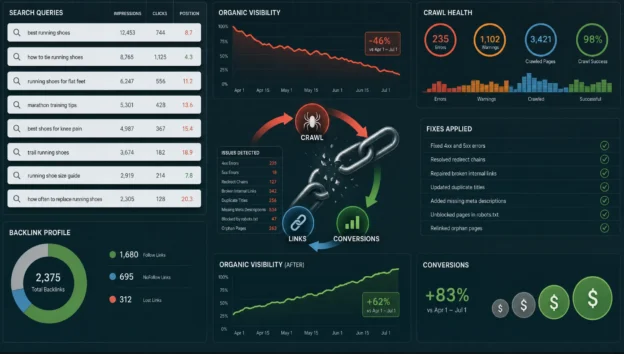
Layered search signals, links, and trend lines suggest repairing organic visibility.

Why Search Rankings Drop and How to Recover Fast

A sudden drop in search rankings can feel like a sales problem before it looks like an SEO problem. Qualified traffic slows, RFQ volume gets softer and sales teams start asking why familiar keywords no longer bring in the same opportunities.

The good news is that most ranking drops are diagnosable. Some are caused by temporary volatility, but many come from a small group of issues: crawl problems, content decay, competitor gains, lost links, search intent changes or an algorithm update. Fast recovery starts with separating a real ranking loss from normal movement, then fixing the pages that matter most to revenue.

For B2B and industrial companies, the goal is not to chase every keyword. It is to restore visibility for the terms buyers use when they are researching vendors, specifications, capabilities, service areas or solutions.

First, confirm what actually dropped

Search rankings fluctuate every day. A one-position movement on a low-value keyword is not the same as losing page-one visibility for a high-intent service page. Before changing pages or launching a broad content rewrite, confirm whether the decline is in rankings, impressions, clicks, leads or all of them.

Google Search Console should be your first stop because it shows performance directly from Google Search. Google Analytics, CRM data and call tracking help you connect visibility loss to pipeline impact. If your site serves several markets, segment by product line, location and buyer intent rather than looking only at total organic sessions.

Signal What it may mean Where to check first
Rankings dropped but impressions stayed stable Competitors or SERP features are taking clicks Search Console queries and SERP review
Impressions dropped sharply Indexing, crawlability, demand shift or algorithm impact Search Console pages, sitemaps and index reports
Clicks dropped but average position did not Lower click-through rate, new ads or richer SERP features Search Console and live search results
Traffic dropped but leads stayed stable Lost low-intent visits, not necessarily a business problem Analytics and CRM lead quality
Leads dropped faster than traffic High-converting pages or forms may be affected Analytics, form tracking and call tracking

This distinction matters. If informational blog traffic fell but high-intent RFQ pages still perform, your recovery plan will look different from a situation where core product, service or location pages lost visibility.

Why search rankings drop

Ranking drops usually have more than one cause, but one factor often explains most of the damage. Start with the causes that can create the largest swing in the shortest time.

Technical changes blocked or confused search engines

A redesign, CMS migration, hosting change or plugin update can accidentally tell search engines to ignore important pages. Common issues include noindex tags, blocked robots.txt rules, broken redirects, incorrect canonical tags, missing internal links and slow server responses.

Technical mistakes can cause sudden ranking losses because Google may stop crawling, indexing or trusting the affected URLs. If the drop happened shortly after a launch, deployment or hosting change, treat technical SEO as the first suspect.

Content no longer matches buyer intent

Search intent changes over time. A page that ranked well two years ago may now be too shallow, too sales-heavy or too broad for the current results. In industrial SEO, this often happens when competitors add specification tables, application examples, tolerances, compliance details, FAQs or clearer service-area content.

Content decay is not always about age. A page can be recent and still miss intent if it does not answer the questions buyers ask before contacting a vendor.

Google changed how it evaluates the topic

Core updates and spam updates can shift search rankings across many pages at once. Google does not usually penalize a site during a core update in the traditional sense. More often, its systems reassess which pages are most helpful for a query.

If the timing lines up with a confirmed update and several page types declined together, read the drop as a relevance and quality signal. A short-term technical patch will not be enough. You will need to improve content usefulness, trust signals and topical coverage. For a deeper look at update-related changes, this related article on Google’s core update explains how broad updates can affect visibility.

Competitors improved their pages

Your rankings can drop even when you did nothing wrong. A competitor may publish a stronger buying guide, earn better links, improve page speed, add product data or consolidate several thin pages into one authoritative resource.

This is common in B2B markets where a few suppliers compete for the same high-value terms. If a competitor moved above you, compare the page experience, depth, internal links, supporting content and proof signals. Do not copy their page. Identify what they satisfy that your page currently leaves unanswered.

External backlinks still help Google understand credibility and relevance. If a strong industry directory, association profile, distributor listing or partner page removed its link to your site, rankings may soften. Internal links matter too. During redesigns, companies often remove navigation links to older but valuable pages, which weakens their importance in the site structure.

Lost links rarely explain every ranking change, but they can tip competitive pages out of the top positions.

The search results page changed

Sometimes rankings stay similar but traffic falls because the search results page changed. More ads, local packs, video results, AI summaries, shopping elements or featured snippets can reduce clicks to organic listings. For some queries, ranking number three today may produce fewer visits than ranking number five did in the past.

This is why you should review live SERPs for your most valuable terms instead of relying only on rank-tracking software.

A fast diagnostic workflow

Google’s own guide to debugging Search traffic drops recommends comparing performance by date range, query, page and search appearance. That is the right starting point because a total traffic chart hides the source of the problem.

Use a practical workflow that moves from broad signals to specific fixes:

  1. Mark the drop date: Identify the first day rankings, impressions or clicks declined. Compare it with known site changes, Google updates, server issues and marketing campaigns.
  2. Separate branded and non-branded queries: A drop in branded searches may point to demand, reputation or offline marketing changes. A drop in non-branded searches is more likely an SEO issue.
  3. Find the affected page types: Group losses by product pages, service pages, blog posts, location pages, case studies or technical resources.
  4. Check indexing and crawl signals: Look for noindex tags, canonical changes, redirect chains, crawl errors, sitemap exclusions and blocked resources.
  5. Compare current pages with cached assumptions: Review what changed in titles, headings, body copy, schema, internal links, page templates and conversion elements.
  6. Review the SERP manually: Search the affected terms and note whether competitors, ads, local results, videos or AI results changed the click opportunity.
  7. Prioritize by revenue impact: Fix high-intent, lead-generating pages before low-value informational pages.

The fastest recovery usually comes from technical fixes or restoring removed content. Content quality and authority issues take longer, but you can still make meaningful progress quickly by focusing on the pages that drive pipeline.

A marketer reviews search performance charts, affected landing pages, and crawl signals on a desk with recovery notes.

How to recover search rankings fast

Fast does not mean reckless. The worst response is to rewrite everything, change every title tag and disavow links without evidence. Recovery should be controlled, documented and tied to the likely cause.

Start with the first 48 hours

In the first two days, your job is to stop further damage and fix obvious blockers. Freeze unnecessary site changes until the issue is understood. Confirm that important pages are indexable, canonicalized correctly and linked from relevant areas of the website.

If a redesign or migration caused the drop, test redirects from old URLs to new URLs. A missing 301 redirect from an old high-performing page can erase years of earned value. Also check whether old page copy, technical details, FAQs or supporting sections were removed during the redesign. Many redesigns look better but rank worse because useful content was cut.

Restore what was working

If a page ranked well before a recent edit, compare the previous version with the current one. Restoring lost sections, internal links, product specifications or headings can recover visibility faster than creating a completely new page.

For B2B websites, do not remove practical information just because it looks dense. Buyers often want details before they contact sales. Capabilities, applications, materials, tolerances, industries served, standards and service areas can all help a page satisfy intent.

Refresh pages instead of rewriting blindly

When content decay is the issue, update pages with intent-matching improvements. Add missing buyer questions, clarify service fit, include proof points and make the page easier to scan. A strong page should help the visitor decide whether your company is relevant, qualified and worth contacting.

If you need a structured approach to improving page copy without over-optimizing, this guide to search engine optimization content writing that ranks covers how to align useful content with search visibility.

Internal links are one of the fastest levers you control. Link from relevant service pages, blog posts, case studies and navigation elements to the pages that lost rankings. Use natural anchor text that describes the page, not generic phrases.

For example, if a machining capabilities page dropped, link to it from related materials pages, industry pages and technical articles. This helps search engines understand which page is central to the topic and helps users move toward conversion.

Update titles and meta descriptions with care

Title tags can affect both relevance and click-through rate. If a title became vague during a redesign or no longer reflects the page’s main intent, improve it. Keep the primary topic clear, add a useful qualifier where appropriate and avoid stuffing terms.

Meta descriptions do not directly raise rankings, but they can influence clicks when they match the searcher’s need. A better snippet can soften traffic loss when the SERP becomes more competitive.

Rebuild authority where it is genuinely relevant

If competitors gained stronger industry links or you lost important references, rebuild authority through legitimate sources. Supplier profiles, industry associations, trade publications, customer resources, partner pages and high-quality thought leadership can help.

Avoid low-quality link packages. They can create more risk than value. For industrial and B2B companies, credible links usually come from real business relationships and useful expertise.

Recovery actions by likely cause

Use the table below to match the symptom with a practical recovery response.

Likely cause Common signs Fast recovery action
Noindex or robots issue Pages disappear from results or impressions fall sharply Remove blocking directives, request indexing and resubmit sitemap
Bad redirects after migration Old URLs lost rankings and new URLs do not replace them Restore one-to-one 301 redirects and update internal links
Content removed during redesign Rankings drop after launch but pages still index Restore useful sections, FAQs, specs and supporting copy
Search intent shift Competitors rank with deeper or differently structured pages Expand the page to match buyer questions and current SERP expectations
Lost internal links Important pages are harder to reach from navigation or hubs Add contextual links from relevant high-authority pages
Competitor improvement One or two competitors pass you across related terms Improve topical depth, proof signals, UX and supporting content
Algorithm update Several page types decline around the same date Improve usefulness, trust, originality and site-wide quality signals
SERP layout change Position is stable but clicks decline Improve titles, descriptions, rich results eligibility and alternative content formats

Not every fix produces an immediate bounce. Technical and indexing corrections can show movement within days, depending on crawl frequency. Content and authority improvements often need several weeks because search engines must recrawl, reassess and compare your page against alternatives.

What B2B and industrial companies should prioritize

A ranking drop is only urgent when it affects business outcomes. For an industrial supplier, one lost keyword tied to a high-margin service may matter more than hundreds of lost blog visits. Prioritize pages that support RFQs, distributor inquiries, local service calls or enterprise sales conversations.

The most valuable recovery work usually focuses on:

  • Product and service pages that map to buyer intent
  • Location pages that support local or regional demand
  • Technical resources that earn trust before a sales call
  • Case studies and proof pages that support evaluation
  • Comparison or application pages that help buyers choose a solution

Trust content matters when a searcher needs proof before taking action. This is obvious in regulated industrial markets, but it is also true in public-facing technology efforts, including civic technology initiatives like JustSocial, where participation depends on clarity, transparency and confidence.

For B2B search, rankings are not just a visibility metric. They shape credibility before the first conversation. A buyer who repeatedly sees your company for relevant technical questions, service needs and local searches is more likely to recognize your brand when it is time to request a proposal.

If your recovery plan turns into a broader growth plan, focus on durable SEO rather than short-term tactics. The principles in search engine optimization for business growth that lasts are useful once the immediate ranking drop is under control.

Mistakes that slow down recovery

Panic changes can make diagnosis harder. If you change titles, rewrite copy, switch templates and adjust internal links all at once, you will not know what helped or hurt.

Avoid these common mistakes:

  • Rewriting every page before identifying which URLs lost visibility
  • Deleting older content that still earns qualified traffic
  • Treating every ranking drop as a backlink problem
  • Ignoring technical SEO after a redesign
  • Measuring recovery only by total organic traffic instead of qualified leads
  • Chasing high-volume keywords that do not match buyers

A disciplined recovery process creates a record of what changed, why it changed and what happened afterward. That record becomes valuable the next time rankings move.

How to prevent the next drop

You cannot prevent every algorithm shift or competitor move, but you can reduce the risk of avoidable losses. Create a simple SEO change-control process for redesigns, migrations and major content updates. Before launch, review redirects, indexation rules, page titles, heading structure, internal links, structured data and analytics tracking.

Schedule content reviews for your highest-value pages at least a few times per year. In B2B and industrial markets, offerings, certifications, equipment, applications and buyer questions change. Your content should change with them.

Also monitor rankings alongside business metrics. A lower ranking for a low-intent post may not matter. A small drop on a bottom-funnel page may need immediate action. The best SEO reporting connects search visibility to pipeline, not just sessions.

Frequently Asked Questions

How long does it take to recover from a rankings drop? Technical fixes can sometimes show improvement within days after Google recrawls the affected pages. Content, authority and algorithm-related recoveries usually take several weeks or longer, depending on competition and crawl frequency.

Should I wait before making changes after a Google update? Do not make random changes on day one. Confirm the affected pages and compare them with current top-ranking results. If the issue is clearly technical, fix it immediately. If it appears quality-related, plan thoughtful improvements.

Can a website redesign cause search rankings to drop? Yes. Redesigns can remove useful content, change URL structures, break redirects, weaken internal links or add crawl blockers. A redesign should include SEO testing before and after launch.

Are lost backlinks always the reason rankings fall? No. Backlinks can matter, but ranking drops often come from technical issues, content mismatch, competitor improvements, SERP changes or broader quality reassessment. Check links as part of the diagnosis, not as the only explanation.

When should a company bring in SEO help? Bring in help when the drop affects leads, spans several important pages, follows a migration or persists after basic technical checks. An outside review can shorten diagnosis and prevent costly trial-and-error changes.

Need help diagnosing a ranking drop?

If your search rankings have fallen and the cause is not obvious, B2B Inbound Marketing can help you identify what changed, prioritize the pages that affect revenue and build a practical recovery plan. The Houston-based team works with B2B and industrial companies on SEO, PPC, inbound strategy, web content and site improvements that support qualified lead generation.

If the decline is tied to a redesign, migration, algorithm update or long-term visibility loss, it may also be time to review when to hire search engine optimization consultants before the problem becomes harder to reverse. To discuss your site and next steps, visit B2B Inbound Marketing.

Search results branch into organic listings, ads, maps, videos, and an inquiry card in one flow.

7 SEO Strategies That Still Move Rankings in 2026

Rankings still matter in 2026, but the work that moves them has become more selective. Search results now blend organic listings, ads, maps, videos, AI-assisted summaries, forums and product results. A page does not win because it repeats a keyword more often. It wins when it gives search engines and buyers the clearest reason to trust it.

For Houston B2B and industrial companies, that distinction matters. Traffic is useful only if it brings engineers, plant managers, procurement teams, distributors or business owners closer to a conversation. The strongest SEO strategies in 2026 are not shortcuts. They are practical habits that make your website easier to understand, easier to verify and easier to choose.

What still moves rankings in 2026

Google continues to reward pages that match intent, demonstrate usefulness and provide a strong user experience. The difference is that weak content has less room to hide. Generic posts, thin service pages and outdated keyword pages are easier to ignore when search engines have more ways to compare quality.

A modern SEO plan needs to connect five areas: buyer intent, topical depth, technical performance, trust signals and lead outcomes. If one is missing, rankings may stall even when the rest of the site looks active.

Ranking driver Why it still matters in 2026 What to check first
Buyer intent Search engines need to match pages to the real task behind the query Does the page answer the buyer's next question?
Content depth Thin pages struggle against more complete resources Does the site cover the topic from problem to purchase?
Technical clarity Crawlers need clean access and users need fast pages Are priority pages indexable, fast and mobile friendly?
Trust Buyers compare claims before contacting sales Are proof points visible and specific?
Lead quality Rankings should support revenue, not vanity traffic Do ranking pages generate qualified inquiries?

1. Map every important page to buyer intent

The first strategy is also the easiest to overlook. A keyword is not a strategy. A keyword is a clue about what the buyer is trying to do.

A search for industrial pump repair cost has a different intent than emergency pump repair Houston. One query suggests budgeting and evaluation. The other suggests urgency. If both land on the same generic service page, the site misses a chance to be more useful than competitors.

Start by separating priority search terms into intent groups such as problem research, product or service evaluation, supplier validation and contact-ready searches. Then make sure the page format matches the job. A blog article may work for a troubleshooting query. A detailed service page may work better for a high-intent local search. A comparison guide may fit a buyer who is choosing between technologies, vendors or service models.

The search result itself is a useful brief. If the top results are service pages, publishing another educational post may not move rankings. If the top results are guides, forcing a sales page into that result may underperform. Let intent shape the page before writing a word.

2. Build topical authority around revenue categories

Topical authority is not the same as publishing more blog posts. It means your site gives complete, organized coverage of the subjects that matter to your buyers and your business.

For a B2B or industrial company, one strong category may include a core service page, supporting technical explainers, application pages, maintenance content, location pages and FAQs. These pages should connect naturally so a visitor can move from early research to vendor evaluation without leaving your site.

A practical content cluster might include:

  • A primary service page that explains the offer, industries served and next step.
  • A technical guide that answers common buyer questions before a sales call.
  • A comparison page that helps buyers understand options without exaggeration.
  • A troubleshooting article that captures early research demand.
  • A FAQ section that addresses procurement, timing, capabilities and fit.

This approach helps search engines see that your site is not covering a topic randomly. It also helps human buyers build confidence. If your website only has one short page on a high-value service, a competitor with a stronger content ecosystem has an advantage.

3. Refresh existing pages before adding more content

Many websites do not need another batch of blog posts. They need better versions of the pages they already have.

Content refreshes still move rankings because search intent changes, competitors improve and older pages often collect small issues over time. Titles become vague. Introductions get dated. Internal links point to old URLs. FAQs miss the questions sales teams hear every week. A page that once ranked well may lose ground simply because it no longer gives the best answer.

A strong refresh starts with pages that already have impressions, backlinks, conversions or strategic value. Improve the title tag and meta description so they match the searcher’s intent. Replace broad claims with specific information. Add missing details that buyers need to evaluate the offer. Remove duplicate sections that compete with other pages. Strengthen internal links to and from the page.

For a step-by-step way to audit these basics, this comprehensive SEO checklist is a useful companion to a refresh project. The goal is not to change content for the sake of activity. The goal is to make the page more accurate, complete and conversion ready.

4. Fix technical SEO issues that block performance

Technical SEO rarely gets attention until something breaks, but rankings depend on it. Search engines need to crawl, render, understand and index your pages without unnecessary friction. Users need pages that load quickly and work well on phones, tablets and desktops.

For B2B and industrial sites, technical issues often appear in predictable places. Product filters create duplicate URLs. Old PDF resources compete with newer HTML pages. Service pages sit too deep in the navigation. Images are oversized. Redirect chains slow down the crawl path. Important pages lack clear schema or have title tags that repeat across the site.

The most important technical checks include indexation, site speed, mobile usability, internal link depth, canonical tags, XML sitemaps, broken links and redirect hygiene. If your website has been redesigned, migrated or expanded over several years, a technical audit can reveal problems that content alone cannot solve.

Technical SEO does not replace good messaging. It makes sure good messaging can be found, crawled and used.

A conference table with SEO audit notes, search intent cards, industrial brochures, and content cluster diagrams arranged for planning.

5. Put trust signals close to the claims they support

Trust is not only a branding issue. It affects how buyers behave on ranking pages. If a visitor cannot verify who you serve, what you do, where you operate or why your team is qualified, they may return to the search results and choose another supplier.

For industrial and B2B companies, trust signals should be specific. Mention industries served, real capabilities, service areas, standards, certifications, safety requirements, project types or measurable outcomes only when they are accurate. A vague claim like experienced team is weaker than a clear description of the equipment, process or market you support.

Trust architecture appears in many sectors, not just industrial marketing. The Colegio Pioneros in Chicureo website is a useful example of clear positioning because it communicates its bilingual model, adaptive approach and institutional recognition upfront. The SEO lesson is simple: when a visitor can quickly understand identity, credibility and fit, uncertainty drops.

Apply the same idea to your own ranking pages. Put proof near the claim it supports. If you say you serve manufacturers, show the relevant services or use cases. If you say you work in Houston, make your location and service area clear. If your product requires technical evaluation, give buyers enough detail to know whether a conversation is worth their time.

6. Strengthen internal linking around priority pages

Internal links are one of the most controllable ranking levers on your site. They help search engines understand which pages matter, how topics relate and what each page is about. They also guide buyers toward the next useful step.

The mistake is treating internal links as an afterthought. A priority service page should not sit alone. It should receive relevant links from educational articles, industry pages, FAQs, case-oriented content and related service pages. The anchor text should describe the destination naturally. A link that says industrial valve repair services is more informative than one that says learn more.

Internal linking also helps reduce content waste. If you publish a useful article but never connect it to a commercial page, the article may generate traffic without helping the business. If you have an important service page but no supporting content points toward it, the page may struggle to gain topical strength.

Review your site from the buyer’s perspective. After someone reads an article, where should they go next? After they land on a service page, what supporting proof or explanation would help them decide? Strong internal linking answers those questions without forcing the journey.

7. Use PPC and lead data to improve organic pages

SEO should not operate in isolation. PPC campaigns, sales conversations and lead quality data can reveal the exact language buyers use when they are close to action.

Search term reports from paid campaigns can show which phrases produce inquiries, not just clicks. Sales teams can identify recurring objections and missing information. Form submissions can show whether visitors are asking for the service your page intended to promote. These insights can improve titles, headings, FAQs, calls to action and page structure.

This is where search engine marketing still supports SEO. Paid search can test messaging faster than organic SEO can. If a PPC landing page converts well for a specific offer, that language can inform the organic service page. If paid traffic reveals irrelevant queries, organic content can be adjusted to filter better.

The same principle is discussed in more detail in what search engine marketing still gets right in 2026. The main point for SEO is that rankings are not the finish line. Qualified leads, better conversations and lower friction are the real measures of progress.

How to prioritize these SEO strategies

Not every site needs the same first move. The right priority depends on where rankings are stuck and what kind of lead flow the business needs.

If your site has this problem Start with this strategy Main metric to watch
Pages get impressions but few clicks Refresh titles, meta descriptions and intent alignment Click-through rate and ranking movement
Traffic is growing but leads are weak Rework pages around buyer intent and stronger calls to action Qualified form submissions and calls
Important pages are not indexed Fix technical SEO and crawl access Indexed priority URLs
Competitors look more credible Add specific trust signals and proof Engagement, conversions and sales feedback
Blog posts are disconnected from services Improve internal linking and content clusters Assisted conversions and page paths

The companies that see durable ranking gains usually treat SEO as an operating system, not a one-time campaign. They improve existing assets, publish with purpose, keep technical issues under control and use lead feedback to sharpen the next round of optimization.

Frequently Asked Questions

Are backlinks still important for SEO strategies in 2026? Yes, but quality matters more than volume. Relevant mentions, industry citations, local credibility and links from trusted sources are more valuable than generic link building that has no relationship to your market.

How long does it take for SEO rankings to improve? It depends on competition, site health, content quality and authority. Technical fixes can sometimes show impact faster, but competitive B2B rankings usually require consistent work over several months.

Should B2B companies use AI content for SEO? AI can help with research, outlines and content repurposing, but expert review is essential. Pages that affect buyer trust should include accurate details, real experience and clear positioning that generic AI output cannot provide on its own.

What is the biggest SEO mistake in 2026? The biggest mistake is chasing isolated keywords without connecting them to buyer intent, content depth, technical quality and lead outcomes. Rankings that do not support business goals are not enough.

Do SEO and PPC work better together? Yes. PPC can test offers, headlines and high-intent search terms quickly. SEO can turn those insights into durable organic pages that continue attracting qualified buyers over time.

Build rankings that support real lead flow

If your rankings have stalled or your traffic is not turning into qualified inquiries, the next step is not more random content. It is a focused SEO plan built around intent, technical health, trust and conversion.

B2B Inbound Marketing helps Houston and industrial companies improve online visibility through SEO, PPC, inbound strategy, content and web-related marketing services. A practical audit of your priority pages is often the best place to start.

An opened SEO proposal packet shows business goals, technical notes, and reporting sections on a desk.

What to Look for in SEO Optimization Companies

Choosing an SEO company is not a small marketing decision. For many B2B, industrial and local service companies, organic search affects how buyers discover your expertise, compare you against competitors and decide whether to submit a quote request or call your sales team.

Many businesses search for SEO optimization companies when traffic is flat, leads are inconsistent or competitors seem to appear everywhere in Google. The mistake is hiring the first firm with a polished pitch. A better approach is to evaluate whether the company can connect search visibility to business outcomes, especially in markets with technical products, long sales cycles and multiple decision-makers.

The right SEO partner should be able to explain what they will do, why it matters and how progress will be measured. They should also be comfortable telling you what SEO cannot fix by itself, such as weak positioning, poor sales follow-up or a website that does not convert qualified visitors.

Start with your business goal, not an SEO package

Before comparing proposals, define what success should look like. Ranking higher is useful only if those rankings bring the right audience. A manufacturer, distributor, engineering firm or B2B service provider may care more about qualified RFQs, consultation requests and search visibility for specific product categories than overall traffic volume.

Good SEO optimization companies will ask questions about margin, target industries, geography, sales cycle length, lead quality and current conversion paths. If the conversation starts and ends with keyword volume, backlinks and blog post counts, the strategy is probably too generic.

For B2B companies in the Houston area, local market context can also matter. Search demand, competitor density and buyer expectations often differ by city and industry. If local relevance is part of your growth strategy, review how Houston B2B SEO priorities affect technical optimization, service pages and content planning.

Look for buyer intent expertise

SEO is not just about attracting visitors. It is about matching your website to what buyers need at each stage of their decision process.

A strong SEO company should be able to separate broad informational searches from commercial, comparison and purchase-intent searches. For example, a search for how industrial filtration works has a different purpose than a search for industrial filtration supplier Houston. Both may be valuable, but they need different pages, calls to action and measurement.

Ask how the company maps keywords to the customer journey. You want to hear a clear explanation of which terms should support educational content, which should support product or service pages and which may deserve landing pages for paid search or remarketing. This is especially important for B2B companies because high-value buyers often research quietly before they ever contact sales.

If your company sells complex solutions, the SEO team should also understand the difference between traffic and influence. A technical article may not convert immediately, but it can establish credibility with engineers, plant managers, procurement teams or executives who later return through branded search.

Evaluate technical SEO depth

Technical SEO is where many proposals sound similar but differ sharply in quality. Nearly every agency can run an audit tool. Fewer can explain what the audit findings mean for crawlability, indexation, site speed, structured data, internal linking and conversion performance.

The company should review your website architecture, URL structure, mobile usability, duplicate content risks, page templates, metadata, redirects and Core Web Vitals. They should also know how to prioritize fixes. A long list of minor warnings is less useful than a focused plan for resolving the issues that block growth.

For established B2B websites, technical SEO often involves cleaning up years of accumulated problems: old product pages, thin service pages, inconsistent title tags, broken internal links and outdated redirects from previous redesigns. For newer websites, the priority may be building a scalable structure before content growth begins.

A capable firm will also collaborate with your developer or web team. SEO recommendations that cannot be implemented are not strategy. They are paperwork.

Check their content process, not just their writing samples

Content quality has become one of the clearest separators between average and effective SEO work. Google encourages site owners to create helpful, reliable, people-first content through its Search Central guidance. For B2B companies, that usually means content informed by subject matter expertise, not generic articles assembled from search results.

Ask how the SEO company gathers expertise from your team. Do they interview salespeople, engineers, founders, product managers or customer service staff? Do they review proposals, spec sheets, FAQs, sales objections and customer questions? Do they understand how to turn technical knowledge into pages that are both searchable and useful?

This matters because your best SEO content often comes from the questions prospects already ask before buying. A good agency should help turn those questions into service pages, comparison pages, industry pages, case-based articles and practical resources that support lead generation.

If the company promises a fixed number of posts every month without discussing topic selection, search intent or your sales process, be cautious. More content is not automatically better. Better content, placed in the right structure, is what compounds over time.

Test their ability to learn your industry

No SEO firm begins as an expert in every field. What matters is whether they have a disciplined process for learning specialized markets.

Ask the company to walk through how they would approach unfamiliar terminology, competitive research and buyer objections. A firm working with an industrial manufacturer should know how to handle product specifications, standards, applications and distributor relationships. A firm working with a professional service company should know how to build trust around expertise, outcomes and proof.

You can also test range by asking how they would optimize a niche ecommerce or specialty product site. For instance, a page offering professional-grade recovery and wellness devices requires a different content strategy than a local service page or an industrial product category. The SEO team should be able to explain how they would address product education, trust signals, technical details, internal links and conversion intent without forcing the same template onto every business.

That adaptability is a practical signal. SEO companies that rely on one playbook often struggle when a market requires nuance.

Demand reporting that ties to business results

Ranking reports have value, but they are not enough. You need to know whether SEO is creating better business opportunities.

Useful reporting should connect organic visibility to traffic quality, engagement, conversions and lead sources. For B2B companies, this may include form submissions, phone calls, quote requests, consultation bookings, gated content downloads or other meaningful actions. If your sales team qualifies leads manually, the SEO company should help you connect marketing data to lead quality over time.

The best reports do not bury clients in metrics. They explain what changed, why it changed, what was completed and what should happen next. They should also distinguish between early indicators and outcomes. Indexation improvements, keyword movement and impressions may matter in the first few months, but qualified lead flow becomes the real test over time.

For more on connecting organic search activity to pipeline outcomes, see these SEO optimization strategies for better lead flow.

Watch for ethical authority building

Backlinks still influence SEO, but link quality matters far more than volume. Be wary of any company that sells packages based on a fixed number of links without explaining relevance, placement quality or risk.

A credible SEO partner should talk about earning authority through useful content, digital PR, industry directories where appropriate, partner relationships, local citations, thought leadership and strong internal linking. They should avoid link schemes, private blog networks and tactics that exist only to manipulate rankings.

This is especially important for companies that depend on trust. A short-term bump from risky tactics is not worth long-term damage to your domain, brand or search visibility.

Compare red flags with better signals

A practical way to compare SEO optimization companies is to look for patterns in how they sell, diagnose and communicate. The table below summarizes common warning signs and what you should expect instead.

Red flag Better signal
Guarantees #1 rankings Explains realistic scenarios, constraints and timelines
Starts with a package before discovery Begins with business goals, website review and buyer intent
Sends only automated audit exports Interprets technical issues and prioritizes fixes
Focuses on traffic alone Connects SEO work to qualified leads and sales opportunities
Uses vague link-building language Explains authority strategy, relevance and risk management
Produces generic content at scale Builds content from subject matter expertise and search intent
Reports activity only Reports outcomes, next steps and business impact

Two marketers review an SEO performance dashboard, a keyword map, and website structure notes on a conference table.

Ask better questions before signing

The quality of your questions will often reveal the quality of the SEO company. Instead of asking only about price, ask questions that force the firm to explain its thinking.

Useful questions include:

  • How will you decide which keywords and pages matter most for our business?
  • What technical issues would you evaluate before recommending new content?
  • How do you incorporate input from our internal subject matter experts?
  • What does success look like in the first 90 days, 6 months and 12 months?
  • How do you report on lead quality, not just traffic?
  • What SEO work will require our team or developer to participate?
  • How do you approach links and off-page authority?
  • What would make you recommend PPC, web design or conversion improvements alongside SEO?

Strong companies welcome these questions. Weak companies often retreat into buzzwords or promises.

Review the proposal for strategic clarity

A good SEO proposal should not feel like a mystery. It should identify your current situation, explain the opportunity and outline the work required to improve performance.

Look for specific recommendations tied to your website and market. A proposal that could be sent to any company with only the logo changed is not enough. Even if the full strategy is developed after onboarding, the proposal should show that the company has done real thinking.

Proposal element What it should clarify
Business objectives Which outcomes SEO is expected to support
Website findings Key technical, content and conversion issues
Keyword and intent focus Which search themes matter and why
Initial priorities What will happen first and what can wait
Content direction How topics, pages and expertise will be developed
Reporting plan Which metrics will be reviewed and how often
Roles and responsibilities What the agency handles and what your team must provide

The proposal should also be honest about timeline. SEO can produce meaningful gains, but competitive markets rarely change overnight. If a company promises fast results without explaining the work behind them, the claim deserves scrutiny.

Consider whether you need a generalist or a specialist

Some businesses need a broad digital marketing partner. Others need a highly specialized SEO firm. The right choice depends on your internal resources and growth goals.

If you already have strong developers, writers and marketing operations, you may need senior SEO direction and technical oversight. If your team is small, you may need an agency that can support SEO, content, PPC, website improvements and inbound strategy together.

For B2B companies, specialization often matters because the buying process is more complex than simple ecommerce or consumer lead generation. If your audience includes engineers, facility managers, procurement teams or executive buyers, the agency must understand how search behavior changes across roles. This is why evaluating what to look for in a B2B SEO agency can help you assess fit beyond general SEO capabilities.

The goal is not to hire the biggest name. The goal is to hire the partner most capable of improving your search presence in the market where you actually compete.

Frequently Asked Questions

What should I look for first in SEO optimization companies? Start with strategy fit. The company should understand your business goals, target buyers, sales cycle and lead quality standards before recommending tactics.

How can I tell if an SEO company is using ethical methods? Ask how they build authority, create content and earn links. Ethical SEO companies explain their process clearly and avoid guaranteed rankings, private blog networks and vague link packages.

How long does it take to see SEO results? Timelines vary by competition, website condition and resources. Many companies see early movement within a few months, but meaningful lead growth often takes consistent work over 6 to 12 months.

Should an SEO company also understand PPC and web design? It helps, especially for lead generation. SEO brings qualified visitors, but PPC data, landing pages, site speed and conversion design can all influence whether those visitors become leads.

Is the cheapest SEO company usually a bad choice? Not always, but low-cost SEO often limits research, technical work, content quality and strategic attention. Compare value, clarity and accountability rather than price alone.

Ready to evaluate your SEO options?

If your business needs more qualified visibility in search, take time to evaluate fit before signing a contract. Look for a partner that understands buyer intent, technical SEO, content quality, reporting and how organic search supports lead generation.

B2B Inbound Marketing helps Houston and industrial companies improve online visibility through SEO, PPC, inbound marketing strategy, web content and related digital marketing services. If you want a practical conversation about where your website stands and what opportunities may exist, visit Andy Alagappan to start the discussion.

A Houston industrial corridor shows search terms and qualification markers pointing toward a facility entrance for B2B leads.

How SEO Services Help B2B Firms Win Better Leads

B2B firms do not need traffic for its own sake. They need the right people to find them at the right time, understand why they are credible and take a useful next step. That is where SEO services become more than a ranking exercise.

For industrial suppliers, technical service companies, manufacturers and professional B2B firms, the search journey is often long and specific. A buyer may start with a problem, compare approaches, look for compliance or capability details, then narrow the list before ever speaking with sales. If your website is absent or unclear during those searches, better positioned competitors get the first conversation.

Good SEO services help B2B firms win better leads by aligning search visibility with buyer intent, technical credibility and conversion paths that support real sales conversations.

What “better leads” means in B2B SEO

A better lead is not simply a form submission. In B2B, one high-fit inquiry can be worth more than hundreds of casual visitors. Lead quality depends on whether the prospect matches your ideal customer profile, understands the problem, has a serious business need and can move a buying process forward.

For many B2B firms, better leads share several traits:

  • They come from companies that match your target industries, service areas or account profiles.
  • They search with language tied to a real problem, specification, application or buying need.
  • They land on pages that explain relevant capabilities, not generic marketing claims.
  • They take an action that sales can follow up on with context.
  • They are easier to qualify because the website already answered basic questions.

This is why SEO for B2B should be judged by more than keyword rankings. Rankings matter, but only when they connect qualified searchers to pages that help them decide.

SEO services use search intent to filter in the right buyers

The biggest mistake B2B companies make with SEO is chasing broad search volume. A high-volume keyword may look attractive in a report, but it can bring students, job seekers, homeowners or businesses outside your service scope.

A B2B SEO strategy starts by separating informational, commercial and decision-stage intent. Someone searching “what is industrial automation” is in a different stage than someone searching “industrial automation integrator Houston” or “PLC programming services for manufacturing lines.” Each query deserves a different type of page.

SEO services help map this intent to the right content structure. Educational pages can build awareness, application pages can show expertise and service pages can capture prospects who are closer to contacting a vendor. This approach gives sales teams better context because the page that generated the lead often reveals what the buyer cares about.

For example, a company that serves oil and gas, logistics or specialty manufacturing may need separate pages for each use case. Those pages should not be thin copies with swapped keywords. They should explain real problems, constraints, outcomes and proof points that matter to each audience.

A deeper breakdown of how this works is covered in this guide on how search engine optimization services drive B2B leads, especially when technical SEO and conversion-focused pages work together.

Technical SEO makes your expertise easier to find

Technical SEO does not directly close a deal, but poor technical performance can prevent qualified buyers from ever reaching the right page. B2B websites often have years of old service pages, PDFs, duplicate content, outdated plugins and confusing navigation. Search engines and users both struggle when the site architecture is unclear.

Strong SEO services typically review the foundation first. That includes crawlability, indexation, page speed, mobile usability, internal links, metadata, schema where appropriate and whether key service pages are easy to reach. These details sound basic, but they influence whether your best pages can compete.

Technical cleanup also helps buyers. If an engineer, procurement manager or operations leader lands on your site from search, they need fast access to relevant information. Slow pages, broken links and vague menus create friction. In B2B, friction often means the prospect leaves and adds another vendor to the shortlist instead.

Content turns search visibility into trust

Search visibility can bring a buyer to your website, but content determines whether they stay. B2B buyers are usually not persuaded by slogans. They look for signs that you understand their environment, constraints and decision criteria.

That is why effective B2B SEO content should answer practical questions, such as:

  • What problem does this service solve?
  • Which industries or applications does it fit?
  • What technical, operational or compliance factors matter?
  • What should a buyer know before requesting a quote?
  • Why should this company be trusted over a similar provider?

Google's Search Central guidance consistently emphasizes helpful, reliable content created for people first. For B2B firms, that means pages should be useful to real buyers, not written only to satisfy keyword tools.

This principle applies across many professional services markets. A legal practice such as Janssen Van den Biezenbos Advocaten presents clear practice areas and contact paths, which reflects the same broader need B2B firms have: make expertise easy to understand before a prospect reaches out.

For industrial and technical companies, credibility can come from application details, certifications, case examples, process explanations, product compatibility, industry terminology and clear next steps. Content should reduce uncertainty, not add marketing fog.

SEO service area How it improves lead quality What B2B firms should look for
Search intent research Targets buyers with specific problems and commercial intent Keywords grouped by buyer stage, industry and service fit
Technical SEO Helps search engines crawl and rank important pages Clean architecture, fast pages and indexable service content
Content strategy Builds trust before the sales conversation Pages that answer real buyer questions with specific expertise
Conversion optimization Turns qualified visits into inquiries Clear calls to action, proof points and low-friction forms
Reporting Connects SEO to sales outcomes Lead quality, opportunity data and pipeline contribution

A B2B marketing team reviews search intent, service pages, and lead quality notes around a conference table with laptops and keyword maps.

Better SEO improves the path from visit to inquiry

A page can rank well and still fail if it does not guide the visitor toward action. This is common on older B2B websites where service pages describe capabilities but never explain who the service is for, what happens next or why the company is qualified.

SEO services that focus on lead quality pay attention to conversion paths. The goal is not to pressure every visitor into filling out a form. The goal is to make the next step obvious for the buyer's stage.

A decision-stage service page may need a proposal request, phone number, short form or consultation prompt. A research-stage article may need a related service page, downloadable guide or comparison resource. A technical page may need specifications, frequently asked questions or links to supporting capabilities.

This is where SEO and web design overlap. A site must be visible, but it also needs to load quickly, organize information clearly and make trust signals easy to find. For B2B firms planning a redesign, it is worth considering how search engine optimization website design supports better leads before visual decisions are finalized.

Local and industry relevance can increase fit

Many B2B firms serve a specific region, even when their services are specialized. A Houston industrial marketing strategy, for example, may need to reflect local industries, regional search behavior and the way buyers look for nearby partners.

Local SEO for B2B is not just about appearing on a map. It can include location-specific service pages, consistent business information, locally relevant case language and content that speaks to regional market needs. A company serving Houston manufacturers should not sound like a generic national directory listing.

Industry relevance matters too. If your firm serves chemical processing, energy, construction, medical manufacturing or logistics, your SEO content should show that understanding. Buyers often search for vendors who already know their operating environment. Pages that speak in precise industry language tend to attract better-fit inquiries than pages written for everyone.

For Houston-based firms, this article on SEO Houston for B2B companies explains why local relevance, technical clarity and buyer intent matter more than broad visibility alone.

SEO services make PPC and sales smarter

SEO does not have to work in isolation. In fact, some of the best B2B marketing improvements happen when SEO, PPC and sales data are reviewed together.

PPC campaigns can reveal which search terms convert quickly, which offers attract serious buyers and which landing pages create friction. SEO can use that insight to prioritize organic content. At the same time, SEO data can show which topics generate repeated interest over time, helping PPC teams focus paid spend where demand is proven.

Sales feedback is just as important. If organic leads are unqualified, the answer may not be “do more SEO.” The answer may be to adjust targeting, rewrite pages, clarify service fit or remove misleading language. A good SEO provider should want to know which leads became real opportunities.

This feedback loop helps B2B firms avoid vanity metrics. More sessions can be useful, but more qualified conversations are the point.

What to measure if you want better B2B leads

Rankings and organic traffic are still worth tracking, but they do not tell the whole story. B2B firms should measure SEO in a way that reflects revenue potential.

Useful metrics include organic leads by service line, form submissions from high-intent pages, phone calls from organic search, conversion rate by landing page, qualified lead percentage, lead to opportunity rate and influenced pipeline. If your sales cycle is long, assisted conversions and first-touch organic visits can also reveal how search supports deals over time.

The key is to separate activity from progress. Publishing four blog posts per month is activity. Increasing qualified inquiries for a priority service is progress. Ranking for a broad keyword is activity. Ranking for terms that bring serious buyers to a strong service page is progress.

Common signs your SEO is attracting the wrong leads

If your SEO program is active but lead quality is weak, the issue may be strategic rather than tactical. Common warning signs include high traffic to low-intent blog posts, service pages with few conversions, inquiries from the wrong company size, leads outside your geography or visitors who do not understand what you offer.

Another sign is a gap between the language your buyers use and the language on your website. Internal teams often describe services in brand or technical terms that prospects do not search. SEO services can bridge that gap by comparing customer language, sales call themes, keyword data and competitor positioning.

Generic content is another problem. If your pages could apply to any company in any industry, they are unlikely to persuade a specific B2B buyer. Better content takes a position, explains fit and gives the reader confidence that your firm understands their situation.

When B2B firms should invest in SEO services

SEO services make sense when your buyers use search to research vendors, compare solutions or validate credibility. They are especially useful when your sales team depends on inbound inquiries, your paid search costs are rising or your website does not reflect your strongest capabilities.

They are also valuable when your market is technical. Industrial and B2B buyers often search with detailed terms, including part types, applications, problems, standards, materials and locations. Those long-tail searches may not show huge volume in keyword tools, but they can produce highly qualified leads.

The strongest SEO programs are built around business priorities. If a firm wants more leads for a specific service, region or industry, SEO should support that objective rather than publishing random content. Strategy comes before execution.

Frequently Asked Questions

How do SEO services improve B2B lead quality? SEO services improve lead quality by targeting buyer-intent searches, building pages around real customer problems and guiding qualified visitors toward relevant next steps. The focus is not just more traffic, but better-fit inquiries.

How long does B2B SEO take to generate leads? Timelines vary based on competition, website condition, content depth and the sales cycle. Some improvements can appear after technical fixes and page updates, but sustained B2B SEO usually builds momentum over several months.

Should B2B firms use SEO or PPC? Many B2B firms benefit from both. PPC can create faster visibility and test high-intent terms, while SEO builds long-term organic visibility and lowers dependence on paid traffic over time.

What makes industrial SEO different from general SEO? Industrial SEO often requires more precise terminology, technical content, application-specific pages and a clear understanding of how engineers, procurement teams and operations leaders search for solutions.

Turn search visibility into better sales conversations

SEO services help B2B firms win better leads when strategy, content, technical performance and conversion paths work together. The goal is not to rank for every possible keyword. The goal is to be found by the right buyers, answer their questions and make it easy for them to start a meaningful conversation.

If your B2B or industrial company wants stronger search visibility and more qualified inbound leads, B2B Inbound Marketing can help with SEO, PPC, inbound strategy, web content and related digital marketing support.

Two business professionals review a wall plan that links search intent, landing pages and follow-up steps.

SEO Optimization Strategies That Support Better Lead Flow

A steady lead flow does not come from ranking a few pages and waiting for forms to arrive. For B2B and industrial companies, it comes from connecting search visibility, buyer intent, website clarity and follow-up paths into one system.

That matters because many industrial buyers do not convert on the first visit. They compare vendors, review technical details, ask internal questions and return later with a more specific need. The right SEO optimization strategies help your website stay visible through that process, then guide qualified visitors toward the next useful action.

Lead flow is different from traffic growth

Traffic is a volume metric. Lead flow is a business metric. A site can attract thousands of visits and still produce a weak pipeline if those visitors are students, job seekers, low-fit buyers or people looking for information with no commercial need.

Lead flow measures whether the right people keep entering your funnel at a pace your sales team can use. For a Houston manufacturer, industrial distributor, engineering firm or B2B service provider, that often means fewer unqualified inquiries and more prospects who understand the problem, have a business case and are close enough to start a serious conversation.

The practical goal is not to make every page sell aggressively. It is to give every page a job. Some pages should attract early research. Some should build trust. Some should help buyers compare options. Some should convert demand into quote requests, consultations or sales conversations.

Start with search intent, not keyword volume

Search volume can mislead B2B companies. A broad keyword may look attractive in an SEO tool, but it can bring visitors who are not ready, not local, not technical enough or not a fit for your offer. Search intent tells you what the person is trying to accomplish.

A stronger SEO plan separates keywords by the buyer’s stage and the action you want to support. This keeps content from competing with itself and helps sales teams understand where each lead came from.

Search intent Example search behavior Best page type Lead flow role
Problem research Buyer is trying to understand a production, compliance or operational issue Educational article or guide Attract early demand and build familiarity
Solution exploration Buyer is comparing methods, services or vendor approaches Service page, application page or explainer Move visitors toward vendor consideration
Vendor evaluation Buyer is checking proof, capabilities, locations or industry fit Case study, capability page or industry page Reduce risk and support sales conversations
Conversion intent Buyer is ready to request pricing, a proposal or a consultation Landing page or contact-focused service page Capture qualified inquiries

This is where many SEO campaigns underperform. They chase rankings without deciding what a visitor should do next. A page about a technical problem should not use the same call to action as a page built for a buyer searching for a service provider in Houston. Early-stage visitors may need a downloadable checklist or a related guide. Late-stage visitors need a clear way to talk with your team.

If lead quality is already a concern, it helps to examine how intent targeting affects sales outcomes. The connection between search behavior and buyer fit is also central to how an SEO marketing service improves lead quality, especially in B2B markets where one strong inquiry may be worth far more than dozens of casual visits.

Build content paths instead of isolated articles

A single blog post can rank, but lead flow improves when pages support each other. Buyers rarely move in a straight line. They may enter through an educational article, visit a service page, return through a brand search and then review proof before filling out a form.

A content path gives that journey structure. For example, an industrial SEO content path might include a problem-focused article, a service page explaining how your company solves that problem, an industry page showing relevant applications and a conversion page built for quote requests.

Good internal linking is part of that structure. It helps search engines understand topical relationships and helps visitors take the next logical step. The anchor text should feel natural and useful, not forced. If a visitor is reading about improving technical content, a link to a guide on search engine optimization content writing that ranks fits because it extends the same task.

The best content paths answer the questions that slow down B2B decisions. These often include:

  • What problem does this service solve?
  • What industries or applications does the provider understand?
  • What proof suggests the company can handle this type of work?
  • What happens after someone submits a form?
  • What information should a buyer provide to get a useful response?

Not every answer belongs on one page. In fact, forcing everything into one page can make the experience harder to scan. The better approach is to create a connected set of pages that match the way buyers evaluate risk.

Make technical SEO support conversion, not just crawlability

Technical SEO is often treated as a ranking checklist, but it directly affects lead flow. If important pages are slow, hard to crawl, poorly structured or difficult to use on mobile devices, qualified visitors may leave before they reach your forms or phone number.

Google Search Central’s guidance on helpful, reliable content also reinforces a broader point: pages should be built for people first. For B2B websites, that means technical performance and human usefulness have to work together.

Several technical areas deserve special attention when lead flow is the goal. Site architecture should make service, industry and location pages easy to find. Metadata should clarify the page’s purpose without exaggeration. Schema markup can help search engines understand organizations, services, FAQs and local business details where appropriate. Page speed matters because slow pages create friction before the sales conversation starts.

Design is part of this too. A well-structured page can rank and still fail if the offer is buried, the form is intimidating or the navigation distracts from the next step. That is why SEO and design should not be treated as separate projects. The relationship between structure, usability and conversion is covered more deeply in search engine optimization website design for better leads, but the core idea is simple: a page should be easy to find, easy to understand and easy to act on.

Two business professionals review a lead flow map that connects search queries, content pages, landing pages and sales follow-up steps on a conference table.

Match landing pages to the sales conversation

Landing pages should not be generic summaries of everything your company does. They should prepare the visitor for a specific decision. In industrial and B2B markets, that often means giving enough context for a technical buyer, purchasing manager or executive sponsor to understand fit before reaching out.

A strong landing page usually clarifies who the service is for, what problem it solves, what information the buyer should provide and what happens after submission. It also gives visitors confidence that they are not sending a request into a black box.

For better lead flow, review your highest-value landing pages from the buyer’s point of view. If someone arrives from a specific search query, does the page immediately confirm they are in the right place? Does it explain capabilities without relying on vague claims? Does the call to action match the visitor’s readiness?

A technical buyer may not want a hard sales pitch before understanding specifications, process or industry experience. A purchasing team may need vendor qualifications. A business owner may need a concise explanation of business impact. The page should serve these needs without making the visitor dig through the entire site.

Use PPC data to sharpen organic SEO

SEO takes time, but paid search can reveal useful demand signals faster. PPC campaigns can show which messages earn clicks, which landing pages convert and which queries produce sales-qualified inquiries. That data can then guide organic content priorities.

This does not mean PPC should replace SEO. Paid campaigns stop producing traffic when the budget stops. Organic SEO can continue producing visibility over time if the pages remain useful, accurate and competitive. The strongest lead flow strategy often uses PPC for speed and testing, then uses SEO to build durable demand capture.

The same integrated thinking shows up across digital marketing markets. For example, Gilead Digital’s digital marketing services combine SEO, PPC, web design, content and reputation management, a useful reminder that better lead flow usually comes from coordinated channels rather than disconnected campaigns.

For a B2B company, PPC and SEO should share information. If a paid campaign reveals that a niche service term converts well, that term may deserve a dedicated organic page. If an organic page ranks but converts poorly, PPC landing page tests can help identify stronger messaging. If both channels show weak engagement, the issue may be offer clarity rather than traffic.

Measure lead flow with sales-ready metrics

SEO reporting should include rankings and organic traffic, but those numbers do not tell the whole story. Lead flow needs metrics that connect marketing activity to sales usefulness.

Metric What it tells you Why it matters
Organic inquiries by page Which pages generate form fills or calls Shows which content supports conversion
Lead-to-qualified-lead rate How many inquiries match your ideal customer profile Separates volume from quality
Assisted conversions Which pages influenced leads before conversion Gives credit to research and trust-building content
Conversion rate by intent type How different page categories perform Helps prioritize updates and new content
Time from first visit to inquiry How long buyers take to act Improves follow-up planning and remarketing

The most useful reports combine marketing analytics with sales feedback. If sales says many leads lack budget, authority or fit, the SEO strategy may be attracting the wrong intent. If leads are high quality but too few, the issue may be visibility, content depth or conversion friction. If traffic is strong and form submissions are weak, your landing pages may need clearer calls to action, shorter forms or stronger proof.

This is also where website optimization becomes a revenue issue, not just a design issue. Small changes to page clarity, load speed, form placement and trust signals can affect how many qualified visitors become real inquiries. For a deeper look at that side of the process, see how website optimization services improve conversion rates.

Create a practical 90-day SEO lead flow plan

A useful plan does not need to start with a massive website rebuild. Many companies can make progress in 90 days by focusing on the pages and queries closest to revenue.

First, identify the top services, industries or applications that drive profitable work. Then map the searches a buyer would use at each stage, from problem research to vendor selection. Review existing pages against those searches and decide whether each page should be updated, merged, expanded or replaced.

Next, improve the conversion path on priority pages. Add clearer calls to action, tighten copy above the fold, include proof where available and remove distractions that do not help the buyer move forward. If forms are long, ask whether every field is truly needed for the first response.

After that, build supporting content around the questions sales hears most often. These articles should not be generic. They should reflect real buyer concerns, technical considerations and decision criteria. A Houston industrial company, for example, will often benefit more from a focused page on a specific application than from another broad article about why SEO matters.

Finally, set a review rhythm. Monthly reporting should look at rankings and traffic, but it should also include lead quality, page-level conversions and sales feedback. SEO becomes more valuable when each month’s data improves the next month’s decisions.

Common mistakes that disrupt lead flow

One common mistake is treating SEO as a traffic project only. This leads to content that ranks for broad terms but fails to attract buyers with real commercial intent.

Another mistake is sending every visitor to the same call to action. A first-time researcher may not be ready to request a proposal. A late-stage buyer should not have to read five educational articles before finding a contact option. Matching the call to action to the page intent creates smoother movement through the funnel.

Companies also lose leads by hiding proof. Certifications, industries served, relevant experience, testimonials, project examples and clear process details can reduce perceived risk. You do not need to overstate claims. You do need to make credible evidence easy to find.

A final mistake is ignoring the sales handoff. If form submissions are slow to receive a response or sales teams do not know which page generated the inquiry, valuable context is lost. SEO can bring the right person to the site, but lead flow depends on what happens after the conversion too.

Frequently Asked Questions

What are SEO optimization strategies for lead flow? SEO optimization strategies for lead flow are methods that connect search visibility with qualified inquiries. They include intent-based keyword targeting, useful content paths, technical SEO, conversion-focused landing pages and reporting that tracks lead quality.

How long does SEO take to improve lead flow? Many B2B companies can see early movement from technical fixes and page improvements within a few months, but durable organic lead flow usually builds over several quarters. The timeline depends on competition, website condition, content depth and how well pages match buyer intent.

Is SEO or PPC better for B2B leads? SEO is better for long-term visibility and compounding demand capture, while PPC is useful for fast testing and immediate traffic. Many B2B companies get better results when SEO and PPC share keyword, landing page and conversion data.

Why is lead quality sometimes poor from organic traffic? Poor lead quality often comes from targeting broad keywords, publishing generic content or using calls to action that attract the wrong audience. Better intent mapping, clearer qualification language and stronger service pages can improve fit.

Should industrial companies invest in blog content? Yes, if the content answers real buyer questions and connects to service or application pages. Blog content should support the buying journey, not exist only to publish more keywords.

Turn search visibility into steadier B2B inquiries

Better rankings are useful, but better lead flow is the real goal. When SEO strategy, content, technical performance and conversion paths work together, your website can attract more qualified buyers and give them a clearer route to contact your team.

B2B Inbound Marketing helps Houston and industrial businesses improve online visibility through SEO, PPC, inbound strategy, content and web-related marketing services. If your website is getting traffic but not enough qualified inquiries, the next step is to align your search strategy with the way your buyers actually decide.