

832-677-4620 / 281-570-5804
It's not about JUST BEING Online, Its about BEING FOUND Online

Category Archives: B2B Marketing inbound marketing Industrial Marketing

A strategist updates campaign notes and metrics while coordinating organic and paid marketing.

Organic Marketing and Paid Marketing: When to Use Each

Choosing between organic marketing and paid marketing is not a question of which channel is “better.” It is a question of timing, intent, risk and how quickly your business needs qualified demand. For B2B and industrial companies, the best answer often changes by product line, market maturity, sales cycle and budget pressure.

Organic efforts like SEO, content, email nurturing and social posting build compounding visibility. Paid efforts like PPC, sponsored social and retargeting buy speed, testing data and placement in front of specific audiences. A smart plan gives each channel a clear job instead of asking one channel to do everything.

How organic marketing and paid marketing differ in real business decisions

Organic marketing earns attention over time. It includes search-optimized web pages, blog articles, technical SEO, helpful resources, non-paid social content, newsletters, webinars and referral-building activity. The asset usually belongs to you, even though distribution may depend on search engines or social platforms.

Paid marketing rents attention. It includes Google Ads, Bing Ads, paid LinkedIn campaigns, display advertising, sponsored content, retargeting and paid listings. You can turn it on quickly, aim it at a narrow audience and scale it when the economics work.

The simplest way to separate organic marketing and paid marketing is by their business role: organic reduces your cost per lead over time, while paid helps you create visibility, traffic and tests faster. Neither channel guarantees revenue by itself. Both still need the right offer, message, landing page and sales follow-up.

For industrial firms, this distinction matters because buying committees often research vendors long before they request a quote. A plant manager may search for a technical answer today, compare vendors next month and involve procurement next quarter. Organic content helps you show up throughout that path. Paid campaigns help you appear at high-intent moments when timing is critical.

When organic marketing is the better choice

Use organic marketing when your goal is durable visibility, education and trust. If your prospects repeatedly ask similar technical questions, compare options or need proof before contacting sales, organic channels can turn that knowledge into a long-term lead source.

Organic is especially useful when your products or services have a complex buying process. A manufacturer, distributor, engineering firm or industrial service provider often needs content that explains specifications, use cases, compliance needs, lead times and service coverage. Those pages can support both search visibility and sales conversations.

Use organic marketing and paid marketing differently when budget efficiency matters. Organic usually takes longer to produce measurable pipeline, but strong pages can keep attracting visitors after publication. Paid campaigns can stop producing traffic as soon as spend stops. If your market has stable demand and prospects search consistently, investing in SEO can build a cost advantage.

Organic is also a better fit when your brand needs credibility. A paid ad can introduce your company, but it rarely answers every concern a technical buyer has. A useful article, comparison page, case study or FAQ page gives the buyer something to evaluate and share with colleagues.

For a deeper look at the long-term role of search, Andy Alagappan has a guide on organic search engine optimization for long-term growth that explains why SEO is usually a compounding asset rather than a short campaign.

When paid marketing is the better choice

Paid marketing is the better choice when you need speed, control or data. If you are entering a new market, launching a new service or testing a message, PPC can tell you faster whether buyers are searching, clicking and converting.

Paid channels are also useful when organic rankings are hard to earn quickly. Some B2B search results are dominated by directories, large competitors or long-established publications. You may still build organic pages for the future, but paid search can help you compete while those pages mature.

Use paid when the buying signal is strong. Search terms that include “supplier,” “quote,” “near me,” “repair,” “service,” “pricing” or a specific part number often reveal commercial intent. In these cases, ads can put your company in front of buyers who are closer to contacting a vendor.

The strongest use of organic marketing and paid marketing often starts with paid search for high-intent terms, then builds organic pages around the best-performing queries. This keeps PPC from becoming a permanent crutch and turns campaign data into content strategy.

Paid is not only about search. LinkedIn ads can help B2B teams reach job titles, industries and accounts that may not be searching yet. Retargeting can bring past visitors back after they read a technical article or viewed a service page. The key is to match the paid channel to the buyer’s stage, not simply spend money where everyone else is spending.

If you are deciding whether ads fit your lead generation plan, the article on when ads pay per click delivers better B2B leads covers situations where PPC can outperform broader awareness tactics.

Why the strongest programs use both

Organic and paid channels work best when they share insights. PPC reveals which keywords and offers attract clicks. SEO shows which educational topics bring sustained traffic. Sales conversations reveal which leads are serious, confused or unqualified. Together, those signals help marketing focus on what buyers actually need.

A business should not treat organic marketing and paid marketing as isolated budgets. If PPC produces leads but the landing page lacks technical depth, organic content can improve the conversion path. If a blog article attracts steady traffic but few inquiries, retargeting can bring those visitors back with a more specific offer.

This logic applies outside traditional B2B campaigns too. Event organizers, for example, often decide whether removing friction can increase attendance, sponsor value or community growth. The same trade-off appears in this discussion of when free ticketing makes sense for event organizers, where the right choice depends on the goal, not just whether the offer is free or paid.

In marketing, “free” traffic still costs time, expertise and content production. Paid traffic still needs strategy and follow-through. The best mix respects both realities.

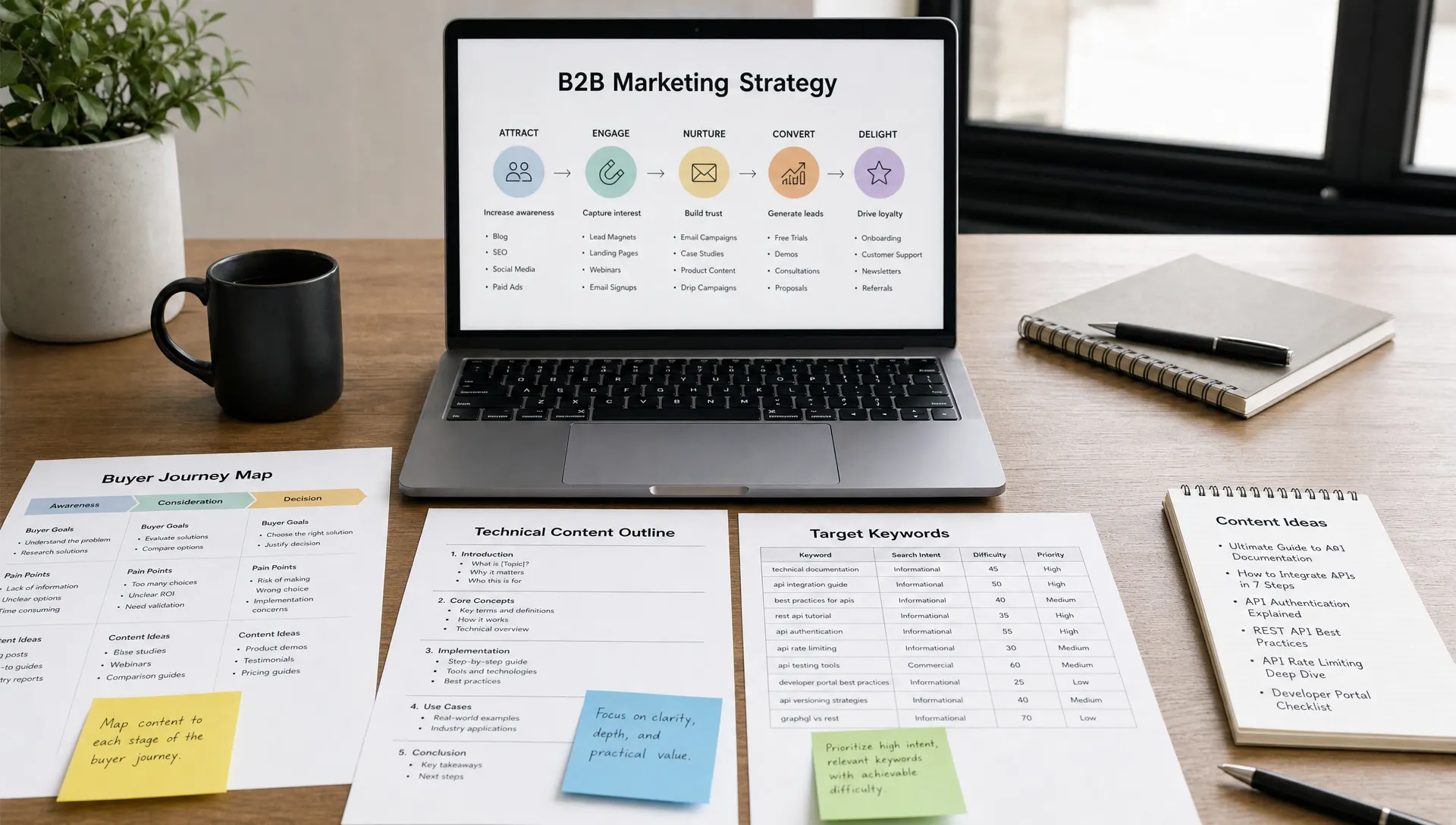
A B2B marketing team compares organic and paid marketing plans on a planning board with SEO content, PPC ads, lead quality notes, and sales pipeline updates.

A practical decision framework for B2B teams

Before allocating budget, clarify the job you need the channel to perform. Most waste happens when a company uses paid ads to compensate for weak positioning or expects organic content to deliver immediate sales volume.

A practical rule is this: use organic marketing and paid marketing based on urgency and evidence. If you need proof fast, paid can test demand. If you already know buyers search for your solution, organic can help you own that demand over time.

Business situation Better starting point Why it fits
New service launch with uncertain demand Paid search or paid social test Fast feedback on message, audience and offer
Established service with recurring search demand SEO and content Long-term visibility and lower dependency on ad spend
High-value leads with narrow targeting needs PPC, LinkedIn ads or account-based paid campaigns More control over audience and timing
Long sales cycle with technical research Organic content plus retargeting Education first, follow-up later
Strong traffic but weak conversion Landing page optimization and paid retargeting Improves return from existing demand
Limited budget with no urgent launch Organic foundation Builds assets before scaling paid spend

This framework is not fixed. A company may begin with paid search to validate terms, then invest in SEO pages for the same topics. Another company may build content first, then use paid campaigns to promote the highest-converting assets.

How to avoid wasting budget when using both

The most common mistake is funding both channels without a shared plan. PPC teams chase conversions, content teams chase traffic and sales teams complain about lead quality. That structure makes reporting look busy without proving progress.

A shared keyword and intent map solves much of the problem. Group keywords by buyer stage, commercial value and difficulty. Then decide which terms deserve paid coverage, which deserve SEO investment and which should be ignored.

For example, a broad informational query may be better for an organic article because the buyer is still learning. A part-number query or urgent service query may deserve a paid ad because the buyer may be ready to act. A comparison query could deserve both: an organic page for depth and a paid ad to protect visibility.

When organic marketing and paid marketing share the same intent map, every click has a clearer purpose. You can also see where the funnel breaks. If paid traffic converts poorly, the landing page, offer or keyword selection may be wrong. If organic traffic grows but leads do not, the content may need stronger calls to action or better internal links to service pages.

Andy Alagappan’s guide to using PPC and SEO without wasting budget expands on this idea with a practical approach to keyword discipline and campaign coordination.

Measure each channel by the right outcome

Organic and paid campaigns should not be measured with identical expectations. Paid campaigns can be judged quickly on click cost, conversion rate, lead quality and pipeline influence. Organic campaigns need more patience because rankings, impressions and authority build over time.

That does not mean organic should get a free pass. It should still be measured. The difference is that early indicators may include indexed pages, keyword movement, impressions, engagement and assisted conversions before direct lead volume becomes meaningful.

Channel Early indicators Business indicators
Organic SEO and content Rankings, impressions, traffic quality, engagement Form fills, assisted pipeline, lower blended cost per lead
Paid search Click-through rate, cost per click, conversion rate Qualified leads, cost per opportunity, revenue influenced
Paid social Audience engagement, landing page visits, retargeting pool growth Meetings booked, account engagement, pipeline from target segments
Email and nurturing Opens, clicks, repeat visits Sales conversations, reactivated leads, influenced opportunities

For many industrial and B2B companies, organic marketing and paid marketing should be judged by sales quality, not just form volume. A small number of technically relevant inquiries may be worth far more than a large number of generic downloads.

Common mistakes when choosing between channels

One mistake is expecting SEO to rescue a weak offer. Search visibility helps only when the page answers a real buyer need. If prospects cannot understand what you do, where you serve or why you are credible, rankings will not fix the core issue.

Another mistake is treating PPC as a slot machine. More spend does not automatically create better leads. Paid campaigns need negative keywords, tight ad groups, relevant landing pages and feedback from sales on lead quality.

A third mistake is stopping paid campaigns the moment organic traffic improves. Sometimes paid search still protects high-value terms, supports seasonal demand or captures buyers who skip organic results. The question is not whether you can replace one channel completely. The question is whether each dollar has a job.

The best programs review organic marketing and paid marketing together at least monthly. Look at what keywords drove qualified inquiries, which pages assisted conversions, which ads wasted spend and where sales conversations stalled. That review turns marketing from a set of activities into a learning system.

Frequently Asked Questions

Is organic marketing cheaper than paid marketing? Organic marketing may become more cost-efficient over time, but it is not free. It requires strategy, content, technical work and ongoing optimization. Paid marketing often costs more per click, but it can generate faster data and faster visibility.

Should a new B2B company start with SEO or PPC? If the company needs immediate leads or market validation, PPC can provide faster feedback. If the company has limited budget and a longer timeline, SEO and content may be the better foundation. Many companies use a small paid test to guide a larger organic strategy.

Can paid ads help SEO? Paid ads do not directly improve organic rankings, but they can reveal which keywords, offers and landing pages attract qualified visitors. Those insights can guide SEO priorities and content planning.

How long does organic marketing take to work? Results vary by competition, site authority, content quality and technical health. Some improvements may appear within weeks, but meaningful organic growth often takes months of consistent work.

What is the best budget split between organic marketing and paid marketing? There is no universal split. A mature company with strong organic visibility may use paid mainly for launches and high-intent searches. A newer company may use more paid media at first while building organic assets in the background.

Build the right mix for your market

The best channel mix starts with your buyers, not a preset budget formula. Industrial and B2B buyers search, compare, ask colleagues, revisit websites and evaluate credibility before they speak with sales. Your marketing should support that full path.

If your company needs help deciding where organic marketing and paid marketing fit, Andy Alagappan and B2B Inbound Marketing can help with SEO, PPC, inbound strategy, content and web marketing support for better visibility and lead generation. Start with the channel that matches your current business goal, then build a system where every campaign makes the next one smarter.


Two professionals compare a service page and quote form while checking mobile lead paths in a sales office.

Responsive Design SEO Mistakes That Cost You Leads

For B2B and industrial companies, responsive design seo is not about making a website look fine on a phone. It is about preserving search visibility, buyer confidence and conversion paths on every screen your prospects use. If a purchasing manager lands on a slow mobile product page, cannot read specs or gives up on a form, the ranking you earned stops producing leads.

The problem is usually not one dramatic failure. Leads are lost through small choices that compound: hidden content, overloaded templates, awkward forms, confusing navigation and technical signals that change between desktop and mobile. The result is a site that ranks worse, converts less and gives sales fewer qualified conversations.

Why Mobile Experience Costs B2B Leads

Google primarily uses the mobile version of a page for indexing and ranking. That means your mobile experience is not a secondary version of your website. For many searches, it is the version search engines evaluate first and the version prospects actually use between meetings, on plant floors or while comparing vendors after hours.

Good responsive design seo keeps the same strategic page available across devices: the same intent, the same core content, the same trust signals and the same conversion path. A smaller screen should not mean a smaller message or a weaker offer.

This matters even more in B2B markets because buyers are rarely browsing casually. They may need a quote, spec sheet, service coverage, case study or phone number at the moment they find you. If the page creates friction, they may not come back on desktop later.

Mistake 1: Designing for Devices Instead of Buyer Tasks

A common mistake is treating responsive design as a layout exercise. The desktop page has three columns, so the mobile page stacks those columns. The image shrinks, the menu collapses and the designer checks the box. The site is technically responsive, but the buyer journey is still broken.

A mobile visitor often has a narrower goal than a desktop visitor. They may want to verify whether your company handles a specific process, confirm a location, check certifications or send an RFQ. If the mobile page forces them through a visual tour before answering those questions, the design is not serving the lead.

In practical terms, responsive design seo fails when the page adapts to the screen but not to the searcher. The fix starts with planning UX, content and search strategy together. If your next project is still in the planning stage, it helps to understand why web design and SEO should be planned together before templates are approved.

Mistake 2: Hiding the Content That Builds Confidence

Accordions, tabs and collapsed sections are not automatically bad. They can make mobile pages easier to scan. The mistake is burying the information that proves relevance or helps a prospect take the next step.

For industrial and B2B websites, lead-generating content often includes specifications, application examples, industries served, compliance details, shipping information and comparison points. When these elements are removed or hidden too deeply on mobile, the page may still look clean, but it stops answering buying questions.

Mobile design issue Why it costs leads Better approach
Specs placed below several visual sections High-intent buyers cannot confirm fit quickly Move key specs near the top with a clear path to details
CTAs hidden inside a collapsed menu Prospects miss quote, contact or call options Keep one relevant CTA visible in the content flow
Desktop comparison tables squeezed into tiny columns Users abandon instead of zooming and scrolling Reformat tables into readable mobile sections
Trust proof removed to simplify layout Buyers have less evidence to continue Keep certifications, case cues and proof points concise but visible

Clean design should not remove the substance that earns the inquiry. Mobile pages need hierarchy, not content starvation.

Mistake 3: Slowing Down the Pages Closest to Revenue

Healthy responsive design seo treats performance as a lead generation issue, not only a technical benchmark. A service page can have strong copy and a clear CTA, but if it loads slowly on a phone, the prospect may never see the offer.

Speed problems often come from oversized hero images, render-blocking scripts, unnecessary animations, third-party tags or video files added without mobile rules. These issues are especially costly on product, service and location pages because those pages usually capture the most intent.

The practical fix is to audit your highest-value pages first. Compress and properly size images, reduce unused scripts, limit heavy visual effects and test real mobile templates, not only desktop previews. Core Web Vitals should be reviewed alongside conversion data so you can see whether technical improvements actually support lead flow.

If the broader goal is to turn search traffic into qualified inquiries, design decisions should support the full path from query to conversion. That is also the logic behind search engine optimization website design for better leads, where rankings and page experience work as one system.

A team reviews mobile service pages, lead forms, and search traffic reports at a conference table.

Mistake 4: Making Forms and CTAs Harder on Small Screens

Forms are where many mobile leads disappear. A visitor may be interested enough to request pricing, but a long form with tiny fields, unclear errors or a broken submit button can end the session. On mobile, every unnecessary field feels more expensive.

At this point, responsive design seo should be measured by completed actions, not just impressions or visits. If mobile traffic is high but mobile submissions are low, the form deserves immediate attention.

Start by reviewing the lead capture experience from a real phone. Check whether the keyboard type matches each field, whether labels remain visible, whether errors are easy to understand and whether the submit button is reachable without fighting sticky elements. For quote forms, separate required fields from nice-to-have details. Sales can always ask follow-up questions, but the website has to capture the first inquiry.

CTA placement matters too. A single button at the very top or very bottom may not be enough for a long technical page. Add relevant CTAs after key decision points, such as after a service description, application section or proof point.

Mistake 5: Breaking Technical SEO During Responsive Rebuilds

Responsive projects often happen during a redesign, and that is when technical SEO mistakes become expensive. Teams may change templates, navigation, headings, internal links and URLs at the same time. If nobody owns search risk, rankings can drop just as the new site launches.

For industrial marketers, responsive design seo also protects crawlability and signal consistency. Search engines should find the same primary content on mobile and desktop. Titles, meta descriptions, structured data, internal links and canonical tags should remain aligned. If the site uses separate mobile URLs, the technical burden is higher because alternate and canonical signals must be correct.

Redirects are another common failure point. A responsive redesign may consolidate pages, rename service URLs or remove older landing pages that still attract qualified traffic. Before launch, build a URL inventory, map redirects carefully and verify that valuable content has not been deleted simply because it did not fit a new template.

If your company is preparing a larger rebuild, review the steps needed to protect organic traffic during a website redesign before development is complete.

Mistake 6: Ignoring Industry-Specific Buying Context

A generic responsive template rarely reflects how industrial buyers evaluate vendors. A manufacturer, engineering firm, distributor or logistics provider may need pages that handle complex service areas, long sales cycles and detailed operational criteria.

For example, a company that markets freight forwarding, warehousing, trucking and 3PL services cannot rely on a pretty mobile homepage alone. A serious buyer may need to confirm modes of transport, warehouse capabilities, customs support, service coverage and contact options before reaching out. If those details are hard to reach on mobile, design simplicity becomes a conversion problem.

The same principle applies across B2B categories. Your mobile experience should match how prospects qualify a vendor. That means fast access to capabilities, industries served, proof points, location relevance and a direct next step.

How to Audit responsive design seo Before Another Lead Is Lost

An effective audit should cover search visibility, usability and conversion behavior together. Looking at only one area gives an incomplete picture. A page may pass a mobile-friendly test but still lose leads because the CTA is buried, the copy is vague or the form is painful.

Use this practical review process for priority pages:

  • Compare desktop and mobile content to confirm that essential information is present on both versions.
  • Test service, product and location pages on real mobile devices, not only browser resizing tools.
  • Review Core Web Vitals, image weight, script load and template speed on high-intent pages.
  • Check forms, phone links, quote buttons and thank-you pages from start to finish.
  • Segment analytics by device to compare organic sessions, engagement and conversions.
  • Review Search Console data for mobile indexing, crawl issues and pages losing impressions after design changes.

Do not audit every page with the same urgency. Start with pages that already receive qualified organic traffic, support sales conversations or rank for terms with strong commercial intent.

What to Measure After Fixes Go Live

A mature responsive design seo process does not stop when a developer closes the ticket. The real test is whether the site produces better lead behavior after the changes go live.

Track organic performance by device, but do not stop at rankings. Measure form starts, form completions, call taps, quote requests, contact page visits and assisted conversions. If possible, compare lead quality by source and page type so you can see whether mobile improvements are bringing in better opportunities, not just more activity.

For B2B companies, it is also useful to monitor sales feedback. If reps report that inquiries are more relevant after service pages are clarified on mobile, that is a meaningful signal. SEO and design should not be judged only by traffic charts. They should help the right prospects understand your offer and take the next step with less friction.

Frequently Asked Questions

Does responsive design affect SEO rankings? Yes. Google primarily evaluates the mobile version of pages for indexing and ranking, so mobile content, performance and usability can influence organic visibility.

Is a mobile-friendly website the same as a lead-generating website? No. A page can fit a phone screen and still lose leads if it loads slowly, hides key content, uses weak CTAs or makes forms difficult to complete.

Which pages should be audited first? Start with pages that generate organic traffic, support quote requests or target high-intent service terms. For most B2B sites, these are service pages, product pages, industry pages and location pages.

How often should a company review mobile SEO and conversion performance? Review key pages after major design changes, campaign launches and content updates. For active SEO programs, monthly device-level reporting is a practical rhythm.

Stop Letting Mobile Friction Waste Qualified Traffic

If your site ranks but does not convert, the issue may not be traffic volume. It may be the mobile path between search intent and the sales conversation. Small responsive design choices can decide whether a qualified visitor becomes a lead or leaves without a trace.

B2B Inbound Marketing helps Houston and industrial companies connect SEO, PPC, content and web design around measurable lead generation. If your responsive design seo strategy needs a practical review, start with the pages that matter most to sales and fix the friction your buyers feel first.

Hands review a mobile service page and analytics notes during a mobile site optimization check.

Mobile Site Optimization for Better B2B Conversions

Many B2B buyers first interact with your company on a phone, even when the final purchase involves a long sales cycle, a technical evaluation or a formal quote request. That makes mobile site optimization more than a design concern. It affects how quickly a prospect understands what you do, whether they trust you enough to keep reading and how easy it is to take the next step without waiting until they are back at a desk.

For industrial suppliers, service firms and B2B companies in competitive markets like Houston, mobile traffic often includes engineers checking specifications, purchasing managers comparing vendors, executives scanning credentials and field teams looking for immediate answers. If the mobile experience is slow or cluttered, the visitor may not complain. They simply leave, return to search results and choose another company.

B2B mobile behavior is different from consumer browsing

B2B mobile visits are usually task-driven. A visitor may be looking for a capability statement, service area, product application, safety credential, case study or contact path. Good mobile site optimization supports those jobs without forcing the user to pinch, zoom, hunt through oversized menus or complete a desktop-style form on a small screen.

The conversion may not happen during that first visit. In B2B, mobile often plays an assist role. A prospect finds you on mobile, reads enough to shortlist you, then converts later through a desktop form, email, phone call or direct sales conversation. That still makes the mobile visit valuable. It shapes trust early in the buying process.

Mobile-first indexing also changes the stakes. Google primarily evaluates the mobile version of a site for indexing and ranking, so weak mobile pages can limit both visibility and conversion performance. In 2026, the question is no longer whether your site should work on mobile. The question is whether it is strong enough to win qualified attention.

Map the mobile journey before changing the layout

Before editing buttons or compressing images, identify the pages that matter most to mobile visitors. Start with organic landing pages, PPC landing pages, service pages, industry pages and contact pages. These pages often reveal where prospects enter the site and where friction causes them to drop off.

A mobile user should be able to answer three questions within seconds: is this company relevant to my need, is it credible and what should I do next? If your page cannot answer those quickly, design changes alone will not solve the conversion problem. This is where SEO, messaging and layout have to work together, a point also covered in more depth in this guide to search engine optimization website design for better leads.

Mobile page type Visitor intent Common conversion risk Better mobile approach
Service page Confirm capability and fit Long intro with no proof Lead with service, industries served and CTA
Product page Check details or applications Specs hidden in downloads Summarize key details before the PDF
PPC landing page Act on a specific offer Slow load or vague headline Match ad intent and show one clear action
Contact page Reach sales or request quote Too many fields Offer phone, short form and email options
Case study page Validate experience Dense desktop formatting Use short sections, results and scannable proof

The best mobile site optimization decisions come from watching how real prospects move through this journey, not from copying generic design patterns. Analytics, search queries, heatmaps and sales feedback can all point to the same issue: the page may rank, but it does not make the next step obvious.

Fix speed and technical friction first

A strong mobile page has to load quickly enough that the visitor never thinks about speed. Google’s Core Web Vitals give useful performance signals, especially Largest Contentful Paint, Interaction to Next Paint and Cumulative Layout Shift. In plain language, your main content should appear quickly, the page should respond when tapped and elements should not jump around while the visitor is trying to read or click.

Common B2B problems include oversized hero images, heavy tracking scripts, uncompressed PDFs, slow hosting, too many third-party embeds and forms that load late. These issues are especially damaging on mobile networks, where conditions vary by location and device. For industrial audiences that may include field users, plant managers or traveling buyers, speed is a direct usability issue.

Technical improvements that often help include compressing images, using modern image formats, limiting unnecessary scripts, cleaning up unused code, caching static files and testing pages on real mobile devices. A fast page does not guarantee conversion, but a slow page can prevent conversion before the message is even seen.

Make responsive design serve the buying decision

Responsive design is the baseline, not the finish line. A page can technically resize for mobile and still be frustrating. True mobile usability requires a content hierarchy that respects the buyer’s intent: headline, value proposition, proof, next step and supporting detail in a logical order.

For example, a service business homepage should immediately clarify who it serves, what problem it solves and why its approach is credible. This principle applies beyond industrial B2B as well. A local service site such as Origin Dental Wellness shows how clear positioning, service categories and trust signals can help visitors understand fit quickly before they decide to schedule or inquire.

On a B2B site, the same idea applies to manufacturing services, engineering support, logistics, software, consulting or technical sales. The mobile screen should not bury proof below a long brand story. Certifications, industries served, project examples, response expectations and quote options should appear where they support the decision.

A smartphone showing a clear contact form sits beside notes on page speed, tap targets, CTA placement, and lead quality.

Simplify forms and calls to action

Mobile forms are one of the biggest conversion bottlenecks on B2B websites. A desktop form with ten required fields may be acceptable for a detailed RFQ, but it can be a poor first step on mobile. Prospects who are still evaluating may not want to type extensive information with their thumbs.

Mobile site optimization should treat every form field as a cost. Ask only for what sales truly needs at that stage. If a visitor is requesting a quote, you may need project details. If they are asking a question, name, company, email and message may be enough. The form should also use the right mobile keyboard for email, phone numbers and numeric entries.

Clear calls to action matter just as much. “Submit” is weak because it describes the button action, not the business outcome. Better labels include “Request a Quote,” “Talk to a Specialist,” “Schedule a Consultation” or “Ask About This Service,” depending on the offer. If phone calls are valuable, make the number tap-to-call and place it where a mobile user can find it easily.

Avoid forcing every visitor into the same path. Some B2B buyers want to call, some want to email and some want to fill out a form after checking credentials. A mobile page can support all three without becoming cluttered if the hierarchy is clean.

A mobile site optimization checklist for B2B teams

Use a practical checklist to separate high-impact improvements from cosmetic changes. The goal is not to make the mobile page look busy or trendy. The goal is to reduce friction for serious prospects and help them move from interest to inquiry.

Area to review What to check Conversion-focused fix
Page speed Main content load time and script delays Compress assets and remove nonessential code
Header Logo, navigation and CTA visibility Keep the menu simple and the primary action clear
Hero section Relevance of headline on small screens State the service, audience and value quickly
Proof Trust signals and examples Place certifications, case studies or industries served near key claims
Forms Required fields and mobile keyboard behavior Shorten forms and use correct field types
Tap targets Buttons, links and phone numbers Make actions easy to tap without zooming
Content Paragraph length and section order Break up dense copy and lead with buyer priorities

This checklist works best when paired with conversion data. If you need a broader view of how technical performance, content and landing page structure affect results, this article on website optimization services that improve conversion rates covers related improvements for B2B websites.

Prioritize fixes by business impact

Not every mobile issue deserves the same urgency. A slightly imperfect icon is less important than a slow service page that receives qualified organic traffic. A beautiful animation is less important than a form that fails on mobile browsers. A practical mobile site optimization plan should rank fixes by lead impact, not by personal preference.

Start with pages that already attract relevant traffic. In many B2B campaigns, these include high-intent service pages, technical blog posts, PPC landing pages and location pages. Improve the experience where demand already exists before investing heavily in pages that receive little qualified traffic.

Next, compare mobile behavior to desktop behavior. If desktop conversion rates are healthy but mobile conversion rates lag, the issue may be usability. If both are weak, the issue may be message-market fit, content quality or offer clarity. That distinction matters because it prevents teams from treating every conversion problem as a design problem.

B2B companies should also review mobile and paid search together. PPC can reveal which offers, headlines and pain points attract qualified visitors quickly. Those insights can then improve SEO pages. Likewise, organic search data can reveal questions and terms that should shape mobile landing pages. For companies looking at mobile as part of a larger channel mix, this overview of mobile marketing provides useful context.

Measure more than form fills

Form submissions matter, but they are not the only measure of mobile performance. B2B conversions often include phone calls, email clicks, PDF downloads, quote starts, map taps, repeat visits and visits that later convert on desktop. If analytics only credits the final form submission, mobile may look less valuable than it really is.

Set up tracking that reflects the full buyer journey. Measure scroll depth on key pages, click activity on CTAs, tap-to-call usage, form starts versus completions and assisted conversions where possible. This helps you identify whether visitors are interested but blocked, or simply not persuaded by the page.

Qualitative review helps too. Ask sales what prospects mention when they call. Review the questions that appear in contact forms. Look for gaps between what the mobile page promises and what buyers actually need to know before taking action. The best conversion improvements often come from aligning page content with real sales conversations.

Frequently Asked Questions

What is mobile site optimization for B2B websites? Mobile site optimization is the process of improving mobile speed, layout, content, forms and calls to action so B2B visitors can understand your offer and convert more easily on a phone or tablet.

Why do B2B mobile conversion rates often lag behind desktop? Mobile visitors may be researching early, dealing with smaller screens or avoiding long forms. If the page is slow, dense or unclear, they may postpone action or choose another vendor.

Should B2B companies use shorter mobile content? Not always. Technical buyers still need detail, but mobile content should be structured better. Use clear headings, concise sections, visible proof and links to deeper resources when needed.

How often should a company audit its mobile website? Review high-value mobile pages at least quarterly, and audit them after major design, SEO, PPC or tracking changes. Search behavior, device standards and buyer expectations change over time.

Turn mobile traffic into qualified conversations

Better B2B conversions do not come from mobile design alone. They come from a faster, clearer and more persuasive path from search intent to sales action. When SEO, PPC, content and web design support the same buyer journey, mobile visitors are more likely to become qualified inquiries.

If your B2B or industrial website receives traffic but does not produce enough leads, start with the pages prospects already use on mobile. Improve speed, sharpen the message, reduce form friction and make the next step easy to take. That is where mobile improvements begin to support real business growth.

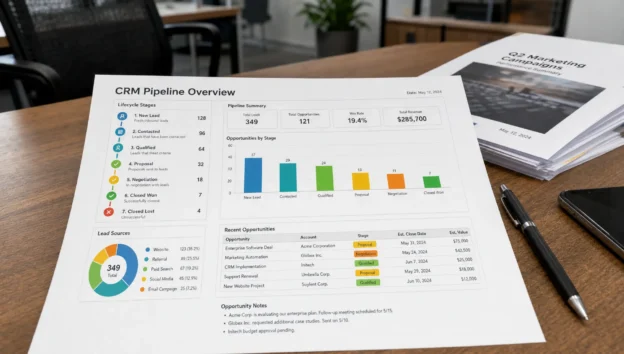
A CRM printout on a desk shows lifecycle stages, source tracking, and opportunity notes for demand generation.

How to Build a Demand Generation Marketing Engine

Building a demand generation marketing engine is not about launching more campaigns, buying more ads or publishing more blog posts. It is about creating a system that attracts the right buyers, teaches them why change is necessary, captures buying signals and gives sales a clear path to follow up. For B2B and industrial companies, that system must be practical enough to run every week, not just impressive in a planning deck.

That distinction matters because many B2B teams already have pieces of the puzzle. They may have a website, a PPC account, an email list, a CRM and some sales collateral. The problem is that those parts often work in isolation. A true engine connects them around one commercial goal: creating qualified pipeline from people and companies that are more likely to buy.

What a Demand Generation Marketing Engine Actually Does

A demand engine has four jobs. It creates awareness among the right audience, captures intent when buyers start looking for options, nurtures people who are not ready yet and helps sales prioritize the opportunities most likely to move forward.

In practical terms, demand generation marketing turns disconnected tactics into a repeatable operating system. The goal is not only to collect leads. The goal is to increase the number of informed buyers who understand the problem, trust your company and are ready for a productive sales conversation.

A simple engine includes these core parts:

  • Audience definition: The industries, accounts, roles and buying committees you want to influence.
  • Message strategy: The business problems, triggers and outcomes your company wants to be known for.
  • Channel mix: The SEO, PPC, social, email and referral channels that reach buyers at the right moments.
  • Conversion process: The offers, forms, follow-up steps and sales handoffs that turn interest into pipeline.

Campaigns vs. engines

A campaign has a start date and an end date. An engine keeps learning. Campaigns can still matter, especially for product launches, trade shows, seasonal budgets or account-based pushes. But if every month starts from scratch, your marketing team is rebuilding momentum instead of compounding it.

If your current demand generation marketing effort depends on one-off blasts or scattered ads, start by documenting the buyer journey. Identify what a prospect needs to understand before they talk to sales, then build assets and follow-up paths around those stages.

Start With the Market, Not the Channel

Many companies begin with the question, “Should we do SEO, PPC, LinkedIn or email?” That is understandable, but it is too early. The better starting point is the market: who you serve, what problem they have, what causes them to act and how they evaluate vendors.

Before investing in more channels, demand generation marketing needs a sharp ideal customer profile. For a Houston industrial supplier, that might include plant managers, procurement leaders, engineers, operations executives and safety decision-makers. For a B2B service company, it might include owners, marketing directors, CFOs and technical buyers.

A useful ICP goes beyond firmographics. Revenue, headcount, region and industry help with targeting, but they do not explain why a buyer changes. The stronger signals are pain points, operational triggers and business consequences. A company expanding into a new facility, replacing outdated equipment or struggling with compliance has a different level of urgency than a company browsing casually.

For a deeper planning angle, Andy Alagappan’s guide to a targeted demand generation strategy expands on how SEO, PPC, content syndication and nurture can work together around a defined audience.

Map the buying committee

B2B buying is rarely handled by one person. A technical evaluator may care about specifications. Finance may care about risk and total cost. Operations may care about downtime. Leadership may care about growth, reliability or market share.

Buyer role Main concern Content that helps
Executive sponsor Business impact, risk, growth Industry insights, ROI narratives, strategic guides
Technical evaluator Fit, compatibility, process Product explainers, technical articles, comparison pages
Procurement Pricing, vendor stability, terms Qualification documents, proof points, case-style summaries
End user Ease of use, reliability, support How-to content, FAQs, workflow examples

This mapping keeps your content from sounding generic. It also helps sales understand which questions a lead is likely to ask next.

Build a Content Architecture Around Buyer Intent

The content layer of demand generation marketing should match how buyers think, not how your internal teams are organized. A prospect does not wake up wanting a “solution page.” They search for symptoms, compare approaches, ask peers for recommendations and look for proof that a vendor understands their situation.

A strong content architecture usually has three layers. Educational content explains the problem and gives the buyer language to describe it. Evaluation content helps them compare options, methods and providers. Conversion content gives them the confidence to take the next step, such as requesting a consultation, proposal or technical discussion.

Clarity matters across industries, not only in B2B. For example, Ons Plekske’s clear service website quickly communicates who it serves, what activities it offers and how visitors can take the next step. B2B companies need the same kind of directness, even when the product or buying process is more complex.

Use content to remove friction

A demand engine should answer the questions that slow deals down. If sales repeatedly explains the same issue, marketing should turn that explanation into a page, article, email, PDF or video. If prospects hesitate because they do not understand pricing factors, implementation effort or risk, content should address those concerns before the sales call.

Good content is not just top-of-funnel traffic bait. It is a support system for the full revenue process. Blog posts, service pages, landing pages and nurture emails should all make the buyer more informed and more comfortable moving forward.

Choose Channels That Match the Buying Journey

Channel selection in demand generation marketing works best when every channel has a job. SEO captures active research. PPC accelerates visibility for priority topics or locations. LinkedIn and social media help stay present with defined audiences. Email nurtures known contacts. Retargeting brings visitors back when they are still comparing options.

The channel mix should reflect buying behavior. Industrial buyers may rely heavily on search when they need a specific capability, replacement part, compliance answer or technical service. B2B service buyers may compare firms across search, referrals, social proof and educational content before ever filling out a form.

Channel Best use Common mistake
SEO Capture research and high-intent searches over time Publishing content without conversion paths
PPC Test offers, capture urgent demand and support priority markets Sending all traffic to the homepage
Email nurture Educate known contacts and revive stalled opportunities Sending only promotional messages
Social media Build familiarity and distribute expertise Posting without a clear audience or message
Webinars or events Create trust and answer complex questions Treating attendance as immediate sales intent

A channel plan should also define how traffic converts. A PPC campaign without a relevant landing page will waste budget. An SEO article without a next step will create traffic but not pipeline. A webinar without follow-up becomes a one-time event instead of a demand asset.

Audience research, content planning, SEO, PPC, email nurture, lead scoring, and sales follow-up appear together in a campaign planning room.

Convert Attention Into Sales-Ready Opportunities

A demand generation marketing engine should not treat every form fill as equal. Someone downloading a beginner guide may be early in research. Someone requesting a quote, comparing vendors or returning to pricing-related content may be closer to a sales conversation.

This is where lead scoring, segmentation and handoff rules matter. You do not need a complicated system on day one. Start with a simple model based on fit and behavior. Fit includes industry, company size, role, geography and service match. Behavior includes pages visited, forms submitted, emails engaged with and repeat visits.

The most useful conversion paths often include a mix of low-friction and high-intent offers. Low-friction offers might include checklists, guides or educational resources. High-intent offers include consultations, assessments, demos, proposal requests or project conversations.

The key is to define what makes an opportunity sales-ready. Andy Alagappan’s article on demand generation that creates sales-ready opportunities is a helpful companion if your team is trying to improve lead quality instead of simply increasing lead volume.

Build the handoff before the leads arrive

Sales and marketing alignment fails when the rules are vague. If marketing sends every lead to sales immediately, reps may waste time on poor-fit contacts. If marketing holds too many leads back, real opportunities may go cold.

Create a basic service-level agreement. Define which actions require immediate sales follow-up, which leads stay in nurture and which accounts deserve special attention. Also define the feedback loop. Sales should report whether leads are qualified, what objections came up and which content helped move the conversation forward.

Connect Operations, CRM and Follow-Up

Operationally, demand generation marketing fails when the data is messy. If forms are not tagged, campaigns are not tracked, CRM fields are inconsistent or sales notes are missing, the team cannot see what is working.

At minimum, every engine needs clean source tracking, lifecycle stages, clear owner assignments and consistent follow-up tasks. When someone fills out a form, the team should know where they came from, what they requested, what happened next and whether that activity became pipeline.

Automation can help, but it should not replace strategy. A simple email workflow that sends relevant content based on interest is more valuable than a complex workflow that treats every buyer the same. The best systems use automation to keep the experience timely and consistent while preserving human follow-up where it matters.

Make the website part of the engine

Your website is not only a brochure. It is the central hub for search visibility, paid traffic, conversion, retargeting and sales enablement. Service pages should make your expertise clear. Blog content should answer buyer questions. Landing pages should match campaign intent. Forms should ask for enough information to qualify interest without creating unnecessary friction.

For industrial and B2B companies, responsive web design, website redesign and web content writing can directly affect demand performance. If the site is slow, unclear or hard to use on mobile, even strong campaigns will underperform.

Measure What Improves Revenue, Not Just Activity

Measurement keeps demand generation marketing honest. Traffic, impressions and clicks can help diagnose activity, but they do not prove business impact by themselves. The more important question is whether the engine is producing qualified conversations and revenue opportunities from the right accounts.

A practical scorecard should include leading indicators and revenue indicators. Leading indicators help you improve campaigns quickly. Revenue indicators show whether the engine is creating business value.

Metric category Examples Why it matters
Visibility Organic rankings, search impressions, paid impression share Shows whether your audience can find you
Engagement Time on page, return visits, email engagement Shows whether the message is resonating
Conversion Form submissions, consultation requests, landing page conversion rate Shows whether interest is becoming identifiable demand
Quality Qualified lead rate, sales acceptance rate, opportunity creation Shows whether marketing is attracting the right buyers
Revenue Pipeline value, close rate, cost per opportunity Shows whether the engine supports growth

Attribution does not need to be perfect to be useful. Start by comparing channels, offers and segments. Which topics create the best sales conversations? Which landing pages convert high-fit buyers? Which campaigns produce leads that sales accepts? For more detail, review this guide on how to measure demand gen campaign results.

A Practical 90-Day Build Plan

In the first 90 days, demand generation marketing should become more focused, more measurable and easier for sales to use. Do not try to rebuild everything at once. Start with the highest-impact gaps.

During the first month, audit your current assets, traffic sources, CRM fields and conversion paths. Identify your best-fit customer segments and the questions they ask before buying. Tighten your messaging so your homepage, service pages and core landing pages speak directly to those problems.

During the second month, build or improve the assets that support the buyer journey. This might include SEO pages for high-intent topics, PPC landing pages for priority offers, nurture emails for early-stage leads and sales enablement content for common objections.

During the third month, launch controlled campaigns and review performance weekly. Look at which audiences respond, which offers convert and which leads sales accepts. Use those insights to improve targeting, copy, content and follow-up.

A 90-day plan will not create a perfect engine. It should create a working version that can be improved every month.

Frequently Asked Questions

What is the difference between demand generation and lead generation? Demand generation creates awareness, interest and trust across the buyer journey. Lead generation focuses more narrowly on capturing contact information. A strong B2B engine usually needs both, but lead capture works better when demand has already been created.

How long does demand generation marketing take to show results? Paid campaigns can create activity quickly, but a full engine usually improves over months as SEO, content, nurture and sales feedback compound. The timeline depends on market competition, buying cycle length, budget, offer strength and follow-up quality.

What should a small B2B company build first? Start with a clear ICP, strong service pages, one or two high-intent conversion offers and reliable tracking. After that, add SEO content, PPC tests and nurture emails based on the questions your best prospects already ask.

Do industrial companies need social media for demand generation? Social media can help, but it should not be treated as the whole strategy. Industrial companies often benefit most when social supports technical content, trade show activity, recruiting, credibility and remarketing rather than relying on social posts alone to create pipeline.

Build an Engine You Can Actually Run

The best demand engine is not the most complicated one. It is the one your team can execute consistently, measure clearly and improve based on real buyer behavior.

B2B Inbound Marketing helps industrial and B2B companies improve visibility, leads and rankings through SEO, PPC, inbound marketing strategy, social media marketing, video SEO, responsive web design and web content. If your current marketing feels like a set of disconnected tactics, the next step is to turn those parts into a system that supports qualified pipeline and better sales conversations.

A project room with a site map display and planning board for a website redesign and SEO launch.

SEO for Website Redesign Without Losing Organic Traffic

A website redesign can make your company look more credible, load faster and convert better, but it can also erase years of organic visibility if search is treated as a final QA task. SEO for website redesign is the process of protecting the pages, rankings and lead paths that already work while improving the structure, content and technical foundation of the new site. For B2B and industrial companies, that matters because organic traffic often represents high-intent buyers, engineers, distributors, procurement teams and decision makers who may take months to convert. A safer redesign starts before wireframes are approved, continues through development and keeps going after launch day.

SEO for Website Redesign Must Start Before the New Site Is Built

Many redesign problems happen because the project begins with appearance and ends with search. By the time SEO is reviewed, URLs have changed, copy has been rewritten, service pages have been merged and technical settings are already locked into the new CMS.

A better approach is to make search visibility one of the redesign requirements from the start. That does not mean design should be restricted by old pages or outdated navigation. It means the redesign team should understand which pages attract qualified visitors, which queries bring prospects, which landing pages support sales and which technical signals help search engines crawl the site.

This is especially relevant for companies with long sales cycles. A product page, technical resource or service landing page may not produce an immediate form submission, but it may be the first touchpoint in a later RFQ or consultation. Protecting that path is part of protecting revenue.

If you are still early in planning, it is worth reviewing why web design and SEO should be planned together before visual decisions become development constraints.

Start With a Baseline: Know What Organic Traffic You Are Protecting

SEO for website redesign should begin with a clear baseline. Without one, teams often mistake normal post-launch fluctuation for a serious loss, or worse, miss a major visibility drop until weeks have passed.

Pull data before the redesign begins, not just before launch. Use Google Search Console, GA4, rank tracking, CRM reports and sales input to understand how organic search supports the business. Do not limit the review to top traffic pages. A lower traffic page that attracts technical buyers or high-value accounts may matter more than a broad informational article.

At minimum, document these benchmarks:

  • Top organic landing pages by sessions, leads and assisted conversions
  • Queries with strong impressions, clicks or commercial intent
  • Pages with backlinks from reputable sites
  • Pages that sales teams use during the buying process
  • Current URL structure, page titles, meta descriptions and headings
  • Indexable pages, canonical tags, robots directives and XML sitemaps

This baseline gives designers, developers and marketers a shared definition of what must be preserved.

Build a URL, Content and Keyword Inventory

A redesign often becomes a content cleanup project, which is good when handled carefully. Old pages may need to be rewritten, combined or removed. The danger is deleting pages because they look outdated without checking whether they rank, earn links or support buyer education.

A practical SEO for website redesign workflow includes a full inventory of existing URLs. Export all crawlable URLs from a crawler, compare them with indexed pages in Google Search Console and add data from analytics. Then assign each page a future action.

Existing page type Recommended action SEO risk if ignored
High traffic service page Keep, improve or redirect to a close equivalent Loss of rankings and qualified leads
Old blog post with backlinks Refresh or redirect to a relevant resource Loss of link equity
Thin duplicate page Consolidate into a stronger page Wasted crawl budget and weak relevance
Outdated product page Update if still relevant or redirect if replaced 404 errors and user frustration
Thank you page or internal utility page Keep out of index when appropriate Index bloat and poor search quality

The goal is not to preserve every old URL forever. The goal is to make every change intentional.

Plan Redirects Before Any Page Moves

Redirects are one of the most visible parts of a redesign migration, yet they are often rushed during the final week. A proper redirect map connects every old URL that has traffic, rankings, links or user value to the most relevant new destination.

Use 301 redirects for permanent moves. Avoid sending every retired page to the homepage, because that creates a poor user experience and can weaken topical relevance. If an old page about industrial pump repair moves to a new pump service page, redirect there. If the content has been consolidated into a broader maintenance guide, redirect to that guide only if it satisfies the same intent.

Also check redirect chains. An old URL should ideally resolve in one step to the final destination. Multiple hops slow down crawling and can create messy troubleshooting after launch.

If traffic drops after the new site goes live, redirects are one of the first places to investigate. This is also why having a recovery process matters, as explained in this guide to why search rankings drop and how to recover fast.

Keep Search Intent at the Center of the Redesign

The biggest risk in SEO for website redesign is not always technical. Sometimes rankings fall because the new page no longer satisfies the same search intent.

This happens when service pages are shortened too much, technical details are removed for a cleaner look or multiple focused pages are merged into one generic page. Search engines do not rank a page because it looks modern. They rank it when it answers the query better than competing pages and sends enough quality signals to be trusted.

For B2B and industrial websites, intent often includes specifics such as applications, industries served, materials, certifications, location, turnaround, installation process or compatibility. A buyer searching for a specialized service may need proof that your company understands their problem before they contact sales.

During content planning, compare each redesigned page against the query it is supposed to serve. Keep the buyer question visible throughout the page, from the H1 to the calls to action. A redesign should make useful content easier to read, not replace it with vague positioning.

A conference table with printed URL maps, redirect notes, and analytics reports for a website redesign planning session.

Technical SEO Checks for the Staging Site

Technical QA is where SEO for website redesign becomes concrete. The staging site should be crawled before launch so the team can identify issues while they are still easy to fix.

Check whether the site can be crawled efficiently, whether important pages are indexable and whether templates produce clean, consistent markup. Many redesigns accidentally launch with staging settings such as noindex tags, blocked robots.txt rules or canonical tags pointing to temporary URLs.

Review these items before launch:

  • Indexability for key pages, including service, product and location pages
  • Internal links from navigation, footer, body copy and related resources
  • Page titles, meta descriptions and heading structure
  • Canonical tags, hreflang if relevant and structured data where appropriate
  • XML sitemap accuracy and removal of obsolete URLs
  • Robots.txt rules and noindex directives
  • Mobile usability, Core Web Vitals and image compression
  • 404 pages, redirect chains and internal links pointing to redirected URLs

Do not rely only on a visual review. A page can look perfect to a human visitor and still be hard for search engines to crawl or understand.

CMS, CRM and IT Changes Need SEO Review

Redesigns often include platform changes beyond page templates. A company may be moving to a new CMS, connecting CRM forms, implementing marketing automation, rebuilding product databases or integrating internal systems. Each change can affect crawlability, tracking, load speed, URL formats and lead attribution.

When the project includes custom software, ERP, CMS or CRM changes, bring technical stakeholders into the SEO conversation early. If the in-house team needs broader implementation guidance, partners that provide IT consulting and custom software support can help align digital infrastructure with business requirements while the marketing team protects organic visibility.

The key is coordination. Developers should know which URLs cannot change without redirects. Marketers should know which form events need tracking. Leadership should know that search traffic protection is not a cosmetic task, it is part of the launch plan.

Launch Day: Verify the Site Before Google Finds Problems

On launch day, SEO for website redesign becomes a verification process. The main question is simple: did the live site launch the way the migration plan intended?

Start by crawling the live site as soon as DNS changes are stable. Compare the crawl against the staging crawl and the redirect map. Test priority redirects manually, especially URLs that previously earned traffic, backlinks or leads. Submit the new XML sitemap in Google Search Console and confirm that important pages are not blocked.

Analytics also needs immediate attention. GA4, conversion events, call tracking, form submissions and CRM integrations should be tested with real submissions where possible. A redesign can appear to lose conversions simply because tracking broke, which leads to bad decisions in the weeks after launch.

Keep communication tight during the first 24 to 72 hours. Developers, marketers and decision makers should know where launch issues are being tracked, who owns each fix and which problems are urgent.

Monitor Organic Performance for the First 30 to 60 Days

A responsible SEO for website redesign plan does not end at launch. Search engines need time to crawl redirects, process changed content and evaluate the new structure. Some fluctuation is normal, but sharp or sustained declines need quick diagnosis.

Review performance daily during the first week, then at least weekly for the next two months. Compare against the baseline instead of relying on gut feel. Segment branded and nonbranded queries, because branded traffic can hide losses on important commercial terms.

Timeframe What to monitor What to do if problems appear
First 24 hours Crawl errors, blocked pages, tracking, sitemap submission Fix launch-critical issues immediately
First week Redirects, index coverage, organic landing page traffic Repair broken paths and resubmit key URLs
Weeks 2 to 4 Query changes, ranking movement, lead volume Improve affected pages and internal links
Weeks 5 to 8 Stabilization, conversion quality, content gaps Prioritize ongoing SEO improvements

For companies that depend on organic lead flow, post-launch monitoring should also connect to sales quality. The right measure is not only whether visits returned, but whether qualified inquiries continue.

Common Website Redesign SEO Mistakes to Avoid

Most redesign traffic losses come from preventable mistakes. They usually happen because SEO is assigned too late, or because teams assume that a newer site automatically performs better in search.

Avoid these common issues:

  • Deleting pages without checking organic traffic, links or lead value
  • Changing URLs without a complete 301 redirect map
  • Rewriting technical pages into thin brand copy
  • Blocking the live site with staging robots.txt or noindex tags
  • Forgetting to update internal links after redirects are added
  • Launching without tested analytics and conversion tracking
  • Ignoring mobile performance and page speed
  • Treating post-launch SEO as optional maintenance

A redesign is also a good time to improve what was weak on the old site. Stronger navigation, clearer service pages, better internal linking and more useful content can support long-term growth if they are guided by search intent. That is the same principle behind organic search engine optimization for long-term growth, where durable visibility comes from structure, relevance and trust rather than shortcuts.

FAQ

How early should SEO be involved in a website redesign? SEO should be involved before wireframes, navigation and URL decisions are finalized. Early involvement helps preserve valuable pages, prevent redirect problems and align content with buyer intent.

Will a website redesign always cause an organic traffic drop? Not always. Small fluctuations are common after launch, but a well-planned migration can preserve traffic and may improve performance over time if the new site is faster, clearer and better structured.

Should every old page be redirected during a redesign? Every old page with traffic, backlinks, rankings or user value should be redirected to the closest relevant new page. Low-value pages can be removed, but the decision should be based on data.

What is the most common SEO issue after a redesign? The most common issues are missing redirects, blocked indexation, changed content intent and broken internal links. Tracking errors can also make performance look worse than it really is.

How long should organic traffic be monitored after launch? Monitor closely for at least 30 to 60 days. Larger websites, platform migrations and major content changes may need longer tracking because search engines process changes at different speeds.

Protect Your Organic Traffic During a Redesign

A website redesign should strengthen your digital presence, not reset it. For B2B and industrial companies, the safest path is to connect design, SEO, content, technical development and lead tracking before the new site goes live.

If your company is planning a redesign and wants to protect search visibility, Andy Alagappan and B2B Inbound Marketing can help with SEO strategy, PPC alignment, web content planning and inbound marketing support. Start with a clear migration plan, measure what matters and build a site that is easier for both buyers and search engines to understand.

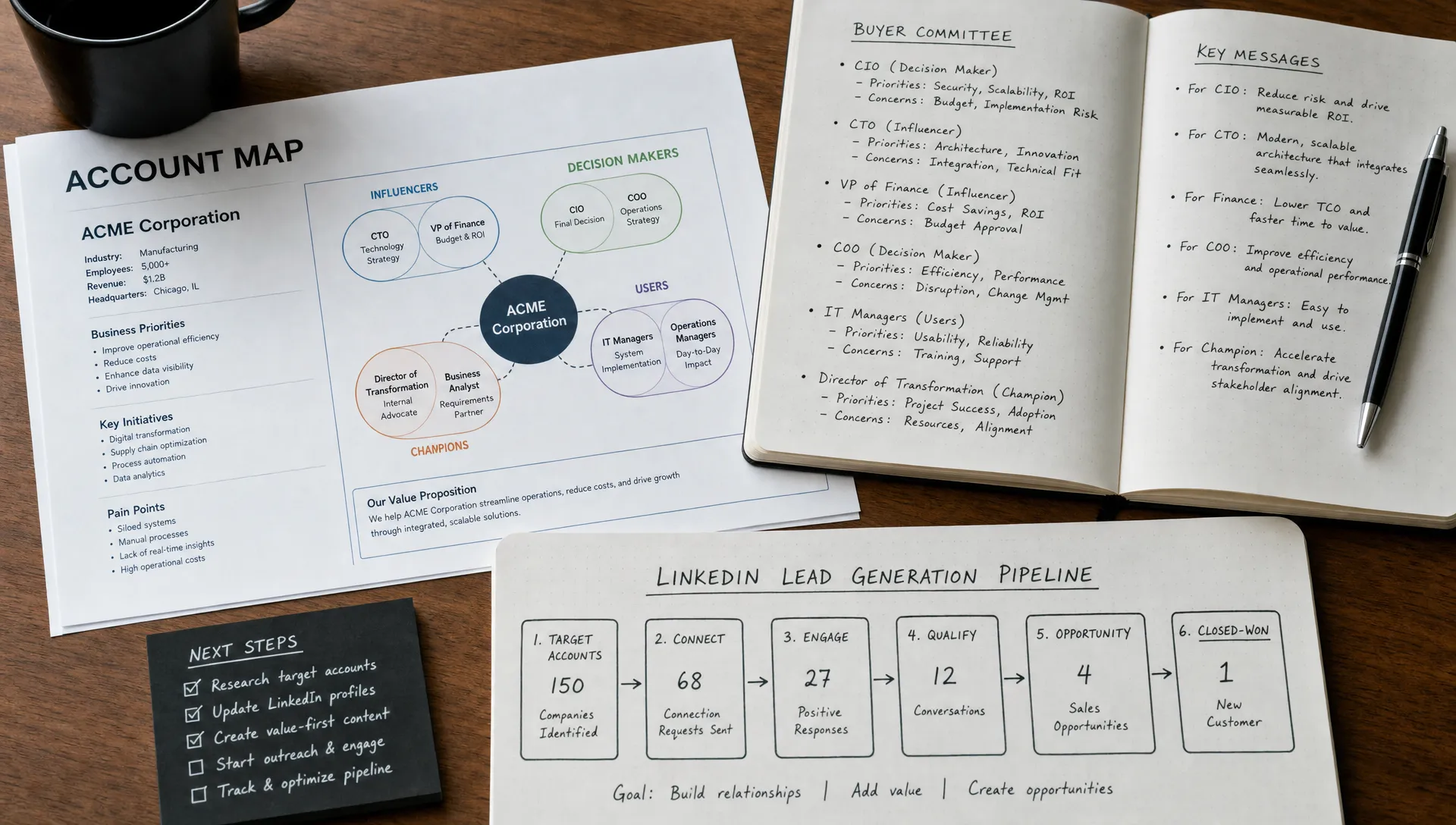
A notebook on a desk lists account names and buying committee roles for LinkedIn outreach.

LinkedIn Lead Generation for High-Value B2B Accounts

When the deal size is high, LinkedIn lead generation works best as an account-based discipline, not a volume game. The goal is not to collect hundreds of disconnected names. The goal is to identify the right companies, understand the buying committee, create relevant reasons to connect and move qualified conversations into a sales process your team can actually support.

That distinction matters for B2B firms selling industrial services, complex technology, professional services, equipment, consulting or other high-consideration offers. These buyers rarely convert from one message. They need evidence, context and timing. LinkedIn gives marketers and sales teams a practical way to see who is involved, what they care about and when an account may be ready for outreach.

Why LinkedIn lead generation fits high-value B2B accounts

High-value B2B sales depend on narrow targeting. LinkedIn is useful because company size, role, seniority, geography, industry and career movement are often visible in one place. That does not make the platform a shortcut. It makes it a research environment where marketing and sales can coordinate around the same target accounts.

A practical program should connect four activities: account selection, profile positioning, content engagement and direct outreach. If any one of these is weak, the campaign usually becomes noisy. A great message sent to the wrong buyer will not create a qualified opportunity. A strong target list paired with a generic profile will also underperform.

For a broader foundation, Andy Alagappan’s article on why LinkedIn is essential for professional networking and lead generation is a useful companion. This article goes deeper into using LinkedIn for high-value accounts where precision is more important than volume.

Start with a tight account list before you message anyone

A strong LinkedIn lead generation program starts before the first connection request. Your team needs a shared definition of a high-value account, ideally based on revenue potential, fit, urgency and the likelihood that your company can deliver measurable value.

For many B2B firms, the best account list combines firmographic filters with buying signals. Firmographics tell you whether the account fits. Buying signals suggest whether the account may have a current reason to talk.

Useful account selection signals include:

  • Industry, region, employee count and revenue range
  • Installed technologies, facilities, equipment or certifications
  • Recent hiring, expansion, funding, leadership changes or new locations
  • Public pain points mentioned in posts, news, case studies or job descriptions
  • Similarity to your best existing customers

Public websites can also sharpen your research. For example, if you sell scheduling software, financing tools or compliance services into healthcare, a provider such as a Melbourne CBD dentist can show service lines, patient financing cues, location context and operational complexity that help you understand what a similar account may value.

Map the buying committee, not just the decision maker

High-value B2B purchases rarely belong to one person. A plant manager may define the operational need. A CFO may challenge the cost. A technical director may assess feasibility. A CEO may only enter the process when risk or strategic fit becomes clear.

This is where account mapping matters. On LinkedIn, identify the people who influence the problem, the budget and the implementation. Then decide who should receive content, who should receive direct outreach and who should simply be monitored for signals.

Buyer role What they usually care about LinkedIn approach
Economic buyer ROI, risk, payback period and vendor credibility Share proof, benchmarks and executive-level outcomes
Technical evaluator Specifications, integrations, feasibility and reliability Offer detailed resources and practical explanations
Day-to-day user Workflow, ease of adoption and support Address operational pain and process improvement
Internal champion Building consensus and reducing objections Provide content they can share with the buying group

This approach also improves lead quality. If your current pipeline includes too many weak-fit contacts, Andy Alagappan’s guide to 10 actionable tips to improve lead quality can help tighten your qualification process.

Build a profile that supports the sales conversation

For high-value accounts, LinkedIn lead generation depends less on clever outreach and more on credibility. Before a buyer replies, they often inspect the profile behind the message. If the profile reads like a resume instead of a business case, the campaign loses momentum.

A strong LinkedIn profile for B2B selling should answer three questions quickly: who you help, what business problem you solve and why the buyer should trust you. That applies to company pages as well as individual profiles used by founders, consultants, account executives or subject matter experts.

Good profile positioning usually includes a clear headline, a buyer-focused about section, proof points, relevant services, strong featured content and a recent activity feed that reflects your expertise. The goal is not to make the profile overly promotional. The goal is to make it obvious that a conversation with you may be worth the buyer’s time.

Use outreach that earns a reply instead of forcing a pitch

Most failed LinkedIn outreach feels rushed. The sender connects, pitches, follows up with another pitch and then disappears. High-value buyers can spot automation quickly, especially when the message ignores their role, company and current priorities.

A better outreach sequence starts with relevance. Mention a business trigger, shared context, recent company move or industry-specific issue. Keep the first message short and avoid attaching every value proposition at once. If the account is worth pursuing, it is worth taking the time to personalize.

A simple outreach structure can look like this:

Step Purpose Message focus
Connection request Open the door Shared industry, role relevance or account-specific context
First message Start a conversation One problem or opportunity likely relevant to the buyer
Value follow-up Add usefulness A short insight, benchmark, article or checklist
Conversion message Invite the next step A specific reason to compare notes or discuss fit

Avoid asking for a meeting before the buyer has a reason to care. A short question about a real business issue often performs better than a polished paragraph about your company.

A workspace shows a printed account map, handwritten buyer committee notes and pipeline stages for LinkedIn lead generation.

Use content to warm accounts before direct sales activity

Content is often the missing link between visibility and sales conversations. When your target buyers repeatedly see useful, specific insights from your company, outreach feels less abrupt. They may not be ready to buy today, but they begin to associate your team with the problem you solve.

For high-value accounts, content should be written around the buying committee’s actual concerns. A CFO may respond to cost reduction and risk management. An operations leader may care more about downtime, throughput or implementation burden. A technical evaluator may need evidence that your solution can work inside real-world constraints.

Content formats that support account-based selling include short LinkedIn posts, executive point-of-view articles, customer problem breakdowns, comparison guides, checklists, webinar clips, industry observations and concise case studies. The most effective content is not generic thought leadership. It gives the right buyer language to describe a problem internally.

Combine LinkedIn with search and PPC when intent is visible

For many B2B companies, LinkedIn lead generation performs best when it is connected to search marketing. LinkedIn is strong for account targeting and relationship building. Search is strong for capturing active demand when buyers look for a provider, solution or comparison.

This is especially important in high-value sales where one channel rarely carries the whole journey. A buyer may first notice your company through a LinkedIn post, later search for your category, then compare vendors through your website. If your SEO, PPC and landing pages do not support the same message, the journey becomes fragmented.

Paid search can also validate demand before you scale LinkedIn outreach. If certain pain points, industries or offers convert well in search, those insights can improve your LinkedIn messaging. For a deeper look at paid acquisition in complex sales, see Andy Alagappan’s guide to paid per click advertising for high-value B2B sales.

Measure quality, movement and revenue impact

The easiest way to mismanage LinkedIn lead generation is to measure only activity. Connection requests, impressions and profile views can indicate reach, but they do not prove pipeline value. High-value account programs need metrics that connect outreach and content to sales movement.

A useful reporting model should track leading indicators, qualification indicators and revenue indicators. This gives marketing and sales a shared view of what is working and where accounts are getting stuck.

Metric category What to track Why it matters
Account coverage Target accounts reached, roles engaged and buying committee depth Shows whether the right people are aware of your company
Engagement quality Comments, replies, content saves, document views and direct questions Separates meaningful interaction from passive visibility
Sales movement Meetings booked, opportunities created and next steps completed Connects LinkedIn activity to pipeline progress
Fit and qualification ICP match, budget potential, problem urgency and authority Protects sales time from poor-fit leads
Revenue impact Pipeline value, closed revenue and sales cycle influence Shows whether the program supports business growth

Attribution will not always be perfect. A buyer may engage with multiple posts, visit your website and speak with a referral before contacting sales. That is normal in B2B. The point is to measure enough context to make better decisions, not to pretend every touch can be reduced to one source.

Common mistakes that weaken high-value account campaigns

The easiest way to undercut LinkedIn lead generation is to treat it like cold email with a profile photo attached. LinkedIn has its own norms. Buyers expect relevance, professional context and some evidence that the sender understands their world.

Common mistakes include targeting too broadly, relying on generic automation, pitching too soon, ignoring the company page, posting content that is not tied to buyer pain and failing to coordinate with sales follow-up. Another frequent issue is chasing engagement from peers instead of attention from actual buyers.

Sales and marketing alignment is especially important. If marketing creates awareness but sales has no agreed follow-up process, accounts cool down. If sales messages accounts before marketing has built credibility, outreach feels abrupt. The strongest programs define who owns each stage and what action should happen when a target account shows interest.

Frequently Asked Questions

How long does LinkedIn lead generation take for high-value B2B accounts? Most high-value programs need several months to show reliable pipeline movement because the buying cycle is longer and more people are involved. You may see early replies within weeks, but qualified opportunities often depend on repeated exposure, timing and follow-up discipline.

Should we use Sales Navigator for account-based prospecting? Sales Navigator can be useful when your team needs advanced filters, saved account lists and lead alerts. It is not a replacement for strategy, but it can make research and monitoring more efficient when you already know your ideal customer profile.

How many prospects should we contact at each target account? In most complex B2B deals, contacting only one person is too narrow. Start by mapping economic buyers, technical evaluators, users and potential champions, then choose outreach based on relevance. The goal is to understand the buying committee, not spam everyone with the same message.

What content works best before direct outreach? Practical content usually works better than broad inspiration. Use posts, short articles, checklists and case-style breakdowns that address the buyer’s industry, operational pain, risk concerns or financial priorities.

Can LinkedIn replace SEO or PPC for B2B lead generation? No. LinkedIn is powerful for targeting and relationship building, but SEO and PPC capture buyers who are actively searching. The best approach often connects LinkedIn visibility with search visibility, strong landing pages and clear sales follow-up.

Turn LinkedIn activity into qualified B2B pipeline

High-value account growth does not come from more random outreach. It comes from disciplined targeting, credible positioning, useful content and coordinated follow-up across marketing and sales.

B2B Inbound Marketing helps companies improve visibility, lead quality and campaign performance through SEO, PPC, inbound strategy, content and web-related marketing services. If your team wants a more focused way to reach valuable B2B accounts online, use the proposal enquiry form on Andy Alagappan’s B2B marketing website to start the conversation.

Two team members prepare keyword notes, case studies, and a laptop for an industrial marketing campaign.

Industrial Marketing Services That Support Long Sales Cycles

Industrial buyers rarely move from first search to purchase order in a week. They compare technical fit, production risk, vendor stability, pricing, lead times and internal approvals before they contact sales. Effective industrial marketing services account for that reality by building visibility, trust and follow-up across the full buying journey, not just by trying to generate a quick form fill.

For manufacturers, distributors, engineering firms and other industrial companies, the challenge is not simply getting more website traffic. It is helping the right people find the company, understand its capabilities and keep moving toward a serious sales conversation over months of research. That calls for a marketing system designed around long sales cycles, multiple stakeholders and technical decision-making.

What Industrial Marketing Services Must Do During a Long Sales Cycle

The most useful industrial marketing services connect the early research stage with the later buying committee stage. A plant manager may search for a solution to a production bottleneck, an engineer may evaluate technical specifications and a procurement leader may compare vendors against budget and delivery requirements. Marketing has to support each of those moments.

This is where industrial marketing differs from simple consumer promotion. A good campaign does not pressure every visitor to request a quote immediately. It gives different buyers the information they need at the right level of detail. That can include educational pages, application-focused content, case studies, specification downloads, comparison pages, PPC landing pages and sales follow-up assets.

Long-cycle marketing should also make the sales team more effective. When marketing answers common technical questions before the first call, sales conversations can focus on fit, scope and next steps instead of starting from scratch.

Why Long Industrial Sales Cycles Need a Different Marketing Approach

Industrial purchases often involve high stakes. A wrong supplier choice can disrupt production, create safety issues, delay projects or increase operating costs. Buyers know this, so they spend more time validating expertise and reducing risk.

A short-term campaign may produce leads, but it may not produce qualified opportunities if it ignores that risk-reduction process. Industrial marketing services should therefore be planned around the way buyers actually behave: they search, compare, bookmark, return, share internally and wait until the need becomes urgent enough to engage.

Several practical realities shape these campaigns:

  • Buying committees may include operations, engineering, finance, procurement and executive leadership.
  • Technical buyers often want detailed information before speaking with a salesperson.
  • Search demand can be narrow, specialized and spread across many low-volume terms.
  • Trust depends on visible proof, not broad marketing claims.
  • The first website visit may happen months before a request for quote.

When those realities are reflected in the strategy, marketing becomes a steady pipeline support system rather than a disconnected set of tactics.

SEO That Matches Technical Buyer Intent

Search engine optimization is often the foundation because industrial buyers use search to identify suppliers, compare processes and solve technical problems. The goal is not ranking for the broadest possible terms. It is ranking for the phrases that indicate real buying intent or strong technical fit.

For example, a company may need pages built around applications, materials, service areas, tolerances, equipment types or industry-specific problems. These pages can attract lower-volume searches that are much more valuable than generic traffic. A visitor searching for a precise capability is often closer to a serious evaluation than someone searching for a broad definition.

Strong industrial marketing services usually include keyword research, technical SEO, on-page optimization, local or regional visibility where relevant and content planning. The work should also address crawlability, page speed, internal linking and conversion paths because search visibility alone does not create pipeline.

For a deeper look at how search supports industrial growth, the article on why organic SEO still matters for industrial companies explains how buyers use search before they reach out to suppliers.

Content That Builds Confidence Before Sales Engagement

Industrial content should help buyers answer practical questions. It does not need to sound flashy. In many markets, clear and specific content performs better than promotional language because technical readers want evidence that a supplier understands their environment.

Useful content can include capability pages, industry pages, application guides, maintenance considerations, comparison articles, troubleshooting posts, FAQs and short explainers. Case studies can be especially helpful when they describe the problem, constraints, approach and business result without revealing confidential customer details.

The role of content in long sales cycles is to reduce friction. A buyer who understands your process, sees relevant experience and finds answers to internal objections is more likely to return when the project becomes active. That is why industrial marketing services should treat content as a sales asset, not just a traffic generator.

Buyer question Content asset that helps Sales value
Can this supplier handle our application? Application page or industry page Improves fit before inquiry
What makes this process suitable? Technical guide or comparison article Educates engineering and operations teams
Has this company solved similar problems? Case study or project summary Builds confidence with stakeholders
What happens after we request a quote? Process page or FAQ Reduces uncertainty and speeds follow-up

PPC for High-Intent Moments

Pay-per-click advertising can be valuable for industrial companies, especially when organic rankings are still developing or when the company wants visibility for specific services, regions or campaigns. PPC is not a replacement for SEO, but it can capture buyers who are actively looking for a supplier now.

The key is precision. Broad targeting can waste budget quickly in specialized B2B markets. Campaigns should separate informational terms from quote-ready terms, send visitors to relevant landing pages and measure conversion quality rather than only lead volume.

For long sales cycles, industrial marketing services may use PPC to support different stages. Search ads can capture urgent demand, remarketing can keep the company visible to past visitors and campaign-specific landing pages can promote a high-value capability. The strongest campaigns are managed with regular search term reviews, negative keywords and close communication with sales about lead quality.

A marketing strategy workspace with printed buyer journey notes, technical content outlines, search keywords, and a laptop facing the camera.

Website Conversion Without Forcing Every Buyer Into a Quote Request

Many industrial websites treat the request-a-quote form as the only meaningful conversion. That can work for ready-to-buy visitors, but it misses earlier-stage researchers who are not ready to talk yet.

A better website supports multiple levels of engagement. Some visitors may want to download a capabilities sheet, read a case study, subscribe for updates or ask a technical question. Others may need phone numbers, facility information, certifications or service area details before they trust the company enough to engage.

The website also needs to be dependable. If a campaign sends qualified buyers to pages that are slow, broken or affected by SSL or DNS problems, trust suffers before sales ever gets involved. For companies that rely heavily on web inquiries, tools for HTTP(S), SSL, DNS and network monitoring can help teams catch technical issues that might otherwise interrupt lead generation.

Effective industrial marketing services look at the website as both a credibility platform and a conversion system. The design, content and technical performance all influence whether a buyer continues the evaluation or leaves to compare another supplier.

Lead Nurturing for Buyers Who Are Not Ready Yet

A long sales cycle creates a major follow-up challenge. Some inquiries are urgent, but many are early research signals. If those contacts receive no relevant follow-up, the company may be forgotten by the time the project moves forward.

Lead nurturing can be simple and still useful. Email sequences, periodic technical resources, industry updates and sales check-ins can keep the relationship warm without overwhelming the buyer. The content should match the original interest whenever possible. Someone who downloaded a guide about a specific application should not receive generic company news as the only follow-up.

This is where industrial marketing services need close alignment with sales. Marketing can help categorize leads, create useful follow-up content and identify signals of renewed interest. Sales can provide feedback on which leads are qualified, which questions appear repeatedly and where buyers get stuck.

For companies building a more structured pipeline, a practical lead generation strategy for industrial firms offers a complementary view of attracting the right buyers instead of chasing every possible contact.

Sales Enablement Content That Shortens the Evaluation Stage

Marketing should not stop when a lead is passed to sales. In complex industrial sales, the salesperson often needs materials that help buyers persuade other stakeholders internally.

Sales enablement content can include one-page capability summaries, comparison sheets, proposal support pages, technical FAQs, objection-handling documents and industry-specific presentations. These assets should be written in practical language and based on real sales conversations.

Well-planned industrial marketing services create consistency between what buyers see online and what sales shares later. If the website emphasizes technical depth, the sales materials should reinforce that same positioning. If the company differentiates on responsiveness, quality control or process knowledge, the follow-up assets should make those claims concrete.

This consistency matters because buyers often revisit the website after speaking with sales. They may share pages with colleagues or compare the company again before making a recommendation.

Measurement That Connects Marketing to Pipeline

Industrial marketing measurement should go beyond traffic and impressions. Those numbers are useful, but they do not tell the full story in a long sales cycle. The more important questions are whether the right companies are engaging, which pages influence inquiries and which campaigns produce qualified opportunities.

Useful metrics often include organic visibility for priority terms, landing page conversion rate, lead source quality, form completion rate, call tracking, assisted conversions and sales feedback. CRM notes can also reveal whether a campaign is attracting the right industries, project types or company sizes.

Because sales cycles can last months, industrial marketing services should use both leading and lagging indicators. Leading indicators show whether visibility and engagement are improving. Lagging indicators show whether those improvements turn into quoted projects, proposals and revenue opportunities over time.

A practical reporting rhythm helps marketing and sales make better decisions. Monthly reviews can cover search visibility and lead flow, while quarterly reviews can look at pipeline quality and content gaps.

Choosing the Right Mix of Services

Not every industrial company needs the same marketing plan. A regional service provider may need local SEO, PPC and stronger conversion pages. A manufacturer with national reach may need technical content, industry pages and account-based follow-up. A company with a dated website may need redesign work before paid campaigns can perform well.

The right mix depends on sales goals, margin, capacity, competitive pressure and how buyers search. The common mistake is starting with tactics before defining the buying journey. A stronger plan begins with ideal customer profiles, core capabilities, priority markets and sales cycle constraints.

The article on online marketing strategies for complex B2B sales expands on this broader mix of SEO, PPC, content, conversion and measurement for companies with more complicated buying processes.

Frequently Asked Questions

What are industrial marketing services? Industrial marketing services are digital marketing activities designed for manufacturers, distributors, engineering firms and technical B2B companies. They often include SEO, PPC, content marketing, website optimization, inbound strategy, social media marketing and lead generation support.

Why do industrial companies need marketing for long sales cycles? Industrial buyers often research for weeks or months before contacting suppliers. Marketing helps your company stay visible, answer technical questions, build trust and support internal buyer discussions throughout that longer process.

Is SEO or PPC better for industrial lead generation? SEO is usually stronger for long-term visibility and educational research, while PPC can capture high-intent searches more quickly. Many industrial companies benefit from using both, with careful tracking of lead quality.

How should industrial marketing success be measured? Success should be measured through qualified inquiries, sales feedback, conversion rates, search visibility for priority terms, assisted conversions and pipeline influence. Traffic alone is not enough for long-cycle B2B sales.

Build a Marketing System That Supports the Full Sale

Long sales cycles are normal in industrial markets, but they do not have to leave marketing disconnected from revenue. With the right strategy, your website, search presence, paid campaigns and follow-up content can work together to support buyers from first research through supplier evaluation.

If your company needs a clearer plan for getting found online and turning the right visitors into qualified conversations, B2B Inbound Marketing can help with SEO, PPC, inbound strategy and web-related marketing services for industrial businesses. Start by reviewing where buyers lose momentum today, then build the marketing assets that help them take the next step with confidence.

A financial worksheet with calculator and notes shows SEO ROI, gross profit, and payback period on a desk.

How to Calculate SEO Return on Investment for Executives

Executives do not need another rankings report. They need a clear seo return on investment calculation that connects organic search spending to pipeline, booked revenue, gross profit and strategic growth. The right model helps finance compare SEO with PPC, trade shows, sales outreach and channel programs without reducing SEO to a traffic chart.

For B2B and industrial companies, the calculation is rarely as simple as revenue divided by monthly SEO fees. Buying cycles are longer, multiple stakeholders influence the sale and many conversions begin with research content months before a request for quote. That does not make SEO impossible to measure. It means the model has to match how your buyers actually buy.

Why executives should measure SEO like a business asset

SEO behaves differently from paid media. PPC can generate visibility as soon as campaigns launch, but traffic usually stops when the budget stops. SEO takes longer to build, then can continue producing qualified visits, leads and assisted conversions after the first investment period.

That compounding effect is why executive reporting should separate leading indicators from financial outcomes. Rankings, impressions and clicks are useful operating signals, but they are not the return. A good seo return on investment model ties those signals to business value, such as sales opportunities, quote requests, booked consultations, distributor inquiries and closed-won deals.

This is also where leadership teams need a wider view of visibility. If your company is not showing up when buyers compare specifications, vendors or service providers, revenue impact starts before a prospect ever reaches your sales team. For more context on that connection, see how website search engine visibility affects revenue.

A finance-grade formula for seo return on investment

The executive formula should be based on profit, not vanity metrics:

SEO ROI = (SEO-attributed gross profit – total SEO investment) / total SEO investment x 100

Revenue can be useful for sales and marketing reports, but gross profit is more defensible in a boardroom because it accounts for delivery cost. If your finance team prefers contribution margin or net profit, use that instead. The most defensible seo return on investment calculation is the one that uses numbers your company already trusts.

Input Executive definition Common source
SEO-attributed revenue Revenue from leads, ecommerce orders or booked services influenced by organic search CRM, ecommerce platform or call tracking
Gross margin Revenue after cost of goods sold or direct service delivery cost Finance system
Total SEO investment Agency fees, internal labor, content, tools and implementation cost Marketing budget and payroll estimates
Attribution rule How credit is assigned when SEO is one of several touchpoints CRM, GA4 and sales process rules
Measurement period The time window used for cost and return comparison Monthly, quarterly or annual reporting

If leadership is evaluating SEO against other growth initiatives, the ROI formula should sit inside a broader business case. A strong companion to this calculation is a structured SEO marketing business case that explains strategic upside, budget requirements, risks and expected payback.

Step 1: Define which returns count

Before calculating ROI, agree on what counts as return. For a B2B manufacturer, that may include RFQ submissions, distributor leads, engineering downloads that influence an opportunity and calls from target accounts. For a professional service firm, it may include consultation bookings, proposal requests and qualified inbound conversations.

For ecommerce or appointment-based businesses, the conversion event is often closer to the purchase. That principle applies outside industrial markets too. For a premium local service business, such as a luxury salon offering personalized color, scalp and styling services, the same logic would connect organic pages to online bookings, repeat visits and service margins rather than to anonymous traffic alone.

In this context, seo return on investment becomes more useful when the return is segmented by intent. Non-branded searches often show market expansion because buyers found you without already knowing your name. Branded searches show demand capture. Both matter, but they should not be blended without explanation.

Separate direct, assisted and influenced return

Direct return comes from a visitor who lands through organic search and converts in the same session or within your attribution window. Assisted return comes from a buyer who first discovers your company through search, then converts later through direct traffic, email or sales outreach.

Influenced return is broader. It includes deals where SEO content helped educate stakeholders, shorten due diligence or support sales conversations. Executives can accept influenced return if the methodology is consistent and clearly labeled. Do not mix influenced pipeline with closed-won revenue as if they carry the same certainty.

Step 2: Capture the full cost of SEO

Many ROI reports understate cost by counting only the agency invoice or software subscription. That makes the percentage look better, but it will not survive finance review. A clean seo return on investment model includes every meaningful cost required to produce the result.

Typical SEO costs include strategy, technical audits, page optimization, content writing, subject matter expert interviews, design, development tickets, analytics setup, reporting, link acquisition where appropriate and internal review time. If executives approve new landing pages, website redesign work or technical fixes, those expenses should be included in the investment side of the equation.

Use cost categories that finance recognizes

A simple cost table keeps the model transparent:

Cost category What to include Notes for executives
External services SEO agency, content partner, web developer or consultant fees Use actual invoices when available
Internal labor Marketing, sales, engineering or executive review time Estimate hours multiplied by loaded hourly cost
Technology SEO platforms, analytics tools, call tracking and reporting software Include only the portion used for SEO if tools serve several channels
Content production Writing, editing, graphics, video support and page updates Separate one-time assets from recurring production
Website implementation Technical fixes, templates, forms and conversion improvements Costs may create value beyond SEO

This full-cost view may lower the short-term ROI percentage, but it increases executive trust. It also makes future budget requests easier because leadership can see which costs are one-time setup, which are ongoing and which directly support conversion.

Step 3: Connect organic traffic to revenue

Attribution is where many SEO ROI models become either too soft or too complicated. The goal is not to build a perfect model. The goal is to build a consistent model that links organic search activity to revenue with enough accuracy to support decisions.

Start with source and medium data from analytics, then connect conversions to CRM records. For B2B companies, form fills alone are not enough. Track whether the lead became a marketing qualified lead, sales qualified lead, opportunity, proposal or closed-won account. This lets executives see quality, not just quantity.

A practical lead value formula is:

Estimated lead value = average gross profit per customer x lead-to-customer close rate

If the average gross profit from a customer is $20,000 and organic leads close at 10 percent, the estimated value of one qualified organic lead is $2,000. If SEO generates 40 qualified leads in a quarter, estimated gross profit contribution is $80,000 before subtracting SEO costs.

A conference room screen shows SEO return on investment, organic leads, pipeline value, and payback period beside printed financial notes.

Align the attribution window with the sales cycle

Short attribution windows can undervalue SEO in complex sales. A visitor may read a technical article in March, return through a branded search in April, attend a webinar in May and request a proposal in June. If your attribution window is only 30 days, the original organic touchpoint disappears.

For B2B companies, seo return on investment is often clearer when reporting separates first-touch, last-touch and multi-touch views. First-touch shows demand creation. Last-touch shows demand capture. Multi-touch shows how SEO works with paid search, email, sales and direct traffic across the buying process.

Step 4: Build an executive forecast before asking for budget

Executives rarely fund SEO because someone promises more traffic. They fund it when the forecast explains how more qualified visibility can turn into revenue. Forecasting seo return on investment requires assumptions, but those assumptions should be visible and stress-tested.

A simple forecast starts with current non-branded organic traffic, target traffic growth, conversion rate, lead qualification rate, close rate and average gross profit per customer. Use your own CRM and analytics data wherever possible. If you do not have reliable data, begin with conservative assumptions and label them as estimates.

Use scenario planning instead of a single prediction

A single ROI number can create false confidence. Scenario planning gives executives a range of outcomes and shows which assumptions matter most.

Scenario Traffic growth assumption Conversion assumption Executive interpretation
Conservative Modest gains on existing pages and priority keywords Current conversion rate stays flat Useful for downside planning
Expected Growth from technical fixes, content expansion and stronger internal linking Conversion rate improves slightly Best case for budget planning
Upside Multiple high-intent pages gain visibility and convert well Sales accepts more qualified opportunities Shows strategic potential, not a guarantee

For example, if incremental organic traffic produces 50 qualified leads, the close rate is 12 percent and average gross profit per new customer is $15,000, the gross profit contribution is $90,000. If total SEO investment for that period is $45,000, ROI is 100 percent using the gross profit formula.

The assumptions matter more than the arithmetic. Executives should be able to challenge each number, see the source and understand what would need to happen operationally for the forecast to become real.

Step 5: Report payback, CAC and risk alongside ROI

ROI is useful, but it should not stand alone. A 12-month ROI figure can hide cash flow timing, sales capacity issues or long ramp periods. An executive seo return on investment report should include payback period, customer acquisition cost and confidence level.

Payback period tells leadership when cumulative gross profit exceeds cumulative SEO investment. Customer acquisition cost shows how much SEO spend is required to win a customer. Confidence level explains whether the result is based on closed-won revenue, pipeline probability or early lead indicators.

Present SEO as a portfolio, not one campaign

A mature SEO program usually contains several types of work. Technical SEO protects crawlability and site health. Content captures buyer questions. Service and product pages convert high-intent visitors. Authority building improves competitiveness. Conversion optimization turns more visits into leads.

Treating those activities as one lump sum can make performance hard to diagnose. If organic traffic grows but leads do not, the issue may be conversion quality. If leads grow but pipeline does not, the issue may be keyword intent or sales qualification. If rankings improve but revenue lags, the sales cycle may simply need more time.

For companies that want the lead-generation side of the model clarified, this guide to how search engine optimization services drive B2B leads explains the connection between buyer intent, content and qualified inquiries.

Common mistakes that weaken executive SEO ROI reporting

The fastest way to lose executive confidence is to report SEO as if every visit has the same value. A visitor researching a definition is not equal to a buyer searching for an industrial supplier near Houston or a plant manager comparing maintenance service providers.

Another common mistake is counting all branded organic traffic as SEO-created demand. Branded search often benefits from reputation, referrals, sales activity, offline events and paid campaigns. Include it in reporting, but separate it from non-branded growth so leadership can see what SEO is creating versus capturing.

Companies also weaken the model when they ignore sales feedback. If organic leads are unqualified, the SEO team needs to know which queries, pages and offers are producing poor fit inquiries. Revenue reporting should flow back into content strategy, not sit in a spreadsheet after the quarter ends.

Finally, do not stop measuring after a campaign launches. The best seo return on investment reports show trend lines over time, such as cost per qualified lead, organic pipeline, assisted revenue and payback by cohort. That turns SEO from a marketing expense into a managed growth system.

A simple executive reporting template

A useful monthly or quarterly SEO report for executives should fit on one page before any supporting detail. The summary should state investment, return, payback progress, major wins, risks and next actions.

Use this structure:

  • Business objective: The revenue or pipeline goal SEO is supporting.
  • Investment: Total cost for the period, including external and internal resources.
  • Return: Closed-won gross profit, weighted pipeline and qualified lead value shown separately.
  • Efficiency: Cost per qualified lead, cost per opportunity and customer acquisition cost where available.
  • Momentum: Non-branded visibility, high-intent landing page performance and conversion rate movement.
  • Decision needed: Budget, implementation support, content approvals or sales alignment required next.

This format keeps the conversation executive-level. Detailed keyword movement, crawl reports and page recommendations can sit in the appendix for marketing and technical teams.

Frequently Asked Questions

What is a good seo return on investment? A good result depends on margin, sales cycle and alternative acquisition costs. For executives, the strongest benchmark is whether SEO produces customers or pipeline at a lower cost and better payback than comparable channels.

Should SEO ROI be calculated with revenue or profit? Profit is usually better for executive decisions because it reflects the economic value of a sale. Revenue can still be reported, but the main ROI formula should use gross profit, contribution margin or another finance-approved profit metric.

How long does it take to measure SEO ROI? Many companies can track leading indicators within 60 to 90 days, but revenue ROI often needs 6 to 12 months in B2B markets. Longer sales cycles require longer attribution windows and cohort reporting.

How do you calculate ROI if most leads come through phone calls? Use call tracking, source attribution and CRM notes to connect organic landing pages with phone inquiries. Then apply qualification rate, close rate and average gross profit to estimate financial contribution.

How should executives compare SEO with PPC? Compare both channels on qualified lead cost, customer acquisition cost, payback period, margin and scalability. PPC often gives faster testing data, while SEO can create compounding visibility when maintained well.

Calculating SEO ROI is not about proving that every ranking movement has a dollar attached. It is about creating a disciplined model that connects search visibility to business outcomes executives already manage: pipeline, margin, acquisition cost and growth capacity.

If your leadership team needs a clearer way to evaluate SEO, PPC and inbound marketing performance, B2B Inbound Marketing can help translate search activity into a practical revenue model for budget planning and campaign decisions.

A Houston industrial marketing planning room shows page outlines, conversion notes, and a worktable for website checks.

On-Site SEO Checks Every B2B Website Needs

A strong B2B website depends on a disciplined on site seo process, not just publishing more pages and hoping Google sorts them out. For industrial suppliers, professional service firms and Houston-area B2B companies, the real goal is not traffic alone. The goal is to help the right buyer understand what you do, trust your expertise and take the next step without friction.

Many B2B websites underperform because the problems are hiding in plain sight. A product page may have a vague title tag. A service page may target the wrong intent. A case study may have no internal links to a proposal form. A technically sound website can still lose qualified leads if the page structure, content and calls to action do not match how buyers search.

That is why on site seo should be treated as a revenue-supporting audit, not a one-time publishing task. The checks below focus on the areas that most often affect B2B visibility, lead quality and conversion readiness.

Start with the search intent behind each page

Every page should have a clear job. In B2B marketing, that job usually fits one of three intent categories: educate, evaluate or convert. A blog post may help an engineer compare options, while a service page may need to reassure a purchasing manager that your company can handle a specific project scope.

Before editing tags or adding keywords, ask whether the page satisfies the buyer’s actual search. A visitor searching for “industrial pump repair Houston” probably wants service coverage, response capability, technical qualifications and a way to request help. A visitor searching for “how to reduce downtime in manufacturing” may need a guide, checklist or diagnostic article before they are ready to speak with sales.

This is where many B2B sites drift. They write for internal language rather than customer language. Your checks should confirm that each page has one primary topic, one search intent and one next step.

The on site seo checks that matter most

Once page intent is clear, the practical checks become much easier. Title tags, headings, internal links and body copy should all reinforce the same topic without repeating the same phrase unnaturally.

Start with the title tag. It should identify the subject of the page and give buyers a reason to click. For B2B pages, that often means combining the service, market or location with a value signal. A title like “Industrial Valve Repair in Houston for Processing Facilities” is more useful than “Services” because it tells both search engines and buyers what the page is about.

Meta descriptions do not directly control rankings, but they influence click behavior. A good description should summarize the page in plain language, include a relevant benefit and avoid generic claims. Headings should then support the page structure. Use one clear H1, followed by H2s and H3s that break the topic into decision-friendly sections.

If you want a broader audit framework, this comprehensive SEO checklist can help you organize additional page-level and technical reviews.

Check whether the content proves expertise

For B2B buyers, thin content is a trust problem. A page that says “we provide quality solutions” does not help a plant manager, procurement team or technical buyer decide whether you understand their situation.

Effective on site seo connects search relevance with evidence. That evidence may include process details, industries served, service limitations, standards followed, project examples, FAQs or comparison points. The more specialized the service, the more important specificity becomes.

For example, a niche event service such as large champagne glass pyramid displays needs to communicate the offer, visual impact, logistical credibility and proof of execution quickly because the buyer is evaluating something highly specific. B2B and industrial websites face a similar challenge, even when the subject is less visual. Buyers want to know whether your company can deliver in their environment.

Avoid adding filler just to increase word count. Instead, add the details a real buyer would need before contacting sales.

Page element What to check Why it matters for B2B SEO
Title tag Clear service, product or topic focus Improves relevance and click clarity
H1 and headings Logical structure with buyer-focused sections Helps readers scan and search engines understand the page
Body content Specific proof, examples and useful explanations Builds trust with technical and business buyers
Internal links Relevant links to supporting pages Guides buyers through the decision path
Calls to action Clear next step based on intent Turns qualified visits into inquiries

A B2B marketing specialist reviews an on-site SEO checklist beside website wireframes, headings, and conversion notes for an industrial website.

Internal links help search engines discover related content, but their bigger value for B2B sites is guiding buyers through a complex decision. A visitor may enter through an educational article, move to a service page, compare capabilities and then look for a contact form. If the site does not connect those steps, the buyer may leave before taking action.

A good internal link should feel like a natural next step. If a page explains a problem, link to a service page that solves it. If a service page mentions a technical challenge, link to a deeper article that explains your approach. If a blog post attracts local or regional buyers, link to location-relevant service content where appropriate.

This is also where SEO and design overlap. Strong navigation, scannable sections and visible calls to action can improve lead quality as much as rankings. The article on search engine optimization website design for better leads goes deeper into how site structure and conversion design work together.

When on site seo is aligned with conversion paths, the website stops acting like a brochure and starts acting like a guided sales assistant.

Inspect technical signals that affect page performance

Technical checks do not need to be mysterious, but they do need to be consistent. If search engines cannot crawl, index or render key pages correctly, strong content will not reach its full potential.

Begin with indexation. Important pages should be indexable, included in the XML sitemap and free from accidental noindex tags. Check canonical tags to make sure they point to the right version of each page. Review redirects, broken links and duplicate pages that may split ranking signals.

Performance also matters. Slow pages can hurt engagement, especially when B2B buyers are comparing vendors during a busy workday. Core Web Vitals, mobile usability, compressed images and clean code all contribute to a better experience. A responsive website is now basic infrastructure, not a design bonus.

Security is another trust signal. HTTPS should be standard across the entire website. Forms should work properly, especially proposal inquiries, quote requests and contact submissions. A ranking improvement is wasted if a buyer cannot complete the action that creates a lead.

Make local and industry relevance visible

B2B search is often shaped by geography, even when the sales cycle is national or regional. A Houston industrial company may serve clients across Texas, but a local presence can still influence credibility, search relevance and buyer confidence.

Your pages should make location and industry relevance clear where it is true. This may include service areas, facility location, industries served, local project experience or Houston-specific terminology. Do not create thin location pages with copied text. Instead, build pages that explain why your location matters to the buyer.

For companies competing in the Houston market, on site seo should connect local relevance with buyer intent. A manufacturer, distributor or B2B service provider will usually benefit from pages that speak to both the service category and the industries that need it.

For a deeper local perspective, see this guide to SEO Houston for B2B companies, which covers the signals that matter most in a competitive regional market.

Use media, schema and page formatting with purpose

Images, videos, charts and downloadable assets can improve B2B pages when they clarify the buying decision. A product photo, equipment image, process diagram or short explainer can make a technical offer easier to understand. The key is to optimize media without slowing the page.

Use descriptive file names and alt text for important images. Alt text should describe the image accurately, not repeat keywords mechanically. Compress images before publishing and avoid uploading oversized files that force mobile users to wait.

Schema markup can also help search engines understand page elements. Organization, LocalBusiness, FAQ and Article schema may be relevant depending on the page type. Schema does not replace strong content, but it can make structured information easier for search systems to interpret.

Formatting matters too. B2B readers scan before they commit. Short sections, descriptive subheadings, tables and clear CTAs make a page easier to evaluate. Good on site seo supports that behavior instead of forcing visitors through dense blocks of text.

Measure the checks that connect to leads

Rankings are useful, but they are not the finish line. B2B companies should track the metrics that show whether organic traffic is turning into business opportunity.

Look at impressions, clicks, average position and click-through rate in Google Search Console. Then connect those patterns to behavior in analytics: engaged sessions, form submissions, phone clicks, proposal inquiries and visits to high-intent pages. If a page ranks but does not generate action, the issue may be intent mismatch, weak proof, poor CTA placement or an offer that is too vague.

A simple monthly review can catch problems before they become expensive. Prioritize pages that target valuable services, receive impressions but low clicks or attract traffic without conversions. These pages often offer the best improvement opportunities because they already have some search visibility.

The best on site seo programs become part of ongoing marketing operations. They help your team decide what to update, what to consolidate, what to expand and what to promote through PPC or social campaigns.

Frequently Asked Questions

How often should a B2B website run on-site SEO checks? Most B2B websites should review key pages quarterly and run a deeper audit at least twice a year. High-value service pages, PPC landing pages and pages losing rankings may need more frequent attention.

What is the difference between on-site SEO and technical SEO? On-site SEO covers page content, headings, internal links, metadata, user experience and conversion clarity. Technical SEO focuses more narrowly on crawlability, indexation, site speed, redirects, structured data and code-level issues.

Do B2B websites need different SEO checks than consumer websites? Yes. B2B buyers usually have longer decision cycles, more stakeholders and more technical questions. That means pages need stronger proof, clearer industry relevance and conversion paths that support research as well as direct inquiries.

Can on-site SEO improve lead quality? Yes. When pages match buyer intent and explain the offer clearly, they tend to attract visitors who better understand what your company does. That can reduce irrelevant inquiries and improve the quality of sales conversations.

Turn SEO checks into better B2B lead flow

A website audit is only valuable if it leads to action. Fixing titles, headings, internal links, page speed and conversion paths can make a measurable difference, but the work should be prioritized around business value rather than vanity metrics.

If your B2B website needs stronger visibility, cleaner structure or a better path from search to inquiry, Andy Alagappan’s Houston-based inbound marketing services can help with SEO, PPC, content and campaign strategy. Start with the pages that matter most to your pipeline, then build a practical improvement plan that supports qualified lead flow over time.

A B2B marketing workspace shows search reports, lead notes, and campaign schedules across the room.

PPC and SEO: How to Use Both Without Wasting Budget

PPC and SEO should not compete for the same marketing budget as if one must win and the other must lose. For B2B, industrial and professional service companies, the smarter question is how paid search and organic search can share data, divide responsibilities and move budget toward the leads most likely to become revenue.

The waste usually starts when campaigns are planned in silos. SEO targets one keyword list, Google Ads targets another, sales receives leads without context and nobody can explain which search terms deserve more investment. That creates duplicated effort, inflated cost per lead and landing pages that are built for traffic instead of buyers.

This article focuses on practical budget control. You will see where each channel should carry the load, when to pull back paid spend, when to use ads for testing and how to judge performance without obsessing over clicks.

Why PPC and SEO Waste Budget When They Run Separately

PPC can produce visibility almost immediately, but every click has a direct cost. SEO takes longer to build, but a strong organic page can keep attracting qualified visitors without paying for each visit. The problem is not either channel. The problem is running them without a shared search strategy.

When paid search managers optimize only for click through rate, they may bid on broad terms that attract students, vendors, job seekers or early researchers. When SEO teams optimize only for ranking volume, they may write pages that attract traffic but do not match sales conversations. PPC and SEO both lose efficiency when the business has not defined which searches matter at each buying stage.

For example, an industrial manufacturer may rank well for a general educational term, but still need paid search for urgent, high intent phrases such as “custom valve supplier quote” or “emergency pump repair Houston.” A law firm, engineering consultant or industrial contractor may face the same problem in a local market where competitive terms are expensive. A firm like Clair Gjertsen Weathers PLLC shows how service businesses often need clear practice area visibility because searchers may be comparing providers based on location, urgency and service fit.

Start With One Search Intent Map

Before you decide budget, build one keyword and intent map for both channels. This is more useful than arguing whether paid or organic is “better.” The map should group searches by what the buyer is trying to accomplish, not just by search volume.

A practical intent map for PPC and SEO separates keywords into awareness, evaluation and action. Awareness terms help prospects understand a problem. Evaluation terms help them compare methods, vendors or specifications. Action terms indicate that they are ready to request pricing, schedule a consultation, download technical details or talk to sales.

Search intent Example search pattern Best primary channel Budget note
Awareness “how does industrial filtration work” SEO Usually too early for expensive paid clicks
Evaluation “best filtration system for chemical plant” SEO plus selective PPC Test paid traffic when the page supports conversion
Action “industrial filtration supplier quote” PPC plus optimized service page Worth bidding if lead quality is verified
Branded Company name plus service Both Protect brand visibility, but avoid overpaying unnecessarily
Competitor comparison Competitor name plus alternative PPC with careful messaging Use only if margin and lead quality justify cost

This map also prevents internal conflict. SEO can focus on content depth, technical visibility and authority. PPC can focus on rapid testing, urgent demand and high commercial intent. The channels still overlap, but overlap becomes intentional instead of accidental.

If your team is still sorting out the basic differences between campaign types, the distinction between a PPC campaign and an SEO campaign is worth clarifying before you assign budget.

Use Paid Search to Test Before SEO Scales

One of the most efficient ways to combine paid and organic search is to use paid campaigns as a testing ground. SEO requires time to produce reliable ranking and conversion data. PPC can show within days or weeks whether a keyword brings the right audience, whether the offer resonates and whether a landing page produces sales conversations.

PPC and SEO work best when paid search answers questions that organic content will later scale. Which problem language do buyers use? Which terms generate quote requests instead of low value form fills? Which industries, job titles or geographies convert at a higher rate?

Do not treat every paid keyword that gets clicks as an SEO target. Treat it as evidence. A term with high click volume and poor lead quality may be a negative keyword candidate for ads and a low priority topic for organic search. A term with modest volume but strong sales acceptance may deserve a dedicated SEO page, a comparison article or a technical landing page.

What to test in PPC before investing in SEO content

Paid search testing should be disciplined. Test small, measure carefully and move only the useful findings into your long term organic plan.

  • Commercial wording, such as “supplier,” “quote,” “manufacturer,” “repair,” “consultant” or “near me”
  • Landing page offers, such as audits, consultations, drawings, calculators, spec sheets or demo requests
  • Geographic modifiers, especially for companies serving Houston, regional industrial markets or multiple service areas
  • Industry modifiers, such as oil and gas, manufacturing, construction, logistics, healthcare or legal services
  • Objection language, including emergency service, compliance, turnaround time, financing or technical capability

The goal is not to make paid media carry the whole pipeline forever. The goal is to reduce uncertainty before investing months into content, technical optimization and authority building.

Where to Spend on PPC and SEO at Each Stage

Budget allocation should change as search maturity improves. A new website with weak rankings may need more paid search at first. A company with strong organic visibility may use ads mainly for high value gaps, remarketing, new markets and urgent offers.

For PPC and SEO planning, think in terms of job assignments. Paid search buys controlled visibility where speed matters. Organic search builds compounding visibility where education, trust and comparison matter.

Business situation PPC role SEO role Budget risk to watch
New service launch Generate immediate traffic and test demand Build permanent service pages and supporting content Overspending before conversion data is reliable
Established service with weak rankings Capture high intent searches while SEO improves Improve technical pages, content depth and internal linking Paying forever for terms that should eventually rank organically
Strong organic rankings Fill gaps and defend key commercial terms Maintain rankings and expand topical authority Buying clicks from users who would have clicked organic results anyway
Seasonal or urgent demand Increase bids during active periods Prepare evergreen content before the season Waiting until peak demand to build organic visibility
New geography Test local demand quickly Create local proof, service pages and citations Scaling paid spend before lead quality is confirmed

This approach is especially useful for industrial companies because buying cycles can be long and technical. Someone searching for a specification guide today may become a qualified lead months later. Someone searching for a repair quote today may need a phone call now. The channels should not be measured with the same expectations.

A conference table holds search intent notes, paid test ideas, organic content plans, and lead tracking sheets.

Build Landing Pages That Serve Both Channels

A common budget mistake is sending paid traffic to pages that were written only for organic rankings, or sending organic visitors to pages built only for ads. A strong search landing page can support both, but it must be structured around buyer intent.

For PPC and SEO to support each other, landing pages need a clear offer, relevant proof and enough detail to answer real buyer questions. A paid visitor may need a fast quote path. An organic visitor may need technical context before contacting sales. Both need clarity.

The best pages usually include a concise explanation of the service, industries served, common problems solved, service area relevance, proof points, FAQs and a visible conversion path. For B2B and industrial companies, proof may include capabilities, certifications, applications, turnaround expectations or project examples. Avoid inventing proof you do not have. Specific, accurate claims beat generic persuasion.

If a page receives paid traffic but cannot convert, do not simply raise the bid. Fix the message, form, offer and qualification path first. If a page ranks organically but produces poor leads, review whether the content is attracting the wrong intent.

Protect the Budget With Shared Measurement

Most waste survives because reporting is fragmented. Paid search has one dashboard. SEO has another. Sales has a CRM. Leadership sees traffic charts but cannot connect them to qualified opportunities.

A shared measurement model keeps PPC and SEO honest. At minimum, track source, keyword or query theme, landing page, form type, lead quality and sales outcome. If phone calls matter, use call tracking carefully so that you can see which search efforts produced real conversations.

Do not stop at cost per click or rankings. Those metrics help diagnose performance, but they do not prove business value. A campaign with expensive clicks can still be profitable if it produces high margin customers. A page with strong rankings can still be underperforming if visitors do not convert or if leads are unqualified.

Useful shared metrics include:

  • Cost per qualified lead by search theme
  • Conversion rate by landing page
  • Sales accepted leads by channel
  • Pipeline value influenced by organic and paid search
  • Assisted conversions where one channel introduced the visitor and another captured the lead
  • Search terms that should become SEO topics or PPC negatives

If you need a deeper paid search reporting framework, focus on PPC advertising metrics that actually matter instead of surface metrics that reward activity over revenue.

How to Decide When Paid Search Should Step Back

Paid search should not always be reduced when organic rankings improve. Sometimes ads and organic listings together increase trust, protect market share and occupy more search result space. Other times, continuing to pay for a term becomes unnecessary.

PPC and SEO budget decisions should be based on incrementality. In plain language, ask whether paid ads are producing leads you would not have received through organic visibility alone. This can be tested by reducing spend on selected terms for a controlled period while monitoring total leads, lead quality and revenue impact.

Be careful with branded terms. Some companies can safely reduce branded ad spend if they already dominate the organic result and face little competitor bidding. Others need brand protection because competitors bid aggressively or because search results contain directories, ads and comparison sites above the organic listing.

For nonbranded terms, look at margin and capacity. If sales teams are busy and organic leads are strong, it may make sense to reduce bids on lower quality paid terms. If a high value service has limited organic visibility, PPC may remain essential until SEO catches up.

Common Budget Leaks to Fix First

Before increasing spend, remove the leaks. Many businesses do not need a larger search budget at first. They need cleaner targeting, better pages and tighter feedback from sales.

PPC and SEO waste often comes from the same operational issues. The keyword strategy is too broad. The landing page does not match the query. The offer is vague. Leads are counted equally even when sales rejects them. Nobody reviews search term data often enough.

Start with these fixes:

  • Add negative keywords for irrelevant paid search queries
  • Separate branded, commercial and research campaigns
  • Create landing pages for major service or industry intent groups
  • Improve forms so they qualify leads without creating too much friction
  • Review Search Console queries for organic pages that attract the wrong audience
  • Send sales feedback back into both paid and organic planning

If your ads are already consuming spend without producing qualified opportunities, it may be time to fix the pay per click campaign that wastes budget before asking for more media dollars.

A Simple 90 Day Integration Plan

A practical 90 day plan can align both channels without creating a massive internal project. The first month should focus on cleanup and measurement. Audit paid search terms, organic rankings, landing pages and lead quality. Identify the overlap between expensive PPC terms and existing organic pages.

In the second month, use PPC to test high intent search themes and landing page offers. Build or improve SEO pages for the terms that show qualified demand. At the same time, pause or reduce paid keywords that attract poor fit traffic.

In the third month, shift budget based on evidence. Keep ads active for terms where speed, competition or urgency justify spend. Invest SEO resources into pages that can reduce long term dependency on paid clicks. Review performance with sales so that search reporting reflects pipeline, not just form fills.

This does not require perfect attribution. It requires enough discipline to stop treating every click as equal.

Frequently Asked Questions

Should PPC or SEO get more budget first? It depends on urgency, current rankings and lead quality. A new offer or weak website may need PPC first for testing and immediate visibility. A mature company with proven demand should keep investing in SEO so it is not permanently dependent on paid clicks.

Can PPC hurt SEO performance? PPC does not directly reduce organic rankings. The risk is budget distraction. If paid search absorbs all investment while the website, content and technical SEO remain weak, the company may keep paying for traffic that organic search could eventually earn.

How long should we run PPC tests before creating SEO content? Many B2B companies can learn useful directional signals within a few weeks, but longer sales cycles require patience. Look beyond form volume and include sales feedback before deciding which topics deserve organic investment.

Should we bid on keywords where we already rank organically? Sometimes. If the term is highly competitive, commercially valuable or crowded with ads, PPC can still add value. If organic rankings already produce strong leads and competitors are not a threat, reducing paid spend may be reasonable.

What is the biggest sign that search budget is being wasted? The biggest warning sign is a gap between marketing reports and sales reality. If clicks, rankings and conversions look good but sales rejects most leads, both paid and organic targeting need review.

Make Search Spend Work Harder

Using paid and organic search together is not about doing more. It is about making better decisions with the same budget. PPC gives you speed, control and test data. SEO gives you durability, authority and lower long term dependence on paid clicks.

For B2B and industrial companies, the winning approach is shared intent mapping, shared landing pages and shared revenue measurement. If your campaigns are managed separately today, start by identifying duplicated spend, poor fit search terms and pages that need stronger buyer alignment.

B2B Inbound Marketing helps companies improve visibility through SEO, PPC, inbound strategy, web content and related digital marketing services. If you want a more efficient search plan, begin with an audit of where your current budget is going and which searches are actually turning into qualified opportunities.

1 2 3 14