


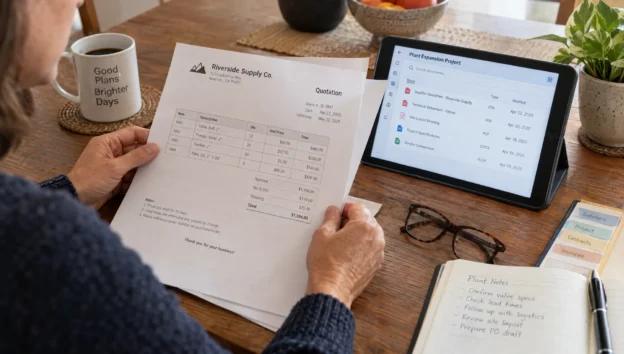
Industrial buyers rarely move from a single advertisement to a purchase order. An engineer researches specifications, a maintenance manager calls about availability and procurement requests a formal quote. Useful examples of omnichannel buyer journeys show how those interactions connect, so each person can move forward without reconstructing the project for every department they contact.
For manufacturers, distributors and industrial service firms, that connection is the difference between being available everywhere and being easy to buy from. A website, trade show booth and sales team can all perform well individually while the overall buying experience remains frustrating. The seven illustrative scenarios below show what information should travel between channels, who needs it and how to judge whether the handoff worked. They are hypothetical workflows, not claims about specific companies or client results.
What these examples of omnichannel journeys have in common
Omnichannel means preserving relevant buyer context as people move between digital and human interactions. It does not require every channel, a large technology budget or unrestricted sharing of customer information.
Consider a buyer who submits equipment requirements online, then calls a branch. If the representative can retrieve those requirements and continue the conversation, the channels are connected. If the buyer must start again, the business has multiple channels but a disconnected journey.
| Buyer interaction | Multichannel experience | Omnichannel experience |
|---|---|---|
| Website inquiry followed by a call | The caller repeats the application details | The representative confirms the submitted requirements |
| Trade show conversation followed by email | Everyone receives a generic brochure | Follow-up addresses the documented project |
| Quote followed by a branch visit | Staff cannot locate the current quote | Authorized staff retrieve the correct revision |
| Service request followed by a parts order | The buyer identifies the equipment again | The order references the verified equipment record |
The goal is continuity, not identical messaging. Engineering, operations and purchasing need different answers drawn from consistent project information.
Establish the promise and the handoff first
Before connecting software, decide what buyers should understand about your offer. Availability, application expertise, documented quality and installation support are different reasons to choose a supplier. Each needs evidence, not just repetition across channels.
The work on positioning and commercial communication described by Valore Percepito provides a relevant parallel: make differentiation and credibility clear before amplifying the message. In industrial examples of omnichannel selling, that means the website’s promise must survive the conversation with sales and the wording of the quotation.
Then select one journey to improve. Define its starting event, next action and owner. A manageable first project might connect a technical inquiry form to an assigned salesperson, followed by a scheduled application review.
Document the information required for that transition: company, application, product interest, urgency and preferred contact method. Separate confirmed facts from assumptions. Your omnichannel campaign management across sales teams should establish who updates the record and what happens when an inquiry remains unassigned.
Seven connected industrial buyer journeys
Each scenario follows the buyer beyond the initial conversion. The important moment is usually the transition between teams, not the first click.
1. Search research becomes a qualified pump application
A process engineer searches for pumps suitable for a demanding fluid-handling application. An organic search result leads to an application page explaining operating considerations, available documentation and when an engineering review is necessary.
The engineer submits preliminary requirements and requests a discussion. The form creates or updates a CRM record, and an application specialist reviews the submission before calling. Instead of repeating intake questions, the specialist clarifies missing conditions and arranges a site visit if needed.
These are meaningful examples of omnichannel journeys because application context moves from search to the website, then into the technical conversation. A page visit alone does not establish suitability, and the proposed equipment still requires appropriate verification.
After the visit, the specialist attaches confirmed requirements to the opportunity. Procurement receives a quotation referencing those requirements, while engineering receives the relevant technical documents. Both work from the same project revision.
Marketing owns the accuracy of the application page, sales owns follow-up and engineering owns technical approval. The CRM should identify which requirements are preliminary and which have been validated.
Measure the share of inquiries that reach a completed application review and the frequency of repeated intake questions. More form submissions are not an improvement if specialists spend their time correcting incomplete or misleading requests.
2. An urgent maintenance search continues at the distributor counter
A maintenance supervisor searches on a phone for a replacement bearing near a Houston plant. A distributor’s paid search ad leads to a branch page with clear contact details and a way to request an availability check.
The supervisor calls rather than completing a form. The branch employee records the requested part, equipment context and urgency, then checks the appropriate inventory system. Any alternative requires the necessary compatibility review; urgency is not a reason to assume interchangeability.
When the buyer arrives, authorized counter staff retrieve the inquiry and continue the transaction. They confirm the approved item, purchasing requirements and collection details instead of asking the supervisor to explain the breakdown again.
Local distributors offer practical examples of omnichannel service when phone and counter interactions share a usable record. The connection can be simple: a reference number and a reliable lookup process may matter more than advanced personalization.
Keep availability claims precise. A website should distinguish an inquiry from a confirmed reservation, and staff should communicate when stock information was checked.
Track time from initial contact to confirmed availability, failed pickups and orders delayed by missing purchase authorization. Call-source data can help evaluate advertising, but a tracking number alone does not connect the operational journey.
3. A trade show discussion becomes a focused retrofit evaluation
At an automation trade show, a plant manager discusses an aging controls system with an integrator. The booth representative records the equipment family, operating constraint and agreed next step, with appropriate permission for follow-up.
Back at the office, the manager receives a relevant technical resource and an invitation to an engineering discussion. The message refers to the actual project rather than treating the contact as a generic badge scan.
Trade shows become useful examples of omnichannel engagement when the booth conversation determines what happens next. Scanning a badge and adding the contact to an unrelated newsletter does not provide continuity.
During the evaluation call, the integrator confirms what can be assessed remotely and what requires an on-site survey. The resulting opportunity includes the maintenance lead and the person responsible for capital approval, with their roles clearly distinguished.
The engineering team receives the original notes before the survey. Afterward, the proposal separates confirmed scope, unresolved assumptions and potential shutdown requirements. Marketing pauses introductory event follow-up once the active sales process begins.
Evaluate meetings held, surveys completed and opportunities accepted by sales. Also check whether contacts receive contradictory messages after the event. A buyer discussing implementation should not simultaneously receive automated emails asking whether they have heard of the company.
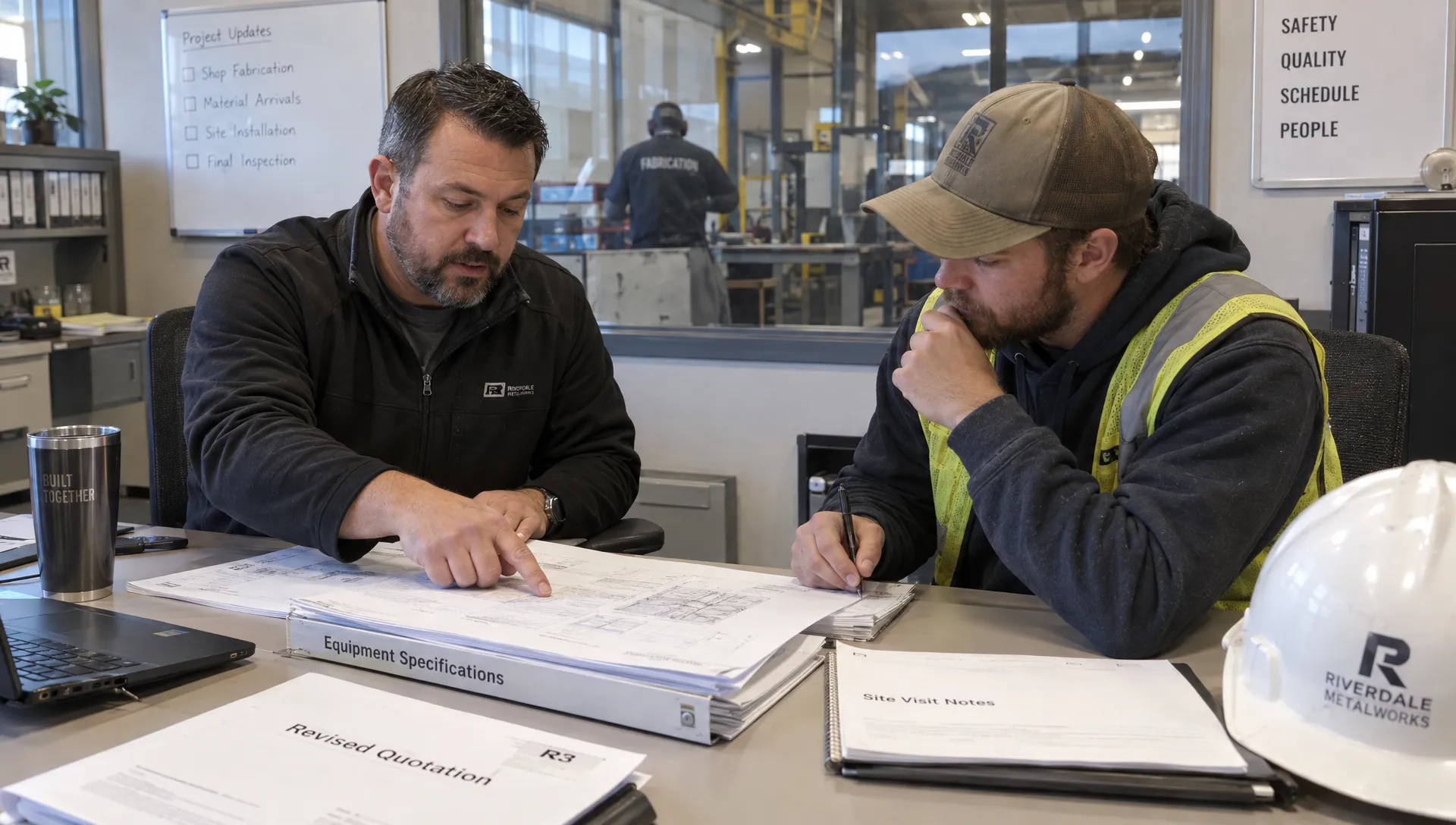
4. A fabrication RFQ stays consistent through technical revisions
An engineering contractor finds a fabricator through an industry article, reviews its capabilities and submits a request for quotation. The inquiry includes drawings and project requirements through an appropriately controlled submission process.
The estimator acknowledges receipt, assigns an RFQ identifier and requests missing details. When the buyer phones, the estimator can locate the submission without asking for another email containing the same files.
RFQ workflows are strong examples of omnichannel coordination because technical clarification, commercial negotiation and document control must remain connected. A shared contact name is not enough when the wrong drawing revision can change the scope.
During clarification, engineering resolves technical questions while procurement discusses terms. Each material change receives a documented revision. The quotation identifies the drawings and assumptions used, rather than relying on whichever attachment happened to arrive last.
If the project proceeds, the order acknowledgment references the agreed scope. Production receives the approved information through the company’s established release process, not an uncontrolled collection of marketing and sales notes.
Useful measures include acknowledgment time, clarification turnaround and quotes requiring rework because staff used outdated information. Sensitive drawings also require access controls and suitable retention rules. Connecting channels should never mean placing every project file in a broadly accessible marketing system.
5. A manufacturer transfers an inquiry without losing the distributor
A buyer researching a valve reaches a manufacturer’s product page and asks for local application support. The manufacturer serves the region through a distributor, so the next step involves another organization rather than another internal department.
With an appropriate basis for sharing the inquiry, the manufacturer passes the relevant requirements to the distributor and tells the buyer who will respond. The distributor accepts ownership, confirms the application details and continues the conversation.
Channel-partner examples of omnichannel selling depend on an acknowledged handoff. Forwarding an email without checking ownership leaves the buyer uncertain and can create conflict between direct sales and distribution.
The manufacturer remains available for product-level technical questions. The distributor manages its assigned commercial responsibilities, including local coordination and the quotation where applicable. Both parties understand when to escalate a question and which information they may share.
A simple referral identifier can connect the records without exposing every contact or confidential commercial detail. Partners need clear rules for duplicate inquiries, territory questions and requests that receive no response.
Measure accepted referrals, time to first meaningful contact and inquiries returned for missing information. Also review buyer complaints about being passed between companies. The experience is connected only when the customer knows who owns the next step and that owner has enough context to act.
6. An installed-equipment service call leads to the correct spare part
A maintenance technician needs a replacement component for installed equipment. The technician starts with a service phone number or an equipment-label link, then provides a serial number and a description of the issue.
Service verifies the equipment configuration before recommending the next action. If a replacement part is appropriate, the buyer receives the confirmed part reference and a route to request a quote or place an authorized order.
These service-led examples of omnichannel support depend on equipment identity, not merely contact identity. Knowing the buyer’s name does not establish which version of a machine is installed or whether its configuration has changed.
The parts team retrieves the service reference and verified recommendation. It checks current availability and commercial terms rather than treating a historical service record as a live inventory promise.
Following fulfillment, installation or service documentation can be associated with the equipment record where appropriate. The buyer should not receive unrelated replacement-equipment promotions simply because a support request triggered a marketing workflow.
Track incorrect-part returns, orders needing manual correction and time from verification to an actionable quote. Keep access permissions proportionate: a procurement contact may need pricing and order status without needing unrestricted access to maintenance records or service discussions. Equipment records also need a process for correcting outdated ownership and configuration information.
7. A successful plant pilot becomes a multi-site purchasing decision
A manufacturer completes a limited trial of an industrial monitoring solution at one facility. The local operations team has useful findings, but corporate procurement and other plants were not involved in the original evaluation.
The supplier turns the approved pilot findings into a controlled decision package. Operations receives the implementation requirements, finance receives documented cost assumptions and procurement receives the proposed commercial structure. Claims stay within what the pilot actually established.
Expansion projects provide examples of omnichannel buying across a committee. Consistency means using the same verified evidence while answering each stakeholder’s different questions, not sending everyone the same presentation.
A corporate meeting leads to site-specific assessments. Each facility’s requirements remain visible within the broader account opportunity, so the supplier does not assume that one plant’s results guarantee another’s outcome.
Sales coordinates the commercial discussion, technical staff validate site differences and the customer identifies its own approval responsibilities. Relevant digital resources support those conversations without replacing the necessary human review.
Measure progression from pilot review to approved site assessments and purchasing decisions. Record why sites pause or decline. A connected journey should reveal genuine obstacles, such as integration work or local operating requirements, rather than conceal them behind an optimistic account-level pipeline stage.
Measure continuity and protect buyer trust
Start with the handoff most likely to delay a purchase. Sample recent inquiries and check whether the receiving team had the promised information, accepted responsibility and completed the next action.
Across these examples of omnichannel coordination, useful indicators include repeated intake requests, unassigned inquiries, outdated quote revisions and time between agreed milestones. Compare similar journey types rather than combining emergency parts orders with long-cycle capital projects.
Revenue attribution answers a different question. It can help explain which interactions preceded an opportunity, but it does not prove that one advertisement or download caused the sale. Account-level reporting must also distinguish known contacts from anonymous visitors and avoid treating shared company domains as proof of individual identity.
A practical approach to measuring omnichannel marketing success connects operational measures to qualified opportunities, order quality and commercial outcomes.
Respect contact preferences, applicable consent requirements and contractual restrictions. A request for a quotation should not automatically become permission for every marketing campaign. Capture only information needed for the task, limit access and establish correction and retention procedures. Suppress or adjust automated messages when a service issue or active negotiation makes them inappropriate.
Frequently asked questions
What is an omnichannel example in industrial sales? A buyer submits equipment requirements online, discusses them with an application specialist and receives a quotation based on the same verified requirements. The defining feature is that useful context survives each transition.
Can a small industrial supplier do this without expensive software? Yes. A well-maintained CRM, clear ownership and a dependable inquiry reference can connect a focused journey. More complex integrations become useful when manual transfers cause recurring delays, errors or access-control problems.
Which examples of omnichannel journeys should a supplier prioritize? Start with frequent, valuable journeys where buyers repeatedly explain themselves or staff lose track of the next action. Common candidates include technical inquiries, distributor referrals and replacement-part requests. Choose a scope your team can maintain reliably.
Does every buyer interaction need to be tracked? No. Track what supports the agreed service or sales process, subject to applicable requirements and buyer preferences. Omnichannel coordination does not require identifying every anonymous visitor or storing every conversation indefinitely.
Connect one industrial buying journey first
Choose one recurring friction point: a technical form that goes nowhere, an RFQ that loses its revision history or a distributor referral without an owner. Define the handoff, assign responsibility and test the experience from the buyer’s side.
For help aligning industrial SEO, PPC and inbound marketing with those buying journeys, explore Andy Alagappan’s B2B marketing services. Start with the customer transition you need to improve, then select the channels that support it.