


A healthy sales pipeline does more than hold a list of names. It gives your sales team a steady flow of relevant opportunities, clear buying signals and enough context to know where to spend time. That is why effective lead generation services are not just about filling the top of the funnel. They are about improving the quality, timing and movement of every opportunity inside it.
For B2B, industrial and technical service companies, this matters even more. Buyers may spend weeks or months comparing vendors before they ever submit a form. Several people may influence the decision. Procurement, engineering, operations and leadership may all look at the same solution from different angles. A pipeline built on weak targeting quickly becomes noisy, expensive and frustrating.
The right lead generation approach creates a healthier pipeline by connecting marketing strategy, search visibility, paid campaigns, conversion assets, lead qualification and sales follow-up into one operating system.
What a Healthier Pipeline Actually Means
A healthy pipeline is not simply a bigger pipeline. More opportunities can help, but only if they are the right opportunities. A pipeline can look full in a CRM and still be unhealthy if most leads are poor fits, slow to respond or unlikely to buy.
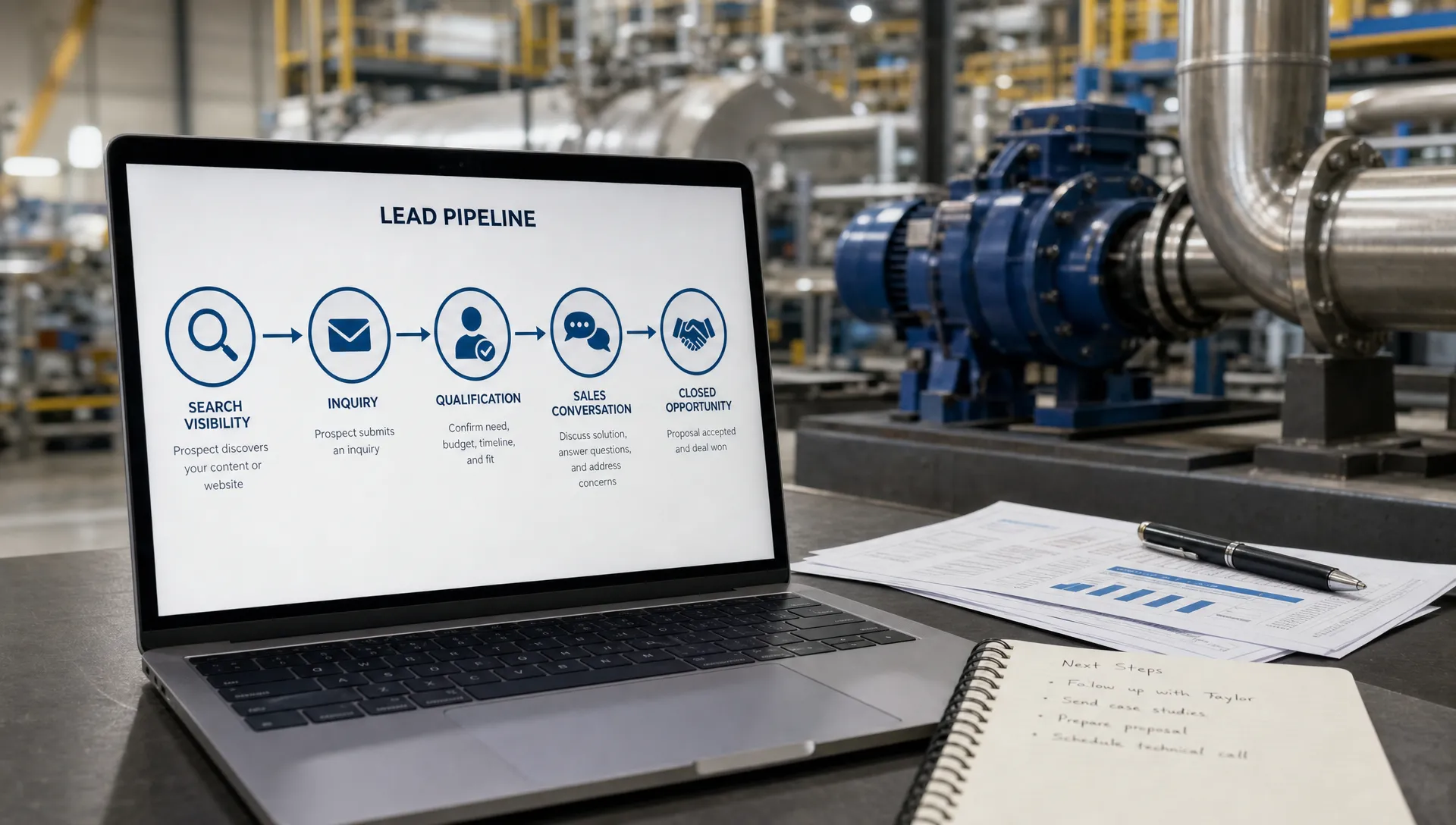
For industrial and B2B firms, pipeline health usually comes down to five factors: fit, intent, source quality, sales readiness and stage movement. When those factors are weak, sales teams waste time chasing contacts who downloaded something casually or filled out a form without a serious business need.
| Pipeline signal | Unhealthy pipeline | Healthier pipeline |
|---|---|---|
| Lead fit | Many inquiries from wrong industries, company sizes or geographies | Leads match target accounts, markets and service capabilities |
| Buyer intent | Contacts ask broad questions with no clear need | Prospects search for solutions, pricing factors, comparisons or vendor help |
| Stage movement | Deals sit in early stages for weeks with little response | Qualified opportunities advance after useful follow-up |
| Source mix | Overdependence on referrals, old lists or one ad channel | Balanced visibility across SEO, PPC, content and targeted outreach |
| Sales feedback | Marketing measures form fills only | Marketing and sales review lead quality together |
Lead generation services improve these signals by building a system around the kind of buyer your company can actually serve profitably.
Why Lead Generation Services Affect More Than Lead Volume
Many companies first look for lead generation help when lead flow drops. That is understandable, but volume is only part of the problem. The deeper issue is often pipeline reliability.
A good lead generation partner helps answer questions like:
- Which buyers are worth pursuing?
- What problems are they trying to solve before they contact sales?
- Which search terms or ad campaigns show commercial intent?
- What content helps qualify a buyer instead of attracting random traffic?
- Which leads deserve fast sales follow-up and which need nurturing?
This is where professional lead generation services differ from isolated tactics. Buying ads without an offer, publishing blogs without a conversion path or collecting form fills without qualification criteria may create activity, but not necessarily sales pipeline health.
For industrial firms, the targeting layer is especially important. A manufacturer, distributor, engineering firm or B2B service provider may need fewer total leads than a consumer brand, but each lead needs to be closer to the right account profile. If your team sells a specialized solution, a broad campaign aimed at everyone can bury good opportunities under irrelevant inquiries.
For a deeper look at the industrial side of this challenge, Andy Alagappan has outlined a practical lead generation strategy for industrial firms that explains why qualified demand matters more than raw inquiry count.
Start With Fit Before You Drive Traffic
Lead generation services build a stronger pipeline by defining fit before money is spent on campaigns. This starts with your ideal customer profile. In B2B, that profile should go beyond basic demographics and include operational realities.
A useful profile may include company size, industry segment, geography, equipment type, service needs, buying triggers, budget range, regulatory requirements and urgency. It should also identify poor-fit leads. For example, some inquiries may come from companies that are too small, outside your service area or looking for work your team does not perform.
This definition protects the pipeline. When targeting is loose, marketing sends sales too many leads that cannot close. When targeting is specific, campaigns can be built around the accounts, problems and decision makers that matter.
Fit-first lead generation also improves messaging. Instead of generic claims such as “full-service solutions,” campaigns can speak directly to buyer concerns: downtime, safety, compliance, efficiency, turnaround time, technical capability, maintenance costs or long-term vendor reliability.
That kind of specificity is what helps a buyer recognize that your company understands their situation.
Capture Demand From Buyers Already Searching
Search is often one of the strongest channels for healthier B2B pipelines because it reaches buyers while they are actively researching. A prospect searching for a specific service, local provider, technical solution or vendor comparison is showing more intent than someone who casually sees a social post.
SEO and PPC can work together here. SEO builds durable visibility for high-value search terms, educational content and service pages. PPC creates faster visibility for priority keywords, locations and offers. Together, they help your company appear when prospects are looking for help, not just when your team is trying to interrupt them.
The key is to avoid chasing traffic for its own sake. A blog post that attracts thousands of unrelated visitors may look successful in analytics, but it does little for pipeline health. A service page that attracts fewer visitors but produces serious inquiries from the right industries may be far more valuable.
This is why keyword intent matters. Search terms tied to technical problems, vendor evaluation, local service needs or purchasing criteria are usually more pipeline-friendly than broad informational phrases. Andy Alagappan’s article on how an SEO marketing service improves lead quality expands on this connection between search intent and better prospects.
Build Conversion Points That Qualify, Not Just Capture
A lead form is not a strategy. It is only one part of the conversion path. Strong lead generation services improve pipeline health by designing conversion points that help prospects take the right next step and give your sales team useful information.
For a B2B or industrial website, conversion points may include request-a-quote forms, consultation forms, specification downloads, assessment tools, service-specific landing pages or a lead calculator. The right choice depends on the buyer’s stage of awareness.
A buyer comparing vendors may be ready for a consultation. A buyer still defining the problem may respond better to a guide, checklist or technical explanation. Both can be valuable, but they should not be treated the same inside the pipeline.
Conversion pages should also reduce uncertainty. Buyers want to know whether your company serves their industry, understands their constraints and can handle the complexity of the work. Proof matters. This is true across niche technical services, from industrial marketing to safety-critical training providers. A specialized provider of technical diving and instructor training in Thailand shows how clear positioning, experience and safety focus can turn a niche service page into a stronger trust signal for qualified prospects.
When conversion points ask the right questions and present the right proof, sales teams receive leads with better context.
Nurture Leads That Are Not Ready Yet
Many B2B buyers are not ready to buy the first time they visit your website. That does not make them bad leads. It means they need the right follow-up path.
Lead generation services support pipeline health by separating immediate sales opportunities from longer-term prospects. This prevents sales teams from overpursuing early-stage contacts and allows marketing to keep useful communication going.
Nurture programs can include educational emails, retargeting ads, LinkedIn content, case studies, comparison pages, industry-specific articles and reminders to schedule a consultation. The goal is not to flood the prospect with messages. It is to stay relevant while they move from awareness to evaluation.
This is especially useful in markets with long buying cycles. Industrial buyers may need internal approval, budget timing, technical review or multiple vendor discussions before they act. A healthy pipeline accounts for that reality instead of treating every non-responsive lead as lost.
Use Lead Scoring to Prioritize Sales Time
Sales time is expensive. A healthier pipeline helps salespeople spend it where it has the best chance of producing revenue.
Lead scoring can help, as long as it is grounded in real buying signals. For example, a prospect who visits multiple service pages, returns to the website, submits a detailed form and matches your target industry likely deserves faster follow-up than someone who downloads a broad guide with a personal email address.
Useful scoring criteria often include:
- Company fit based on industry, size, location or application
- Behavioral intent based on pages visited, forms submitted or repeat visits
- Engagement with emails, ads or content offers
- Stated urgency, budget, project details or technical requirements
- Sales feedback from previous conversations
Lead scoring should not become a rigid black box. It works best when marketing and sales review it regularly and adjust based on which leads actually convert.
Close the Feedback Loop With Sales
Lead generation services build a healthier pipeline when they measure beyond form submissions. A form fill is only the start. The more important questions are whether the lead was contacted, whether it was qualified, whether it became an opportunity and whether it turned into revenue.
Marketing teams need sales feedback to improve targeting. Sales teams need marketing data to understand where leads came from and what prospects already saw. Without this loop, both sides work with partial information.
A simple pipeline review can uncover major issues. If paid search leads respond quickly but rarely qualify, targeting or landing page messaging may be too broad. If SEO leads qualify well but volume is low, the company may need more content or stronger technical optimization. If form fills are strong but sales conversations are weak, follow-up timing or qualification scripts may need attention.
| Metric to review | What it tells you | Pipeline improvement to consider |
|---|---|---|
| Lead-to-qualified rate | Whether inquiries match your target customer | Refine targeting, forms and messaging |
| Source-to-opportunity rate | Which channels create real sales conversations | Shift budget toward higher-quality sources |
| Speed to lead | How quickly sales responds to inquiries | Improve alerts, routing and ownership |
| Opportunity aging | Where deals stall inside the pipeline | Add nurture content or sales enablement assets |
| Closed-won source | Which campaigns contribute to revenue | Invest in channels tied to actual sales |
This is how lead generation becomes a continuous improvement process instead of a monthly count of leads.
Common Pipeline Problems Lead Generation Services Can Fix
A healthier pipeline usually starts by identifying what is broken. Many B2B companies are dealing with one or more familiar problems.
Lead flow may be inconsistent, with strong months followed by quiet periods. Sales may receive leads that are too early, too small or outside the company’s core service area. Marketing may produce traffic but not enough conversions. Paid campaigns may create inquiries but no profitable opportunities. The website may explain services, but fail to guide prospects toward a clear next step.
Lead generation services can address these problems by aligning strategy with buyer intent and sales reality. That could mean rebuilding service pages, improving search visibility, narrowing PPC targeting, strengthening landing pages, adding qualification questions, creating nurture content or improving tracking inside the CRM.
If inconsistency is the main issue, this guide on how to fix inconsistent inbound leads generation covers several root causes that often sit beneath unpredictable inquiry volume.
What to Look for in a Lead Generation Partner
A strong partner should ask about your business before talking about channels. If the conversation begins and ends with traffic, impressions or generic ad packages, the strategy may not be pipeline-focused enough.
Look for a partner who wants to understand your best customers, sales process, service capacity, margins, geography, buying committees and common objections. They should be able to connect SEO, PPC, content and conversion strategy to actual pipeline outcomes.
They should also be comfortable saying no to poor-fit tactics. Not every company needs every channel. Some companies need stronger SEO foundations. Others need paid search to capture urgent demand. Some need website redesign, better content or clearer offers before more traffic will help.
The best lead generation services are not just campaign operators. They act as a bridge between your market, your website and your sales team.
Frequently Asked Questions
What are lead generation services? Lead generation services help businesses attract, capture, qualify and nurture potential customers. For B2B companies, this often includes SEO, PPC, content strategy, landing pages, forms, campaign tracking and sales handoff processes.
How do lead generation services improve pipeline quality? They improve pipeline quality by targeting better-fit buyers, focusing on higher-intent channels, using conversion points that collect useful information and creating feedback loops between marketing and sales.
Are lead generation services only useful when lead volume is low? No. They are also useful when a company gets plenty of inquiries but few qualified opportunities. In that case, the goal is to reduce waste, improve targeting and help sales focus on better prospects.
How long does it take to build a healthier pipeline? PPC and landing page improvements can create faster feedback, while SEO, content and nurture programs usually take longer to mature. The timeline depends on competition, website condition, sales cycle length and how clearly the target buyer is defined.
What should B2B companies measure besides total leads? Companies should measure qualified lead rate, source-to-opportunity rate, sales response time, opportunity value, pipeline velocity and closed-won revenue by source. These metrics show whether marketing is creating business value, not just activity.
Build a Pipeline Your Sales Team Can Trust
Lead generation services are most valuable when they help your company build a pipeline that is consistent, qualified and measurable. For B2B and industrial firms, that means attracting the right buyers, giving them useful reasons to engage and giving sales the context needed to move opportunities forward.
If your current pipeline feels unpredictable, crowded with poor-fit inquiries or too dependent on referrals, Andy Alagappan can help you connect SEO, PPC, inbound marketing and web content into a clearer lead generation system. A healthier pipeline starts with better strategy, not just more leads.