
For B2B and industrial companies, the phrase “blog and seo” may sound like a content marketing basics topic, but the real value appears when both are built around lead quality. A blog gives your company a place to answer buyer questions in depth. SEO helps the right buyers find those answers when they are actively researching a problem, supplier, process or solution.
That pairing matters because B2B buyers rarely convert after one search or one page visit. They compare options, ask technical questions, review credibility signals and look for evidence that a vendor understands their industry. A well-planned blog gives them that evidence, while SEO connects each post to a real search need.
How blog and seo work together in B2B lead generation
A blog without SEO can become a library nobody visits. SEO without useful content can generate impressions but fail to create trust. Together, they form a practical lead generation system: discover what buyers are searching for, publish useful answers, guide readers to the next step and measure which topics produce qualified inquiries.
This is especially important in B2B markets where search volume may be lower than consumer markets, but buyer value is higher. A niche industrial query might attract fewer visitors, yet one good lead can justify months of content investment.
The blog creates depth and authority
Your website’s core service pages should explain what you do, who you serve and why a buyer should contact you. Blog content can go deeper. It can explain common failures, compare approaches, define technical terms, answer procurement questions and show how your team thinks.
When blog and seo are planned together, each article becomes more than a post. It becomes a targeted entry point for a specific buyer question, often earlier in the decision process than a service page can reach.
SEO connects that depth to demand
SEO gives structure to blog planning. Instead of writing only about company news or broad industry opinions, you can identify queries that reflect real buyer intent. Some searches reveal early education needs, such as “how to reduce downtime in manufacturing.” Others show evaluation intent, such as “industrial marketing agency for manufacturers.”
The goal is not to chase every keyword. The goal is to match business priorities with search intent, then create content strong enough to earn attention from the right companies.
Why B2B buyers respond to helpful search content
Most B2B buyers want to reduce risk before they talk to sales. They look for vendors who understand their constraints, speak their language and can explain options clearly. A strong blog helps your company show that expertise before a form fill or phone call happens.
In industrial and technical markets, this can be even more valuable. Buyers may need to justify decisions internally, compare specifications or educate non-technical stakeholders. If your blog helps them do that, your company becomes part of their buying process earlier.
Search intent is the bridge between traffic and leads
Not all traffic is equally valuable. A blog post that attracts students, job seekers or broad curiosity clicks may look good in analytics but produce little revenue. A post that answers a specific operational, purchasing or technical question may bring fewer visits but better sales conversations.
That is why blog and seo should be evaluated by lead relevance, not just rankings. The best content strategy attracts people who match your ideal customer profile and gives them a clear reason to continue.
| Buyer intent stage | Typical search behavior | Blog content that supports leads |
|---|---|---|
| Problem awareness | Searches symptoms, risks or causes | Educational guides, issue explainers, troubleshooting posts |
| Solution research | Compares methods or service types | Comparison articles, process breakdowns, strategy posts |
| Vendor evaluation | Looks for proof, fit and expertise | Case-focused posts, service explainers, industry-specific pages |
| Decision support | Needs internal justification | ROI discussions, checklists, implementation guides |
Turning blog traffic into a lead path
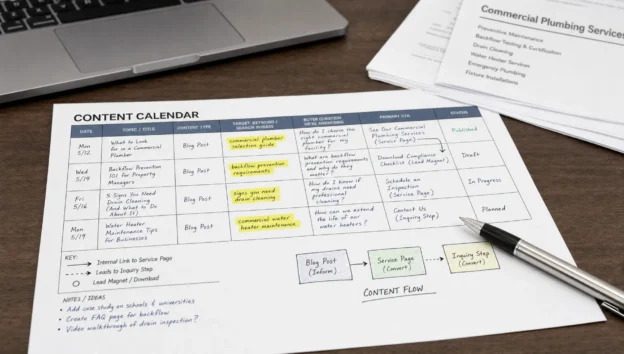
Getting a visitor to your blog is only the first step. To generate B2B leads, the page must help the reader move from information gathering to action. That does not mean every post should push a hard sales message. It means each article should offer a logical next step based on the reader’s intent.
For example, a top-of-funnel post might point readers to a more detailed guide. A middle-of-funnel post might invite them to review an SEO service page, a website redesign resource or a consultation form. The path should feel helpful rather than forced.
If your team is still defining the foundation, a guide on how to build an SEO blog that attracts qualified buyers can help align topics with the actual questions prospects ask before they contact a vendor.
Use calls to action that match the reader’s readiness
A visitor reading a basic educational post may not be ready to request a proposal. They may be ready to download a checklist, read a related article or compare solution options. A visitor reading a specific service-related post may be much closer to a sales conversation.
Blog and seo perform better when calls to action reflect that difference. Instead of using the same CTA everywhere, match the offer to the intent of the page.

Strengthen the page around conversion signals
The blog post itself should be easy to scan, technically sound and connected to relevant pages on your site. Include clear headings, helpful examples, internal links and visible next steps. If the content discusses a service you offer, link naturally to a page that explains that service in more detail.
For instance, companies that want a deeper look at how search visibility turns into inquiries can review how search engine optimization services drive B2B leads. That kind of internal path helps readers continue learning while giving search engines a clearer view of your site structure.
The lead generation loop after a form fill
A blog can influence a buyer long before they submit a form, but the handoff after conversion is just as important. If someone downloads a resource, asks a question or requests information, the follow-up should reflect what they were reading and what problem they likely want to solve.
This is where blog and seo connect with inbound marketing operations. The article brings in the right visitor, the form captures interest and the follow-up process helps determine whether the lead is a fit.
Segment leads by topic and intent
A form submission from a pricing-related page should not be treated the same as a newsletter signup from an educational article. Topic, page type and CTA all provide useful signals. A reader who spends time on multiple posts about industrial SEO may need a different follow-up than someone researching responsive web design or PPC management.
Basic segmentation can help sales teams prioritize outreach. It also helps marketing teams understand which content themes attract serious buyers instead of casual readers.
Add automation without losing the human touch
Marketing automation can help with prompt follow-up, lead routing and nurturing, but it works best when the workflows are simple and tied to clear goals. For smaller B2B companies, it is usually better to start with a few practical triggers than to build a complex system nobody maintains.
A useful next step is reviewing these marketing automation scenarios for SMEs, which explain practical workflows such as form follow-up, qualification, routing, nurturing and reactivation. Those scenarios fit well with a blog-driven lead generation strategy because they turn content engagement into timely action.
What to measure when blog and seo support B2B leads
Rankings matter, but they should not be the only scoreboard. A blog post that ranks well but never contributes to a lead path may need a stronger CTA, better internal links or a clearer connection to buyer intent. A post with modest traffic may be highly valuable if it influences qualified prospects.
The best measurement approach combines SEO visibility, engagement and lead quality. That means looking beyond pageviews and asking whether the content helps the sales pipeline.
| Metric | What it tells you | Why it matters for B2B |
|---|---|---|
| Organic impressions | Whether search engines are showing the content | Helps identify visibility opportunities |
| Organic clicks | Whether searchers choose your result | Shows title and meta relevance |
| Engagement on page | Whether readers find the content useful | Signals topic fit and content quality |
| Assisted conversions | Whether content contributes before a lead form | Captures influence across a longer buying journey |
| Lead quality | Whether inquiries match ideal customers | Keeps the strategy tied to revenue potential |
Review content by business value
A quarterly content review can reveal which posts deserve updates, which need better conversion paths and which should be consolidated. B2B industries change, customer questions evolve and competitors publish new content. Your blog should not sit untouched after publication.
If content is attracting the wrong audience, revisit the keyword target and search intent. If it is attracting the right audience but not converting, review the CTA, internal links and page experience. Strong SEO content writing for B2B conversions keeps the reader’s business problem at the center rather than writing only for search engines.
Common mistakes that weaken the strategy
Many companies invest in blogging but never connect it to a real SEO or lead generation plan. They publish sporadically, choose topics based on internal preferences or write posts that answer questions their customers are not asking. Over time, the blog becomes an archive rather than a growth asset.
Another common mistake is treating blog content as separate from the rest of the website. A post should support service pages, product pages, contact points and sales conversations. If a reader finishes the article and has nowhere useful to go, the content has done only half its job.
Avoid writing for volume alone
High publishing frequency is not a strategy by itself. A smaller number of well-researched posts can outperform a large batch of thin content, especially in specialized B2B markets. Each article should have a purpose: attract a defined audience, answer a meaningful question and guide the reader toward a next step.
Blog and seo work best when quality, structure and business relevance are treated as one system. That system should help buyers understand their problem, evaluate their options and recognize your company as a credible resource.
Frequently Asked Questions
How long does it take for a blog to generate B2B leads through SEO? It often takes several months for SEO-driven blog content to gain traction, especially in competitive markets. Timing depends on site authority, content quality, technical SEO, keyword difficulty and how well the posts are connected to conversion paths.
Should every B2B blog post target a keyword? Every post should have a clear search or buyer intent, but not every article needs to chase a high-volume keyword. Some valuable posts answer niche questions that produce fewer visits but stronger leads.
How often should a B2B company publish blog content? Consistency matters more than raw frequency. Many B2B companies do better with two high-quality, strategically planned posts per month than with weekly posts that lack depth or intent.
Can blog and seo support paid search campaigns too? Yes. Blog performance can reveal buyer questions, objections and wording that improve PPC landing pages and ad messaging. PPC data can also show which topics convert quickly enough to deserve more organic content investment.
Build a blog that brings in better B2B leads
A successful B2B blog is not just a publishing calendar. It is a search-driven lead generation asset that helps buyers find you, trust you and take the next logical step. When SEO guides topic selection and blog content supports buyer education, your website becomes more useful to prospects and more valuable to your sales team.
If your company needs help connecting content, SEO, PPC and inbound strategy, B2B Inbound Marketing in Houston can help you build a stronger path from search visibility to qualified leads.