


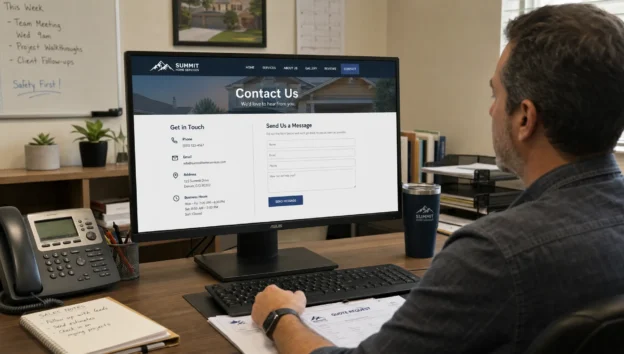
The first priority for an SEO specialist is not keyword research, a technical crawl or a new blog calendar. Those matter, but they come after one decision: which business outcomes should search traffic support first?
For B2B, industrial and professional service companies, SEO can quickly become busywork if it starts with rankings alone. A page can rank, attract visitors and still fail if the wrong people land on it. The best early work connects search demand to revenue, sales conversations, quoting activity and lead quality.
That means an SEO specialist should begin by identifying the highest-value search opportunities closest to the buyer journey, then remove the obstacles that keep those pages from being discovered, trusted and acted on.
Start With the Business Goal, Not the SEO Tool
SEO tools are useful, but they do not know your margins, sales cycle, best-fit customers or capacity constraints. Before auditing title tags or exporting keyword lists, an SEO specialist should ask what the business actually needs from organic search.
For a Houston industrial supplier, that may mean more quote requests for a specific product line. For a B2B service company, it may mean attracting decision-makers who are comparing vendors. For a manufacturer, it may mean supporting distributors with technical content that reduces sales friction.
The priority changes depending on the business model. An SEO specialist working on a professional-services site, for example a firm offering tax and accounting services in Australia, would likely prioritize service intent, location relevance and trust signals before broad educational content. An industrial marketing program may need product categories, specifications, applications and RFQ paths first.
If your team has not aligned on what SEO is supposed to influence, revisit a practical SEO definition marketing teams can use to make decisions before moving into execution.
Prioritize Pages That Can Produce Leads
Once the business goal is clear, the next priority is mapping the site’s existing pages to buyer intent. Not every page deserves equal attention. The homepage, service pages, product category pages, local landing pages and high-intent comparison content usually deserve review before informational blog posts.
A useful first pass is to separate pages into three groups:
- Revenue pages: Service, product, industry, application and location pages that can directly support an inquiry.
- Support pages: Case studies, FAQs, technical articles, buying guides and resource pages that help prospects move forward.
- Awareness pages: Educational content that introduces a problem, trend or method to early-stage visitors.
For most B2B companies, revenue pages should be fixed before publishing more awareness content. If core service pages are thin, slow, poorly structured or unclear, additional blog traffic may not improve lead flow. Organic growth should create better paths toward contact forms, phone calls, quote requests or proposal inquiries.
This is where an SEO specialist earns trust internally. Instead of saying, “We need more content,” the stronger recommendation is, “We need to improve the pages that buyers already use when they are close to taking action.”
Diagnose Search Intent Before Choosing Keywords
Keyword research is still essential, but it should be guided by intent. A keyword’s volume matters less than what the searcher is trying to accomplish.
A person searching “what is industrial SEO” may want an explanation. A person searching “industrial SEO agency Houston” is likely evaluating providers. A person searching for a specific product, certification or application may be closer to a purchasing conversation.
A good SEO specialist looks beyond keyword volume and studies the current search results. The ranking pages reveal what Google believes users want. Are the results mostly service pages, product pages, local businesses, tutorials, videos, directories or comparison articles? If your page format does not match that pattern, ranking becomes harder even if the page is technically optimized.
| Priority question | What it reveals | SEO action |
|---|---|---|
| Who is searching? | Buyer, researcher, engineer, owner or job seeker | Adjust page language and depth |
| What do they need next? | Quote, explanation, specification, vendor shortlist or local provider | Match the content format to the task |
| What pages rank now? | Google’s interpretation of intent | Build or revise the right page type |
| What would make them trust us? | Proof, experience, location, technical detail or responsiveness | Add credibility signals and conversion paths |
This intent-first approach is especially important in B2B and industrial SEO because one lead may be worth far more than thousands of low-fit visitors.
Fix Indexing, Crawling and Technical Barriers Early
After business priorities and intent are clear, the technical audit becomes more focused. The goal is not to chase every possible technical score. The goal is to find issues that prevent important pages from being crawled, indexed, understood or used.
An SEO specialist should review whether search engines can access the right pages, whether important pages are accidentally blocked, whether redirects are clean and whether duplicate or thin pages dilute authority. They should also check site speed, mobile usability, internal linking, schema markup where useful and basic on-page structure.
Technical SEO becomes urgent when revenue pages are affected. A slow blog archive is not as serious as a service page that fails on mobile. A missing meta description is not as serious as a product category hidden from search engines.
Google’s own public guidance has long emphasized making pages accessible, helpful and understandable to users and search engines. In practice, that means technical SEO should support visibility and usability, not become a separate checklist with no commercial context.
Strengthen the Pages Closest to Conversion
Once technical blockers are handled, improve the pages that should convert. This is often where SEO, messaging and web design overlap.
A high-priority service or product page should make the following clear within a few seconds: what the company provides, who it serves, where it operates, what problems it solves and what the visitor should do next. Many underperforming B2B pages fail because they speak in generalities. “Quality solutions for your business” is weaker than specific language about equipment, processes, industries, certifications or measurable outcomes.
Strong conversion-focused pages usually include:
- A clear headline aligned with the searcher’s need
- Specific service, product or application details
- Internal links to related capabilities and resources
- Proof points such as experience, markets served or examples
- A visible next step, such as a consultation, RFQ or enquiry form
If the site is being redesigned, SEO should be involved before wireframes are finalized. Page architecture, navigation, content hierarchy and conversion paths influence whether search traffic turns into pipeline. The case for planning these pieces together is covered in more detail in why web design and SEO should be planned together.

Build Internal Linking Around Buyer Paths
Internal linking is one of the most practical early wins because it helps both search engines and users understand which pages matter. For B2B sites, internal links should not be random. They should guide prospects from a problem to a service, from a service to proof and from proof to contact.
For example, an educational article about reducing downtime should link naturally to the relevant maintenance service or equipment solution. A product category page should link to application pages, technical guides or industries served. A case study should point readers toward the service that produced the result.
This structure helps distribute authority to important pages and gives visitors a reason to continue exploring. It also prevents the common problem of publishing blog posts that rank but never support lead generation.
Use Content Gaps Carefully
Content gaps matter, but they should not be treated as a command to publish everything competitors have published. A competitor may rank for topics that do not fit your offer, geography or sales process.
An SEO specialist should look for gaps that meet three conditions. The topic must match real search demand, connect to the company’s expertise and support a useful next step. If a topic checks only one of those boxes, it may not deserve early attention.
For industrial and B2B companies, useful content gaps often include application pages, industry-specific pages, technical FAQs, comparison resources, local service pages and problem-solving articles tied to buyer pain points. Broad trend content can work, but it is rarely the first priority when core commercial pages are weak.
This is also where PPC data can help. Paid search campaigns reveal which queries, messages and landing pages generate inquiries. An SEO specialist can use that information to prioritize organic pages with stronger commercial evidence instead of guessing from keyword volume alone.
Measure the Right SEO Signals First
Early SEO measurement should focus on whether the program is moving toward business impact. Rankings are useful, but they are not enough. Organic sessions are useful, but they can mislead if traffic quality is poor.
A practical first dashboard for an SEO specialist should include:
| Metric | Why it matters |
|---|---|
| Organic leads or enquiries | Shows whether traffic supports sales activity |
| Rankings for high-intent terms | Tracks visibility where buying intent is stronger |
| Impressions and clicks for revenue pages | Reveals whether commercial pages are gaining traction |
| Conversion rate by landing page | Identifies pages that need message or UX improvement |
| Indexed pages and crawl issues | Confirms that important pages remain discoverable |
| Assisted conversions | Captures SEO’s role in longer B2B buying journeys |
For B2B companies, lead quality should be reviewed with sales input. A form submission from the wrong industry or geography may look good in analytics but add little value. SEO specialists should build a feedback loop with sales teams so optimization is based on actual opportunities, not vanity metrics.
If the goal is better lead flow rather than traffic for its own sake, the strategy should connect rankings, content, landing pages and conversion paths. That broader approach is discussed in SEO optimization strategies that support better lead flow.
What Should an SEO Specialist Do in the First 30 Days?
The first month should produce clarity, not just reports. A good SEO specialist should be able to tell the business which pages matter most, what is blocking performance and what actions should happen first.
A strong first 30 days usually includes an intake with leadership or sales, a review of analytics and search data, a crawl of the site, a high-intent keyword and intent review, a conversion path assessment and a prioritized roadmap. The deliverable should separate urgent fixes from strategic opportunities.
The roadmap should also name what not to do yet. For example, launching a large blog program may be premature if the service pages do not explain the offer. Redesigning page visuals may not help if the site architecture hides the most important capabilities. Adding backlinks may be less urgent than fixing indexation problems on revenue pages.
Prioritization protects budget. It also helps business leaders see SEO as a growth system rather than a collection of isolated tasks.
A Simple Priority Order for Most B2B SEO Work
Every site is different, but many B2B and industrial SEO projects benefit from this sequence:
- Clarify the business objective: Define which products, services, industries or locations SEO should support first.
- Identify high-intent pages: Find the pages most likely to generate leads, quotes or sales conversations.
- Match pages to search intent: Confirm whether each priority page fits what searchers expect to find.
- Remove technical blockers: Fix crawl, indexation, mobile, speed and structural issues affecting important pages.
- Improve content and conversion paths: Make pages clearer, more specific and easier to act on.
- Build supporting content and links: Use internal links, FAQs, guides and proof pages to strengthen the buyer journey.
- Measure lead quality: Review organic performance against inquiries, opportunities and sales feedback.
This order keeps SEO practical. It avoids the common mistake of treating technical fixes, content production and link building as equal priorities at all times.
Frequently Asked Questions
What is the first thing an SEO specialist should do? The first step is to clarify the business outcome SEO should support. For B2B companies, that usually means identifying which services, products, industries or locations should generate better organic visibility and leads.
Should technical SEO come before content? Technical SEO should come early if crawl, indexation, speed or mobile issues affect important pages. If the site is technically accessible but the content does not match search intent, content and conversion improvements may be the higher priority.
How long does it take to see SEO results? Some technical and on-page improvements can produce early movement within weeks, but meaningful B2B SEO results often take several months. Timelines depend on competition, site condition, content quality and how quickly recommendations are implemented.
What should an SEO specialist avoid prioritizing first? They should avoid starting with low-intent blog content, vanity keywords or cosmetic changes before understanding business goals, search intent, technical barriers and conversion paths.
Need a Clearer SEO Priority Plan?
If your website has traffic but not enough qualified leads, the issue may not be effort. It may be priority. B2B Inbound Marketing helps companies focus SEO, PPC, inbound strategy, content and web improvements around visibility that supports real business conversations.
Start by identifying which pages should drive growth, then fix the obstacles that keep them from ranking and converting. A focused SEO specialist will not try to do everything first. They will find the work that matters most and build from there.