
Industrial companies have always relied on relationships, distributor networks, trade shows, referrals, and repeat customers. Those channels still matter. But they no longer cover the full buying journey.
Today, an engineer, plant manager, procurement lead, or operations executive often starts with search before reaching out to sales. They compare technical options, check supplier credibility, look for local or regional partners, and narrow the field long before a phone call. That is why organic SEO still matters for industrial companies, especially those selling complex products, technical services, or high-value B2B solutions.
Organic SEO is not just about ranking for a few broad keywords. For industrial businesses, it is about being discoverable when a serious buyer searches for a specific capability, material, process, certification, part, application, or problem. Done well, it helps your company show up at the moments when buyers are actively trying to solve something.
Industrial buyers research before they contact sales
Industrial sales cycles can be long, technical, and committee-driven. A buyer may not be ready to request a quote on the first visit. They may be trying to understand whether a process is feasible, whether a supplier works with their industry, or whether a product meets their specifications.
If your company does not appear during that research stage, your competitors get the first opportunity to educate the buyer. They also get the chance to frame the criteria the buyer will use later.
Organic search gives industrial companies a way to appear before the sales conversation begins. A well-structured website can answer questions about applications, materials, tolerances, service areas, lead times, capabilities, maintenance issues, and compliance requirements. That kind of content does more than attract traffic. It builds familiarity and trust.
Google's SEO Starter Guide reinforces a practical point that still applies in 2026: websites need to be understandable to both search engines and users. For industrial companies, that means clear page structure, relevant content, crawlable pages, descriptive titles, and pages that actually help buyers make progress.
Organic search fits the industrial sales cycle
Paid advertising can produce fast visibility, but industrial companies often need visibility that compounds over time. A buyer may search today, return three months later, share a page with an engineering team, and only contact vendors after internal approval.
Organic SEO supports this reality because useful pages can keep working long after they are published. A strong capability page, technical article, application guide, or service page can attract qualified visitors repeatedly without requiring a paid click every time.
That does not mean organic search replaces PPC. In many industrial markets, the best strategy combines both. Paid search can test messaging and capture immediate demand. Organic SEO builds durable visibility and reduces dependence on paid traffic over time. For a deeper look at the compounding value of organic visibility, the same principle is explained in this article on organic search engine optimization for long-term growth.
| Industrial business reality | How organic SEO helps |
|---|---|
| Long sales cycles | Keeps your company visible during research, comparison, and vendor selection |
| Technical buying criteria | Lets you explain capabilities, materials, processes, and applications in detail |
| Multiple decision-makers | Gives engineers, procurement, and executives content they can evaluate and share |
| High-value leads | Attracts buyers searching for specific solutions rather than casual visitors |
| Trust-sensitive decisions | Builds confidence through useful content, clear service pages, and proof points |
It captures specific, high-intent searches
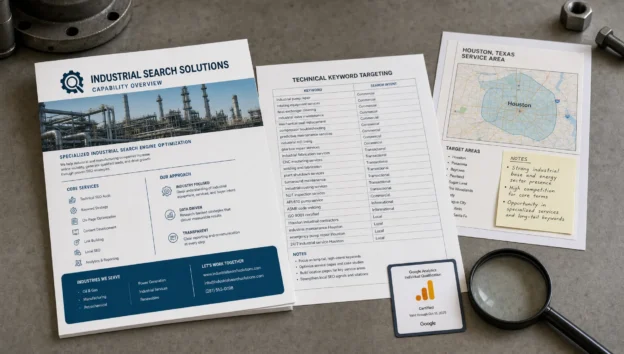
Industrial search behavior is often much more specific than consumer search behavior. A buyer might not search for a general phrase like manufacturing company. They may search for CNC machining for aerospace parts, industrial pump repair in Houston, ASME pressure vessel fabrication, corrosion-resistant coating contractor, or replacement conveyor belt supplier.
Those long-tail searches may have lower search volume, but they often reveal stronger intent. The person searching is not browsing casually. They are trying to solve a business problem.
This is where many industrial websites fall short. They may have a homepage, an about page, and a generic services page, but not enough depth to match the way buyers search. Organic SEO helps close that gap by aligning pages with real buying questions.
For example, a strong industrial SEO strategy may include pages for:
- Core services: Pages that clearly explain each major product or service instead of grouping everything into one broad page.
- Industries served: Content that shows relevance to oil and gas, manufacturing, logistics, construction, energy, chemicals, or other verticals.
- Applications and use cases: Pages that explain how a capability solves a specific operational problem.
- Location relevance: Pages and signals that help regional buyers understand whether you serve their market.
- Technical resources: Articles, FAQs, guides, and comparison content that help buyers evaluate options.
For Houston-area industrial firms, local and B2B relevance often overlap. A company may need to rank for both technical capability and geographic intent. That is why a focused approach to SEO Houston for B2B companies is different from a generic local SEO campaign.
It builds credibility before a sales call
Industrial buyers are risk-conscious. A poor supplier choice can create downtime, quality issues, safety concerns, missed deadlines, or expensive rework. That means buyers are not only looking for a vendor. They are looking for evidence that the vendor can be trusted.
Organic SEO helps because it forces clarity. To rank and convert, pages need to explain who you serve, what you do, where you operate, what makes your process credible, and how a buyer can take the next step. Search visibility and buyer confidence often improve together when a website becomes more useful.
This principle applies beyond heavy industry. Any service business that wants to be chosen online needs clear service information, coverage areas, proof points, and a simple path to request a quote. For instance, Malerhøj's painting contractor website shows how a service-focused business can present services, location coverage, customer confidence signals, and a contact path in one place. Industrial companies need the same kind of clarity, adapted to more technical and B2B buying needs.
For manufacturers, distributors, and industrial service providers, credibility signals might include certifications, industries served, equipment lists, safety standards, project examples, quality control processes, testimonials, downloadable resources, and clear contact options. Organic SEO works best when those elements are not buried or vague.
Technical SEO still matters for industrial websites
Many industrial websites have strong real-world expertise but weak site structure. Pages may be slow, hard to navigate, thin on content, difficult to crawl, or built around internal terminology that buyers do not use. In other cases, a website redesign unintentionally removes important pages or breaks rankings that took years to earn.
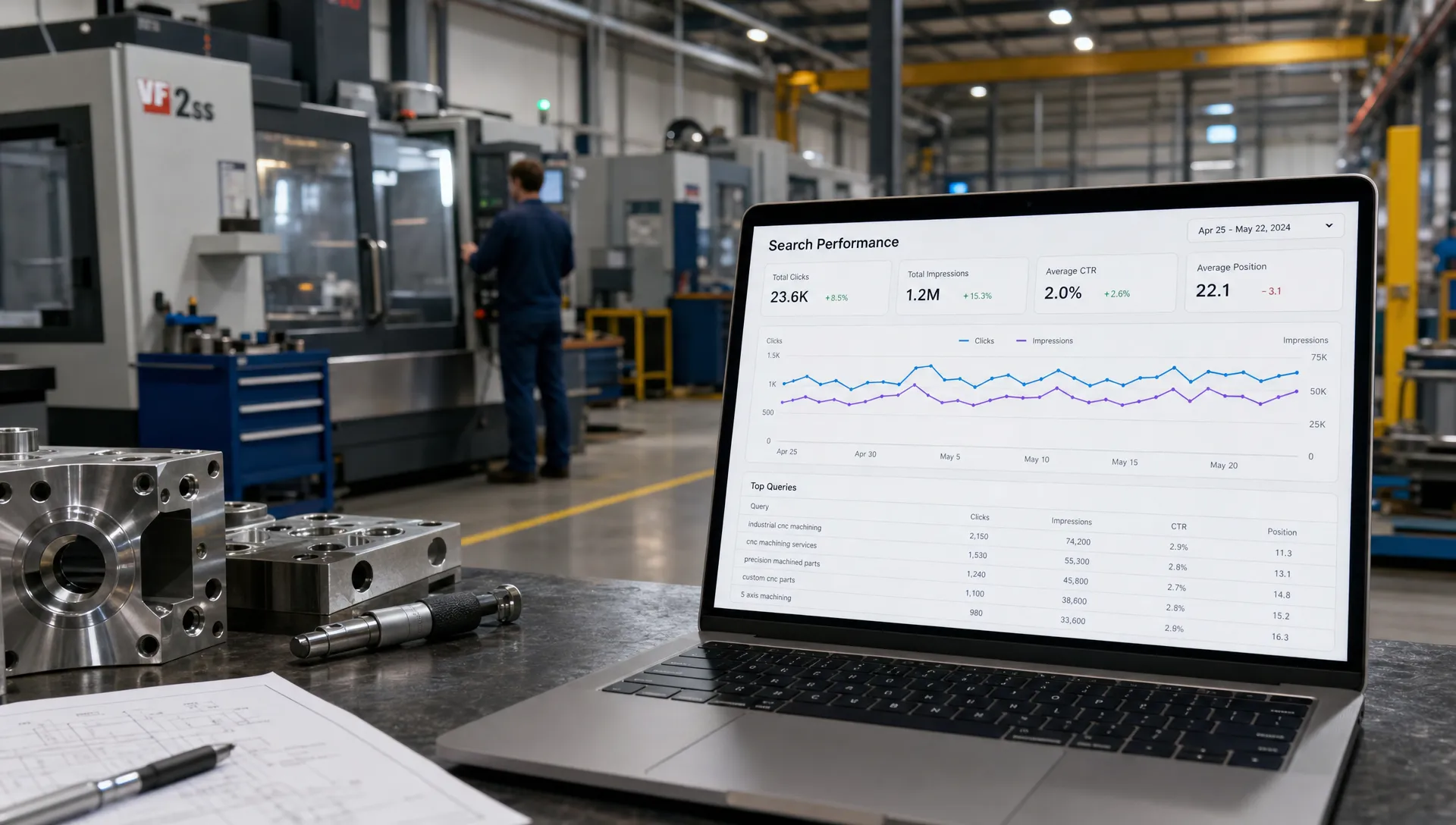
Technical SEO is the foundation that helps search engines discover, understand, and rank your content. It also affects the user experience for buyers who need information quickly. If a procurement manager cannot find a capability page, or an engineer cannot access a technical resource on mobile, the website loses value even if the company behind it is excellent.
Key technical areas include crawlability, internal linking, page speed, mobile usability, indexation, clean URL structure, redirects, duplicate content control, and logical navigation. These details may sound tactical, but they influence whether your best content can perform. Industrial companies planning a redesign should be especially careful because web design and SEO alignment can protect both rankings and lead generation.
Organic SEO strengthens paid search and sales enablement
Organic SEO is often treated as separate from paid search, but the two can support each other. PPC campaigns reveal which search terms, offers, and landing pages attract leads. Organic SEO can turn those insights into durable content and stronger service pages. At the same time, organic content can support paid campaigns by giving visitors more context after they land on the website.
Sales teams also benefit. When a prospect asks about a capability, application, or process, a salesperson can share a relevant page instead of relying only on a brochure or email explanation. That content works as a silent sales asset. It educates prospects, answers repeated questions, and helps maintain consistency across the buying journey.
For industrial companies with complex offerings, this matters. Buyers may need to justify a vendor recommendation internally. A useful technical page, case example, or comparison guide gives them something credible to pass along.
What industrial companies should prioritize now
Organic SEO works best when it is tied to business goals, not vanity traffic. Ranking for broad, popular phrases is less important than attracting the right buyers with the right intent. The goal is not simply more visitors. The goal is more qualified opportunities.
Start by identifying the searches that connect most closely to revenue. These often include product categories, service capabilities, industry applications, location-specific searches, replacement needs, repair needs, and problem-based searches. Then evaluate whether your website has a page that deserves to rank for each of those searches.
A practical industrial SEO plan should focus on these priorities:
- Build specific service and capability pages: Each important offering should have its own clear page with useful detail.
- Write for buyer language: Use the terms customers, engineers, and procurement teams actually search, not only internal company terminology.
- Improve conversion paths: Make it easy to request a quote, ask a technical question, or contact the right team.
- Strengthen proof points: Add certifications, industries served, case examples, process details, and other trust signals where relevant.
- Maintain technical health: Fix crawl issues, broken links, slow pages, redirect problems, and thin or duplicate pages.
- Measure qualified actions: Track quote requests, phone calls, form submissions, downloads, and other meaningful conversions.
The companies that win in organic search are usually not the ones that publish the most content. They are the ones that publish the most useful content for the buying situations that matter.
The cost of waiting is higher than it looks
Organic SEO takes time because search engines need to crawl, evaluate, and compare pages. Buyers also need repeated exposure before they trust a supplier. That is why delaying SEO can create a lasting disadvantage.
If a competitor has spent years building useful pages, earning links, improving site structure, and answering buyer questions, they may already own the search results your prospects use. Catching up is possible, but it requires strategy, consistency, and patience.
In 2026, search is also more blended than it used to be. Buyers may encounter traditional results, map results, review signals, AI-generated summaries, videos, images, and paid listings in the same research path. Organic SEO still matters because it gives your business a stronger foundation across that ecosystem. A clear, authoritative, well-structured website is easier for both people and search systems to understand.
Frequently Asked Questions
Does organic SEO still work for industrial companies in 2026? Yes. Organic SEO still works when it is focused on buyer intent, technical clarity, useful content, and trust. Industrial buyers continue to use search to research suppliers, compare capabilities, and validate vendors before contacting sales.
How long does organic SEO take for an industrial company? Timelines vary based on competition, website condition, content depth, and market size. Some improvements can help quickly, especially technical fixes and better conversion paths, but meaningful organic growth often takes months of consistent work.
Should industrial companies invest in SEO or PPC? Many should use both. PPC can create immediate visibility for priority searches, while organic SEO builds long-term discoverability and trust. The right mix depends on budget, competition, sales cycle, and lead quality goals.
What types of pages are most important for industrial SEO? Service pages, product pages, capability pages, industry pages, application pages, location-relevant pages, technical resources, FAQs, and case-based content are often the most valuable. The best pages match how real buyers search and evaluate suppliers.
Can a smaller industrial company compete in organic search? Yes, especially by targeting specific services, niches, applications, and regional searches. Smaller companies often struggle when they chase broad keywords, but they can compete effectively with focused, helpful pages that match high-intent searches.
Make organic search part of your industrial growth strategy
Organic SEO still matters because industrial buyers still search, compare, evaluate, and verify online. The companies that show up with useful, credible, and technically sound content are more likely to earn attention before the sales conversation begins.
If your industrial business needs better visibility, stronger lead quality, and a search strategy that supports long B2B sales cycles, B2B Inbound Marketing can help connect SEO, PPC, inbound strategy, content, and web-related marketing into a practical growth plan.