

Hiring a search engine marketing agency should make your growth plan clearer, not more confusing. The right partner will help you understand where your buyers are searching, which keywords signal real purchase intent, how your website supports or blocks conversions, and what it will take to turn search visibility into qualified leads.
For B2B, industrial, and service-based companies, this matters because search is rarely just about traffic. A purchasing manager, plant engineer, operations director, or facilities buyer may search very differently from a consumer. They may compare specifications, look for local suppliers, request quotes, or return months later after internal approval. A capable search engine marketing agency should build around that reality.
Here is what you should expect before, during, and after the engagement.
First, expect a clear definition of SEM
The term search engine marketing can mean different things depending on who is using it. Some agencies use it narrowly to mean paid search advertising, especially Google Ads and Bing Ads. Others use it more broadly to include both paid search and organic search engine optimization.
For most B2B companies, the broader view is more useful. Paid search can create visibility quickly for high-intent terms. SEO can build long-term search equity, lower dependency on paid clicks, and help buyers find your company at different stages of the sales cycle. Landing pages, technical site health, content quality, conversion tracking, and reporting all sit between those two disciplines.
If you are still evaluating how search fits into your growth plan, this overview of what search engine marketing still gets right in 2026 provides useful context on why search remains valuable for B2B and industrial companies.
Expect discovery before recommendations
A professional agency should not start by selling a fixed package before understanding your business. The first step should be discovery. This is where the agency learns what you sell, who buys from you, where your revenue comes from, and what a qualified lead actually looks like.
For a Houston industrial supplier, that might include product categories, service territories, certifications, distributor relationships, RFQ process, and lead quality issues. For a B2B service company, it may include target industries, deal size, sales cycle length, and the difference between a casual inquiry and a sales-ready opportunity.
A strong discovery process usually covers:
- Your business goals, such as more quote requests, higher-quality leads, improved visibility, or market expansion
- Your target buyer personas and buying committees
- Your current website performance and conversion paths
- Your sales process and what happens after a lead submits a form or calls
- Your competitors in paid search, organic search, and local search
- Your historical marketing data, if available
This step is important because search campaigns fail when they are built around generic traffic instead of commercial intent.
Expect an audit of your current search presence
Before a search engine marketing agency recommends new campaigns, it should evaluate what already exists. That audit should look at both the visible and less visible parts of your digital presence.
For SEO, this may include indexability, site structure, page speed, metadata, keyword rankings, content gaps, internal linking, backlink quality, and technical errors. For paid search, it may include campaign structure, match types, negative keywords, ad copy, landing page alignment, quality score signals, and wasted spend.
For conversion performance, the agency should review whether your pages make it easy for visitors to take action. In industrial and B2B markets, a page may rank well but still underperform if the call to action is vague, the form is too demanding, the content lacks proof, or the page does not answer the buyer's real questions.
The audit should not be a long document filled with jargon and no priorities. It should explain what matters most, what can wait, and which fixes are most likely to improve results.
Expect strategy, not just tactics
A good agency does more than launch ads or publish blog posts. It should connect search activity to business outcomes.
For example, a national transportation company such as a nationwide limo and airport car service may need campaigns built around airport transfers, corporate travel, event transportation, and location-specific demand. A Houston-based manufacturer may need a very different strategy built around technical product terms, replacement parts, industrial applications, and RFQ intent.
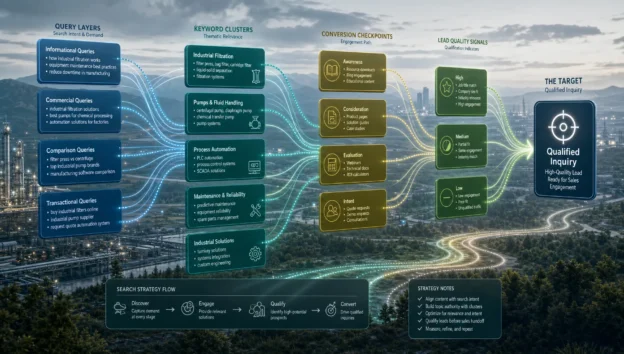
That difference is exactly why strategy matters. The search terms, landing pages, ad copy, content, and tracking plan should reflect how your buyers search and how they make decisions.
A practical SEM strategy should answer these questions:
- Which keywords should we target now, and which should we avoid?
- Which terms are better suited for PPC, SEO, or both?
- Which landing pages need to be created, rewritten, or improved?
- What budget is realistic for the level of competition?
- Which conversions will define success?
- How will lead quality be evaluated after the form fill or phone call?
If an agency cannot explain the logic behind the plan, you may end up paying for activity rather than progress.
Expect a structured launch process
Once strategy is approved, the agency should move into setup and implementation. This is where planning turns into live campaigns, optimized pages, tracking systems, and reporting workflows.
| Phase | What the agency should do | Why it matters |
|---|---|---|
| Discovery | Understand your goals, buyers, offers, and sales process | Prevents generic campaigns and poor-fit leads |
| Audit | Review SEO, PPC, website, content, and conversion issues | Identifies the highest-priority opportunities |
| Strategy | Build a roadmap for keywords, campaigns, content, and budgets | Connects search activity to business outcomes |
| Setup | Configure tracking, campaigns, landing pages, and reporting | Creates a clean foundation for measurement |
| Optimization | Adjust bids, copy, content, targeting, and pages based on data | Improves performance over time |
| Reporting | Translate results into insights and next steps | Keeps marketing accountable to revenue goals |
During launch, expect requests for access to tools such as Google Analytics 4, Google Search Console, Google Ads, your website CMS, call tracking, and CRM data if available. If those systems are not in place, the agency should help you identify what is needed to measure performance properly.
This is also when expectations should be set around timelines. PPC can begin collecting data quickly, but it still needs testing. SEO usually takes longer because search engines need time to crawl, evaluate, and rank improved pages.
Expect realistic timelines
Search marketing is measurable, but it is not instant magic. A trustworthy agency will avoid promising overnight rankings or guaranteed lead volume. Instead, it should explain what can reasonably happen in each stage.
| Timeframe | What you can usually expect | What to watch |
|---|---|---|
| First 2 weeks | Discovery, audits, access setup, tracking review | Quality of questions and clarity of plan |
| Weeks 3-4 | Campaign builds, landing page updates, keyword mapping | Whether setup matches the approved strategy |
| Months 2-3 | Data collection, early optimizations, initial PPC trends | Lead quality, wasted spend, conversion issues |
| Months 4-6 | Stronger SEO signals, better campaign efficiency, improved content performance | Trend lines rather than one-week fluctuations |
| After 6 months | Scaling what works, refining content, expanding campaigns | ROI, sales feedback, and pipeline contribution |
Some companies will see early wins from fixing obvious paid search waste or improving a high-traffic landing page. Others need more foundational work, especially if the website has weak content, technical SEO issues, poor tracking, or little authority in the market.

Expect reporting that explains decisions
Reporting should do more than show charts. It should help you understand what is happening, why it is happening, and what will be done next.
A useful SEM report should include metrics that connect visibility to business value. Impressions, clicks, rankings, and cost per click can be helpful, but they are not enough by themselves. For a B2B or industrial company, the bigger questions are whether search is attracting the right visitors and whether those visitors are turning into qualified opportunities.
Useful reporting categories include:
- Visibility metrics, such as rankings, impressions, and search impression share
- Engagement metrics, such as click-through rate, time on page, and landing page performance
- Conversion metrics, such as form fills, calls, quote requests, and demo requests
- Efficiency metrics, such as cost per conversion and cost per qualified lead
- Sales feedback, such as lead quality, deal stage, pipeline value, and closed revenue when available
If SEO is part of the engagement, the agency should also connect reporting to implementation. For example, publishing content is not the same as improving rankings. Technical fixes are not the same as increased leads. A good report shows the relationship between actions, search performance, and business outcomes. This guide to implementing an SEO campaign and measuring ROI goes deeper into that measurement mindset.
Expect collaboration from your team
Even the best agency cannot operate effectively in a vacuum. Search marketing depends on accurate information about your products, services, buyers, and sales process.
Your internal team may need to help with product details, subject matter expertise, sales feedback, approvals, customer objections, and competitive insights. In technical industries, this collaboration is especially important. An outside writer or ad specialist may understand search behavior, but your engineers, sales managers, or operations leaders often understand the nuances that make content credible.
Expect the agency to ask questions such as:
- Which inquiries are most profitable?
- Which leads are usually not a good fit?
- What terminology do customers use compared with internal terminology?
- What objections come up before a buyer requests a quote?
- Which competitors appear most often in real sales conversations?
The more honest and specific your answers, the stronger the campaign can become.
Expect transparency about budget and tradeoffs
A search engine marketing agency should help you understand what your budget can and cannot accomplish. This is especially true with PPC, where competitive keywords can become expensive quickly.
If your budget is limited, the agency may recommend focusing on a narrower service area, fewer high-intent keywords, better landing pages, or SEO content that compounds over time. If your market is highly competitive, it may recommend a phased approach rather than trying to compete everywhere at once.
Transparency also applies to agency fees. You should understand what is being spent on media, what is being paid for management, and what deliverables are included. If content writing, landing page creation, web design, call tracking, or technical development are separate costs, those should be clear before work begins.
Expect red flags from the wrong agency
Not every agency is a good fit. Some are too vague, too tactical, or too focused on vanity metrics. Others may be skilled in consumer marketing but unfamiliar with B2B search behavior, industrial terminology, or longer buying cycles.
Be cautious if an agency:
- Guarantees first-place rankings on Google
- Cannot explain how it measures lead quality
- Recommends paid ads without reviewing landing pages
- Talks only about traffic, not conversions or pipeline
- Uses the same strategy for every industry
- Avoids discussing reporting, access, or ownership of ad accounts
- Pushes long contracts before completing meaningful discovery
If you are comparing agencies, this article on how to choose the best search engine optimization companies can help you evaluate expertise, questions, and fit before signing an agreement.
Expect better questions, not just better answers
The best search partners often stand out by the questions they ask. They want to know which leads closed, which terms created poor-fit inquiries, which pages supported sales conversations, and which markets are most profitable. They are willing to challenge assumptions, not just execute requests.
For example, you may think your highest-volume keyword is the priority. The agency may discover that a lower-volume, more specific term creates better RFQs. You may want to send all ad traffic to your homepage. The agency may recommend dedicated landing pages because buyers need a tighter message and a clearer next step.
That kind of strategic pushback is valuable. You are not hiring an agency only to perform tasks. You are hiring a partner to improve the way your company earns visibility, trust, and inquiries through search.
Frequently Asked Questions
How long does it take to see results from a search engine marketing agency? PPC can start generating data within weeks, but optimization takes time. SEO often requires several months before meaningful ranking and traffic improvements appear. Most B2B companies should evaluate trends over 3 to 6 months rather than judging performance by the first few weeks.
Should a search engine marketing agency handle both SEO and PPC? In many cases, yes. SEO and PPC work better when keyword data, landing pages, conversion tracking, and messaging are aligned. However, the right structure depends on your goals, budget, competition, and internal resources.
What should I ask before hiring an SEM agency? Ask how the agency defines success, how it tracks conversions, how it evaluates lead quality, who owns the ad accounts, what reporting includes, and what experience it has with businesses similar to yours. You should also ask what they need from your team to be successful.
Can an agency guarantee search rankings or leads? A credible agency should not guarantee specific organic rankings or exact lead numbers. Search results, competition, budgets, and buyer behavior all change. What an agency can guarantee is a disciplined process, transparent reporting, and consistent optimization.
What makes SEM different for B2B and industrial companies? B2B and industrial searches often involve longer buying cycles, technical terms, multiple decision-makers, and quote-based conversions. The strategy should focus less on broad traffic and more on high-intent searches, credible content, and qualified inquiries.
Ready to set clearer expectations for search marketing?
If you are considering a search engine marketing agency, start by looking for clarity. You should understand the strategy, the timeline, the reporting process, and the role your team will play. Most importantly, you should know how search activity will connect to qualified leads and business growth.
B2B Inbound Marketing helps businesses improve online visibility through SEO, PPC, inbound marketing strategy, social media marketing, web content, and web-related services. If your company needs a practical search plan built around measurable growth, reach out to discuss what a focused SEM strategy could look like for your market.