



For B2B companies, seo search engine optimization is the practical work of helping the right buyers find your business before they speak with a salesperson. It is not just about ranking for broad keywords. It is about showing up when an engineer, procurement manager, facility director or business owner is trying to define a problem, compare options or choose a vendor.
That distinction matters because B2B growth rarely comes from casual website visits. It comes from qualified prospects who trust what they find, understand your expertise and have a clear next step when they are ready to talk. The basics below focus on that kind of search visibility, the kind that supports pipeline instead of simply inflating traffic reports.
Start With the Economics of B2B Search Intent
B2B search is usually slower, more specific and more evidence-driven than consumer search. A buyer may search for a problem, a specification, a compliance need, a service type, a regional supplier or a comparison between two approaches. Each search represents a different stage of the buying journey.
In this context, seo search engine optimization begins with intent mapping. Before writing a page or changing a title tag, identify what the searcher is trying to accomplish. A plant manager looking for “industrial pump maintenance Houston” is much closer to vendor evaluation than someone searching “why pumps fail.” Both searches can matter, but they need different content.
For most B2B websites, useful keyword groups fall into a few practical categories: problem searches, solution searches, service searches, comparison searches and local or regional searches. The strongest SEO plans connect all of them, so early educational content can lead naturally toward service pages, case examples, inquiry forms or sales conversations.
Build a Technical Foundation Search Engines Can Read
A search engine has to find, crawl, understand and index your pages before those pages can generate leads. Technical SEO does not need to be mysterious, but it does need to be consistent. If your site loads slowly, hides important content, duplicates pages or blocks crawlers, strong writing alone will not solve the problem.
The technical side of seo search engine optimization includes site speed, mobile usability, clean navigation, secure HTTPS pages, crawlable internal links and indexable content. B2B websites often struggle here after years of small edits, plugin changes, product additions or redesigns that were not planned around search visibility.
SEO Search Engine Optimization Basics for Crawlability
An XML sitemap helps search engines discover the pages you want them to evaluate. It does not guarantee rankings, but it can make the structure of a website easier to process, especially when there are many service pages, articles or location pages. For example, an XML sitemap index can point search engines to separate sitemap files for posts, pages, services and other content types.
A robots.txt file, canonical tags and redirects also deserve attention. These elements tell search engines what to access, which version of a page should be treated as primary and where old URLs have moved. When they are misconfigured, good pages can disappear from search results or compete against each other.
Strengthen On-Page Signals Before Publishing More Content
Many B2B companies rush to publish new articles before fixing the pages they already have. That can waste effort. A service page with vague headings, weak metadata and unclear copy may be close to ranking, but it needs sharper relevance signals before it can perform.
Good on-page seo search engine optimization gives each important page a clear job. The title tag should reflect the search intent. The H1 should explain the page topic. Subheadings should organize the buyer’s questions. The body copy should describe the problem, the service, the audience, the process and the next step without forcing keywords into every paragraph.
Internal links are part of this work. They help search engines understand how pages relate to each other and they help visitors move through the site. If you want a practical checklist for improving existing pages, review these on-site SEO checks every B2B website needs and apply them to your highest-value service pages first.
Create Content That Builds B2B Trust
B2B content has to do more than answer a simple question. It needs to reduce uncertainty. Buyers are often comparing risk, vendor credibility, technical fit, budget impact and implementation complexity. Thin content will not support that decision.
For a B2B team, seo search engine optimization content should show subject matter depth. That can include use cases, process explanations, industry terminology, qualification criteria, maintenance considerations, buying checklists and answers to objections that sales teams hear every week.
The table below summarizes how common page types support the buyer journey.
| Page type | Best search intent | Growth role |
|---|---|---|
| Educational article | Problem research | Attracts early-stage buyers and builds familiarity |
| Service page | Vendor or solution evaluation | Converts qualified visitors into inquiries |
| Comparison page | Option evaluation | Helps buyers understand tradeoffs and fit |
| Case study or project story | Proof and risk reduction | Builds confidence before a sales conversation |
| FAQ section | Objection handling | Clarifies details that might block conversion |
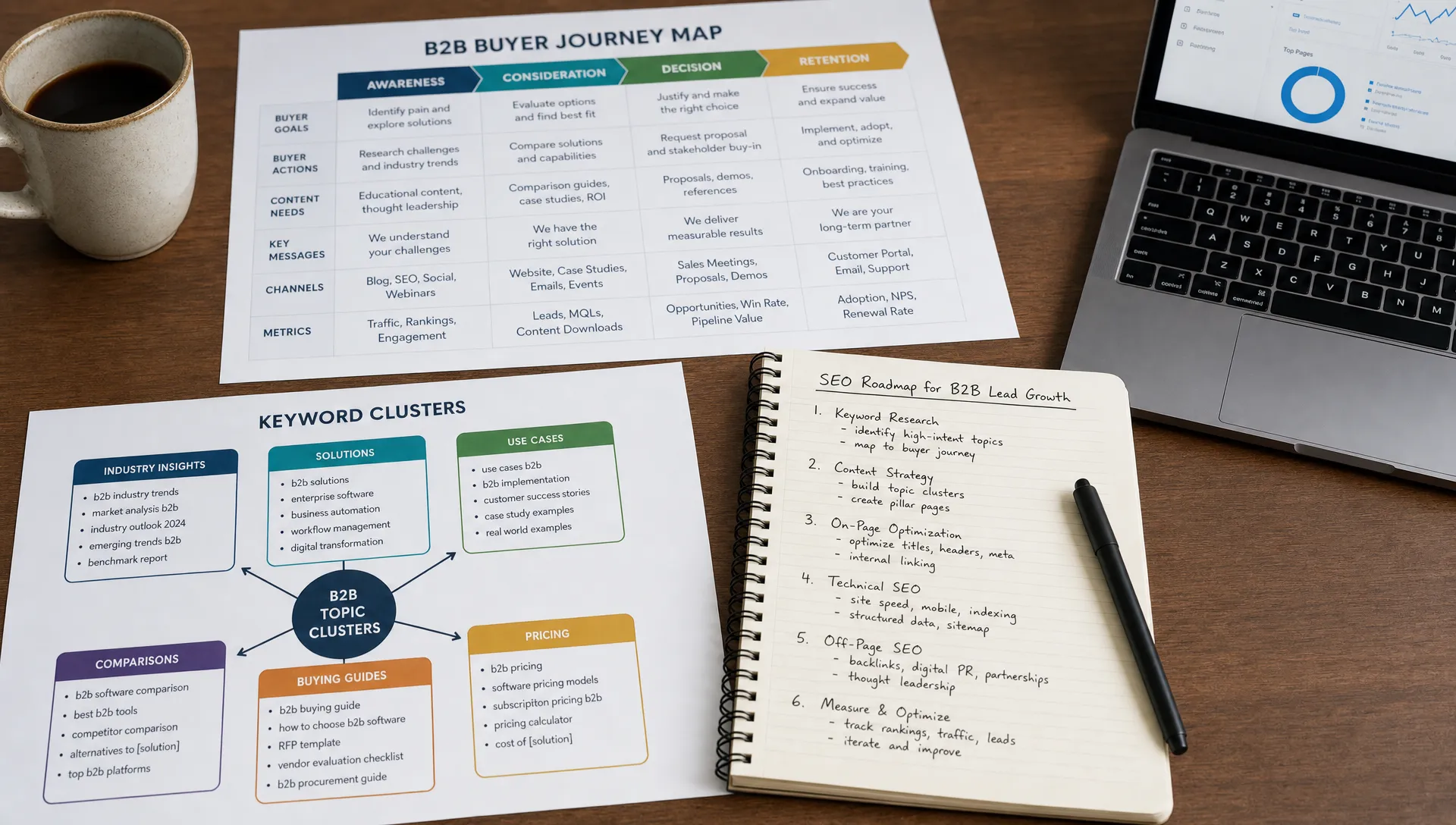
The best content often comes from inside the business. Sales calls, proposal questions, technical support issues and customer onboarding conversations reveal the language buyers actually use. Turning those questions into structured pages can produce content that is both search-friendly and genuinely useful.
Connect Rankings to Conversion Paths
Ranking is not the finish line. If a visitor lands on a page and cannot tell what you do, who you serve or how to take the next step, the ranking has limited business value. B2B SEO should be tied to conversion planning from the start.
This is where seo search engine optimization becomes part of lead generation rather than a separate marketing task. Each important page should have a logical next action. That could be requesting a proposal, calling the company, using a lead calculator, downloading a guide or moving to a more specific service page.
Calls to action should match the page intent. A high-level educational article may not need an aggressive sales pitch, but it should still guide the reader toward a relevant next step. A service page, on the other hand, should make it easy for a qualified buyer to contact you. For a deeper look at this connection, the article on SEO optimization strategies that support better lead flow explains how search visibility and conversion paths work together.
Use PPC and Organic SEO Together When It Makes Sense
SEO and PPC are often treated as separate channels, but B2B companies can learn faster when the two inform each other. Paid search can reveal which terms generate inquiries, which ad messages attract the right audience and which landing pages convert. Organic SEO can then use those insights to prioritize content and page improvements.
A balanced approach to seo search engine optimization does not mean ignoring paid media. It means understanding the role of each channel. PPC can create immediate visibility for high-value searches. Organic SEO builds durable visibility that can keep producing traffic and leads over time. If you are weighing that long-term value, this guide to organic search engine optimization for long-term growth offers a useful companion perspective.
For industrial and B2B service companies, the strongest results often come from coordinated planning: SEO pages that build authority, PPC campaigns that test demand and remarketing or social campaigns that keep the company visible during a long buying cycle.
Measure What Supports Real B2B Growth
Traffic is useful, but it is not the only metric that matters. A small number of qualified visitors can be more valuable than a large number of visitors who never become prospects. B2B measurement should focus on search visibility, lead quality and movement through the buyer journey.
A practical seo search engine optimization dashboard should separate leading indicators from business outcomes. Leading indicators show whether the work is gaining traction. Business outcomes show whether the effort is helping sales.
| Metric | What it tells you | Why it matters |
|---|---|---|
| Indexed pages | Whether search engines can access key content | Visibility depends on discoverability |
| Organic impressions | Whether pages are appearing for relevant searches | Early signal before traffic grows |
| Organic clicks | Whether searchers choose your result | Measures relevance of titles and descriptions |
| Form submissions or calls | Whether visitors take action | Connects SEO to lead generation |
| Lead quality feedback | Whether inquiries match your ideal customer | Prevents traffic growth from becoming noise |
Review these metrics monthly, but avoid changing strategy every few days. B2B search performance usually needs time because sales cycles are longer, competition can be specialized and trust-building content accumulates value gradually.
Put the Basics Into a 90-Day B2B SEO Plan
A 90-day plan keeps the work practical. Start with the pages that are closest to revenue, usually core service pages, industry pages and high-intent local pages. Fix technical issues that block crawling or conversion, then improve content depth and internal linking.
During the first month, audit the website, identify priority keywords by intent and repair obvious technical problems. During the second month, improve high-value pages and publish content that fills buyer journey gaps. During the third month, review early performance, refine calls to action and expand the topics that are showing signs of traction.
The goal of seo search engine optimization is not to complete a one-time checklist. It is to build a search presence that keeps improving as your website becomes clearer, more useful and more aligned with how real buyers search.
Frequently Asked Questions
Is SEO still useful for B2B companies with long sales cycles? Yes. Long sales cycles make search visibility more valuable because buyers often research quietly before contacting vendors. Strong SEO helps your company appear during those early research moments and again when the buyer is closer to making a decision.
How long does B2B SEO take to work? Timelines vary based on competition, website condition, content quality and search demand. Some technical and on-page fixes can show movement sooner, but meaningful B2B growth from organic search usually comes from consistent improvement over several months.
What is the difference between SEO and PPC for B2B growth? PPC buys visibility for selected searches, while organic SEO earns visibility through technical quality, relevance and authority. Many B2B companies benefit from both because PPC can create immediate data and SEO can build durable search presence.
Do small industrial companies need SEO? Yes, if buyers search online for their services, capabilities or location. A smaller company can compete by focusing on specific services, regional relevance, technical clarity and pages that answer the questions buyers ask before making contact.
What should a B2B company fix first? Start with the pages that have the strongest commercial value. Make sure they are crawlable, fast, clearly written and aligned with the search intent of qualified buyers. Then build supporting content around the problems and questions that lead buyers to those services.
Build a Search Foundation That Supports Better Leads
If your website is attracting the wrong visitors or relying too heavily on referrals and paid traffic, a focused B2B search strategy can create a more dependable path to qualified inquiries. Andy Alagappan’s Houston-based inbound marketing work brings SEO, PPC, web content and campaign strategy together around visibility, rankings and lead generation.
The right next step is to evaluate where your current website stands: what searchers can find, what they understand when they arrive and whether the page gives them a reason to act. From there, SEO becomes a growth system instead of a guessing game.