


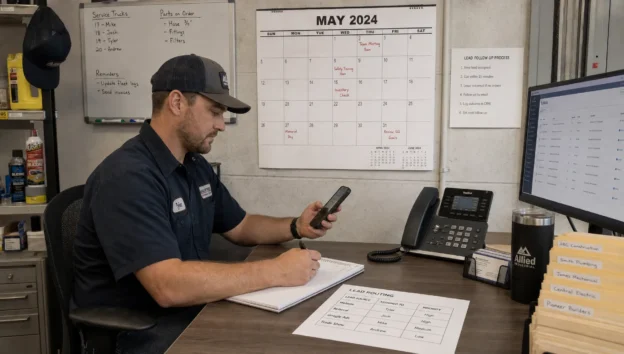
Sales teams rarely lose time because they lack names in a database. They lose time because too many names look similar until a rep spends 20 minutes researching each one. Lead enrichment solves that problem by adding the missing context that helps sales understand who the buyer is, whether the account fits and what action should happen next.
For B2B and industrial companies, this is not just a CRM cleanup project. A purchasing manager at a manufacturer, an engineering lead evaluating a technical service and a founder comparing vendors may all fill out the same form, but they do not deserve the same follow-up. Better data helps marketing and sales separate curiosity from commercial intent.
What lead enrichment should add to your sales process
At its best, lead enrichment turns a basic contact record into a practical sales decision tool. Instead of asking reps to guess from a name, email address and form submission, enrichment adds account details, role context, website behavior and buying signals.
The goal is not to collect every available field. The goal is to add enough trusted information to answer a few priority questions: Is this company a fit? Is this person likely involved in the decision? What problem are they researching? How fast should sales respond?
A useful enriched record often includes company size, industry, location, revenue range, technology stack, job title, department, seniority, source channel, content viewed and recent engagement. For industrial firms, additional fields like facility type, service territory, certifications, equipment category or distributor relationship may matter more than broad demographic data.
Start with the account fit, not the contact alone
Many teams enrich individual contacts first, then try to score them in isolation. That can create false positives. A director from a company outside your service area may look impressive, but the opportunity is weak if the account cannot realistically buy from you.
Effective lead enrichment begins with account fit because B2B buying decisions usually involve budgets, operational constraints and multiple stakeholders. Start by defining the firmographic details that make a company worth pursuing, then use enrichment to confirm or reject that fit quickly.
For example, a Houston-based industrial service provider may prioritize accounts in petrochemical, manufacturing, logistics or energy-related sectors within a specific geography. A SaaS firm may care more about employee count, growth stage and current software tools. A professional services firm may look for companies with recent hiring, new locations or regulatory pressure.
This connects closely with how you define lead quality. If your team has not documented what a strong prospect looks like, review practical ways to improve lead quality before building more complex scoring rules.
Enrich the buying committee
A single form fill rarely represents the full buying group. In B2B sales, one person may research, another may evaluate technical requirements and a third may approve the budget. Sales prioritization improves when the CRM shows where a contact might sit in that group.
Use lead enrichment to identify whether the person is an end user, technical evaluator, economic buyer, influencer or executive sponsor. Job title is a starting point, but it should be interpreted through the lens of your sales motion. A plant manager, procurement lead and maintenance supervisor may all matter, but each one needs a different message.
This is especially important in high-value B2B accounts where outreach should not depend on one lead alone. If one contact downloads a guide, enrichment can help sales identify adjacent decision-makers at the same company and plan a coordinated follow-up.
| Enriched signal | What it helps sales decide | Example action |
|---|---|---|
| Industry and company size | Whether the account matches the ideal customer profile | Route to the right segment or disqualify |
| Job role and seniority | Whether the contact can influence or approve a purchase | Tailor messaging by role |
| Geography | Whether the company is in the service area | Assign to local or regional sales |
| Content viewed | Which problem the lead is researching | Send relevant follow-up content |
| Engagement recency | How urgent the follow-up should be | Prioritize same-day outreach |
Use intent signals to separate research from readiness
Not every lead is ready for sales. Some are learning basic terminology, comparing approaches or collecting information for a future project. Others are actively looking for a vendor. The difference is often visible in behavior, not in a form field.
A strong lead enrichment process combines profile data with intent signals such as pricing page visits, return visits, webinar attendance, product comparison views, branded search activity and high-intent PPC conversions. These signals help sales decide whether to call now, nurture or wait for additional engagement.
Content type matters too. A visitor who reads a general educational article may be early stage. Someone who downloads a specification sheet, requests a proposal or visits a service-area page twice in one week deserves more attention. The same logic applies to video, where views only matter if they connect to a clear buyer action. For a useful example from another industry, this guide to video strategies for lead generation in real estate shows how different video formats can target distinct lead types and move viewers toward inquiries or appointments.
The takeaway for B2B marketers is simple: channel data becomes more valuable when it is tied to intent. A lead source alone tells you where the person came from. Enriched behavior tells you what they may need next.
Build a practical prioritization model
Sales teams need a model that is easy to trust. If the score is too complicated, reps ignore it. If it is too simple, it ranks poor-fit leads too highly. The best approach is usually a blended model that scores account fit, contact fit and intent separately.
In a practical lead enrichment model, a sales-ready lead should show strength in more than one category. A perfect-fit account with no intent may belong in nurture. A high-intent contact from a poor-fit company may need a polite qualification step. A good-fit account with a relevant decision-maker and recent high-intent activity should move to the top.
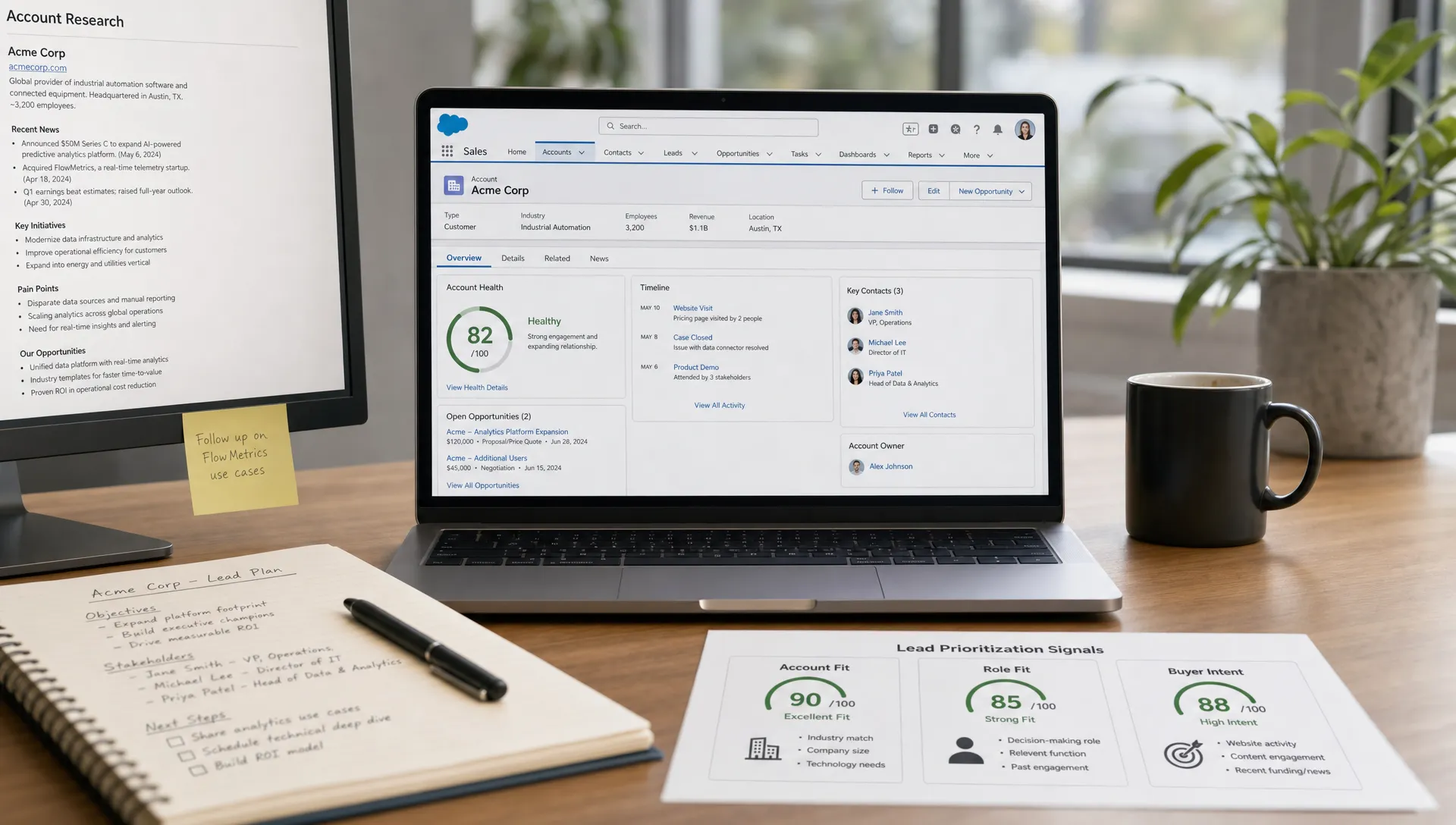
Keep the model understandable. A simple 100-point structure often works well: 40 points for account fit, 30 for contact fit and 30 for intent. You can adjust the weighting based on your average deal size, sales cycle and market. Industrial companies with narrow service areas may weight geography and industry heavily, while software companies may place more emphasis on technology stack and usage signals.
Route leads based on the next best action
Prioritization only matters if it changes what happens next. A lead score that sits in the CRM without affecting routing, alerts or follow-up timing is just decoration. Enrichment should guide action.
Use lead enrichment to create clear routing paths. High-fit, high-intent leads can go directly to sales with a fast response expectation. Good-fit but lower-intent leads can enter a targeted nurture sequence. Poor-fit leads can be suppressed from aggressive sales activity, which protects rep time and improves reporting accuracy.
Routing should also account for expertise. If a lead comes from an industrial manufacturer researching a specific service, the follow-up should come from someone who understands that vertical. If a lead belongs to a named target account, it may need account-based outreach rather than a generic sales sequence.
For companies building more structured lead flow, it helps to connect enrichment with broader demand capture. This is where demand generation that creates sales-ready opportunities becomes important, because marketing should not only attract interest but also prepare leads for productive sales conversations.
Keep data quality under control
Bad enrichment can be worse than no enrichment. Outdated titles, duplicate accounts, wrong industries and inflated company sizes can send sales in the wrong direction. Data quality needs ownership, rules and regular review.
A dependable lead enrichment workflow should include field validation, duplicate prevention and periodic audits. Decide which fields are required, which are optional and which should never override human-reviewed CRM data. For example, automatically updating a company name may be safe, but changing an account owner or lifecycle stage without review can create confusion.
Privacy and consent also matter. Use reputable data sources, honor unsubscribe requests and avoid collecting information that has no clear business purpose. B2B buyers expect relevant follow-up, not invasive outreach. The more precise your data becomes, the more disciplined your team should be about how it is used.
Marketing and sales should review enriched data together at least monthly. Look for patterns: Which enriched fields actually predict opportunity creation? Which sources produce bad matches? Which lead scores are sales challenging most often? Those answers help refine the system.
Measure what enrichment improves
The point of enrichment is not a prettier CRM. It should improve speed, conversion and sales productivity. If you cannot connect the work to measurable outcomes, the process will become hard to defend.
Track metrics before and after implementing lead enrichment so you can see whether prioritization improves. Useful measures include speed to lead, qualified lead rate, meeting conversion rate, opportunity creation rate, average sales cycle length and closed-won revenue by lead source.
Do not rely only on lead score averages. A scoring model can look impressive while failing to create pipeline. Instead, compare enriched leads by segment and follow the path from first conversion to revenue. If high-scoring leads do not convert better than low-scoring leads, the model needs adjustment.
A good review rhythm includes sales feedback. Ask reps whether the enriched fields helped them prepare, personalize outreach and decide which accounts deserved attention. Their feedback will reveal gaps that dashboards miss.
Common mistakes to avoid
The most common mistake is enriching everything without a clear purpose. This creates clutter, slows down CRM use and makes reps skeptical. Another mistake is treating enrichment as a one-time database append rather than an ongoing process.
Teams also weaken lead enrichment by scoring leads before they define a strong ideal customer profile. If the model rewards activity too heavily, students, competitors, vendors and poor-fit researchers can rise to the top simply because they clicked often.
Avoid using enrichment to justify robotic outreach. Better data should make communication more relevant. It should not encourage sales to send messages that feel overly familiar or disconnected from the buyer’s actual problem.
Finally, do not let marketing own the model alone. Sales must help define qualification rules, validate priority levels and report when the data does not match reality.
Frequently Asked Questions
What is lead enrichment in B2B sales? Lead enrichment is the process of adding useful account, contact and behavior data to a lead record so sales can qualify, prioritize and personalize follow-up more effectively.
Which data fields matter most for prioritization? The most useful fields usually include industry, company size, geography, job role, seniority, content engagement, conversion source and recent buying-intent behavior.
How often should enriched lead data be reviewed? Review key enrichment fields monthly with sales and marketing. High-change fields like job title, company size and engagement behavior may need more frequent updates through your CRM or automation tools.
Can small B2B teams use enrichment without expensive tools? Yes. Start with a focused set of fields, use form questions carefully, review website behavior and manually research high-value accounts. Automation can come later once the qualification rules are proven.
Turn better lead data into better sales focus
Lead volume alone does not create a healthy pipeline. Sales teams need to know which accounts fit, which contacts matter and which behaviors suggest real buying intent. With the right process, lead enrichment helps reps spend less time researching weak leads and more time pursuing opportunities that can become revenue.
If your B2B or industrial marketing program is generating inquiries but sales still struggles to prioritize them, Andy Alagappan can help align SEO, PPC, inbound strategy and lead quality around the accounts that matter most. Start with a clearer view of your pipeline, then build campaigns that attract and identify better buyers from the beginning.