By Andy Alagappan : Call US for a FREE 30 MIN Web Site Marketing and Lead Generation analysis and Video Strategy consulting @ 832-677-4620 .281-570-5804 .
Demand generation is the process of creating interest in a product or service through marketing activities in omni channels.
It involves using various tactics, such as content creation, email campaigns, SEO + PPC Campaigns, webinars, and more to build brand awareness about the company’s offerings and attract potential customers.
The goal is to drive conversions from leads into paying customers.
Here are some steps that can be taken to implement a demand-generation strategy:
1) Identify target audience – Before you start any demand generation activity it’s important to have an understanding of who your target audience is. Researching your customer base will help you determine their needs so that you can create messaging that resonates with them.
2) Develop compelling content – Once you know who your target audience is, develop content pieces (like blog posts, eBooks or whitepapers) that will appeal to them. Content should be tailored to the interests and needs of the reader while also showcasing why they should choose your business over others in the industry.
3) Utilize digital channels – Take advantage of digital channels such as social media platforms like LinkedIn or Twitter for promoting your content pieces and engaging with potential customers directly. Additionally use search engine optimization techniques on all website pages so users can easily find what they are looking for when searching online for related topics or products/services offered by your business..
4) Measure results – Tracking metrics like page views, time spent on page/site visits etc., will give insight into how effective different strategies have been in generating demand among prospective customers. This data will allow businesses to adjust their approach accordingly if needed in order to maximize ROI from their efforts going forward.
Andy Alagappan 832.677.4620, Data-driven inbound marketing (epromotionz.lpages.co)
With over 3.5 billion active users combined, Facebook and Instagram have established themselves as essential social media platforms for businesses looking to engage with their audiences and acquire new customers. However, simply being present on these platforms isn’t enough to guarantee success. A well-thought-out customer acquisition strategy is critical for standing out from the competition and growing your business.
To help you achieve your customer acquisition goals on Facebook and Instagram, we’ve put together some fresh and unique tips that go beyond the standard advice you often hear.
Create a Compelling Brand Story
A compelling brand story is the foundation of any successful customer acquisition strategy. Your brand story should capture the essence of your brand and communicate why it matters to your audience. This can be achieved through creative storytelling techniques, such as using authentic customer stories or creating a compelling narrative around your brand’s mission.
Build a Community Around Your Brand
One of the most effective ways to acquire new customers on Facebook and Instagram is to build a community around your brand. This means creating content that encourages engagement and fosters a sense of belonging among your followers. Host giveaways, contests, and other interactive experiences to incentivize your followers to engage with your brand and share it with others.
Leverage Influencers and Collaborations
Partnering with influencers and other brands can help you reach new audiences and acquire customers more efficiently. Collaborating with influencers can be particularly effective in niches where influencers have a significant impact, such as beauty or fitness. By tapping into their established audiences, you can quickly expand your reach and acquire new customers who are already interested in your product or service.
Use Retargeting and Lookalike Audiences
Retargeting and lookalike audiences are two powerful tools that can help you acquire new customers on Facebook and Instagram. Retargeting allows you to show ads to people who have already engaged with your brand or visited your website, while lookalike audiences allow you to target people who are similar to your existing customers. By using these tools, you can ensure that your ads are being shown to people who are most likely to be interested in your product or service.
Use Video Content
Video content is a highly effective way to grab the attention of your target audience and convey your brand message in a dynamic and engaging way. In fact, studies show that video content on Facebook and Instagram receives higher engagement rates compared to other types of content. Experiment with different video formats, such as product demos, behind-the-scenes footage, or customer testimonials to see what resonates best with your audience.
Run Promotions and Offers
Everyone loves a good deal, and promotions and offers are a great way to incentivize people to try your products or services and ultimately, boost customer acquisition. To make your promotions more effective, consider offering a discount or freebie that is only available for a limited time. This creates a sense of urgency that encourages people to take action and try your brand..
Provide Exceptional Customer Service
Customer service is a critical component of any successful business, and it’s especially important when it comes to customer acquisition on social media. Make sure you are responding to customer inquiries and comments promptly, and providing helpful and informative responses that demonstrate your commitment to customer satisfaction.
Analyze Your Results
Finally, it’s essential to analyze your results to understand what’s working and what’s not when it comes to customer acquisition on Facebook and Instagram. Use analytics tools to track your performance metrics, such as engagement rates, click-through rates, and conversion rates, and make adjustments to your strategy accordingly.
In addition to these strategies, there are a few other things to keep in mind when it comes to customer acquisition on Facebook and Instagram:
• Stay on top of trends: Social media platforms are constantly evolving, and it’s essential to stay up-to-date with the latest trends and best practices. Make sure you’re following industry thought leaders, attending relevant conferences and events, and reading industry publications to stay informed.
• Build relationships with your audience: Social media is a two-way conversation, and it’s important to build relationships with your audience by engaging with them on a regular basis. Respond to comments and messages promptly, ask for feedback, and show your appreciation for your followers by sharing user-generated content or hosting giveaways.
• Be authentic: Finally, it’s important to be authentic and genuine in your social media efforts. Your audience can sense when you’re being insincere or inauthentic, so make sure your messaging and branding are consistent and true to your values.
Ultimately, the best types of promotions and offers will depend on your brand and target audience. Consider experimenting with different tactics to see what resonates best with your audience and drives the most conversions.
Wrapping up… Facebook and Instagram offer a wealth of opportunities to acquire new customers and grow your business. Remember to stay authentic and engaging with your audience and always prioritize their needs and preferences. With persistence and a bit of creativity, you can achieve long-term success on these platforms.
A Fresh Start: How to Turn Around a Negative Reputation in 5 Simple Steps
In today’s world, a business’s reputation can make or break its success. With the power of social media and online review platforms, negative feedback can quickly spread and cause significant damage. If your business is struggling with a negative reputation, it’s important to take proactive steps to address the issue and turn things around. Here are five steps to help you do just that.
Identify the root cause
The first step in turning around a negative reputation is to identify the root cause of the issue. Was it a specific incident or a pattern of behavior over time? Conducting a thorough review of your business’s practices and customer feedback can help you pinpoint where things went wrong.
Once you have identified the root cause, you can begin to take targeted action to address the issue and prevent it from happening again.
Take responsibility and apologize
When it comes to addressing a negative reputation, honesty is the best policy. If your business has made mistakes in the past, it’s important to take responsibility and apologize to affected customers. This can be done publicly through social media, website statements, or even in-person meetings.
By owning up to past mistakes and showing a willingness to make things right, businesses can begin to rebuild trust with their customer base.
Implement safeguards
In addition to apologizing for past mistakes, it’s important to implement safeguards to ensure that similar issues don’t arise in the future. This could involve training employees on proper customer service protocols, instituting quality control measures, or even hiring an outside consultant to conduct a review of the business’s practices.
By taking a proactive approach to preventing future issues, businesses can demonstrate their commitment to providing excellent service and building a positive reputation.
Encourage positive feedback
Positive reviews and feedback from satisfied customers can go a long way in offsetting negative feedback and building a positive reputation. One smart trick is to encourage customers that you know had a positive experience to leave positive reviews on online review platforms, social media, or even through email campaigns. By actively seeking out positive feedback, businesses can demonstrate their commitment to providing excellent service and building a positive reputation.
Build positive partnerships
Finally, businesses can consider partnering with other organizations or community groups to build a positive image and reputation. This could involve sponsoring local events or charities, participating in community service projects, or collaborating with other businesses to create a positive network.
By building positive partnerships and demonstrating a commitment to the community, businesses can show that they are more than just a profit-seeking entity, but also a valuable member of the community.
In conclusion, a negative reputation can be a significant obstacle for businesses to overcome, but with the right approach, it is possible to turn things around. By taking a proactive approach to identifying the root cause of issues, apologizing for past mistakes, implementing safeguards, encouraging positive feedback, and building positive partnerships, businesses can begin to rebuild trust and build a positive reputation within their community.
The ROI of S E O varies from one industry to the next. How valuable would it be to your business to come up as the top recommendation when your customers are actively searching for your services?
Let’s look at an example. 320 people search for the exact phrase “event venue Houston” every month (not to mention those who search for slight variants, like “event venues Houston” etc).
Being the first result on Google would bring ~110 people to your website every month who were actively searching for event venues in Houston, many of whom had never heard of your brand before. Assuming 0.5% of those people booked an event venue JUST ONCE, this one search term would bring you 6-7 new customers every year.
Search engines look at 3 primary factors when trying to understand all of the websites in their index: authority, relevancy, and crawlability.
Authority is a measure of how reputable your website is in the eyes of Google and other search engines.
Relevancy helps Google to understand what your website is about so it can send the right people to your website.
If you type “shoes ” into Google, Google will sift through trillions of web pages and order them based on how trustworthy they are, and how relevant they are to “shoes .”
S E O campaign is all about helping Google to better understand your website, while also increasing your authority so you start appearing for the search terms that are most valuable to your business.
Content marketing is the cornerstone of S E O: Search engines like Google are obsessed with giving searchers what they’re looking for. When search engines find websites that provide useful information, they reward those websites by ranking them higher in search results.
The more high-quality content you write, the higher you will rank for the search terms that your customers are looking for.
Keywords, content, and SEO tend to be the focus when you’re trying to
direct more traffic to your website. Images are a powerful tool for traffic as
well, but unfortunately, many marketers aren’t using them to their fullest
potential.
Images are content as well, which can be easy to forget. In fact, images are an essential part of any content marketing effort. Users are also searching for visual content, so if you’re not using images as part of your SEO, you’re missing out on valuable opportunities.
How Do Images Boost Traffic?
Images serve many purposes for your site, such as:
Aesthetics: Images make your site more visually appealing and easier to digest, which keeps people on your site longer and decreases the bounce rate.
Image search: Images pull traffic from image searches, which may direct a different audience to your site than other searches.
Social media shares: Images get more shares and engagement on social media than text-only posts. The more your content is shared, the larger your potential audience is and the more likely you are to get readers for your posts.
Optimizing for Image Search
Images need to be optimized just like anything else. Optimizing images
isn’t much different than optimizing other types of content, and they rank
similarly. The first image on the image search results page is the equivalent
of the first website to come up in a standard search.
Image search has more results, however, and people view images
differently. Because of this, it’s important to optimize your images to be sure
they’re close to the top.
Here’s how:
File Names
Cameras use a series of letters and numbers as the default name for
images. Unfortunately, this doesn’t do much to boost your SEO.
Whenever possible, rename your images with a relevant title that
reflects the content, which gives a search engine an idea of what it is.
Alt Tags
Image alt tags are metadata that help a search engine index an image.
Editing alt tags not only improves your ranking, but it also boosts your SEO
overall.
An ideal alt tag description is short, but filled with keywords. It
should accurately describe the image for visually impaired users as well.
Compression
Your images should be as big as possible, but use as little storage
space as possible, which can be done with compression. Tools like Compressor.io
can be used to reduce the storage size and retain the quality of the image.
Now that we know how to optimize, let’s take a look at how to use image search to direct traffic to your website.
Use Your Own Images
Stock photography has its purposes, but if you’re consistently using
stock photos, it’s not going to help your site. Stock photos don’t accurately
reflect your brand, and they give your site a disorganized look, which is then
communicated to your visitors.
Original images, on the other hand, show your visitors that you put the
extra effort into the look of your site and the overall image of your brand.
Original images are also traced back to your site, which means that you’re more
likely to earn backlinks when others use them for their own content. They’ll
also show up earlier in the image search results, giving you an SEO boost.
If you don’t have the resources to create your own images, it’s
acceptable to use stock images. However, you should be doing all you can to
limit your use of stock photography and provide as many original images as you
can.
Related Image Keywords
Just like text content, image content has a primary keyword that’s
included in the file name and alt tag. You should still be using related image
keywords, however, to give your strategy more variety and to target searchers
who want to find your image but may not be using the proper keyword.
This may seem like extra work, but you’d be surprised at how different
the images can be between similar keywords. When you cast a wide net with
related keywords, you’re reaching a much larger audience.
If you need some assistance in coming up with related keywords, just
look at the image keyword suggestions at the top of an image search results page.
This will give you an idea of what others are searching, which you can use as
part of your own strategy.
Relevant Images
Relevant images are images that are directly related to the topic. While
this may seem clear, it’s not always the case. Many people use images that are
unrelated to their topic to enhance their posts, which directs unrelated
traffic to your site.
For example, you may use a pop culture reference that relates to one
section of a blog post. Because of this, anyone searching for that pop culture
reference will find themselves on your blog post, when they were actually
looking for entertainment. When they discover the actual purpose of your site,
they’re likely to bounce.
Infographics
Infographics are an
excellent way to boost your SEO and create custom imagery that is easy for your
readers to digest. They drive thousands of visitors to your site and help you
establish yourself as an authority as well.
Not every bit of content needs an infographic, but they can help with
content that is research intensive or contains a lot of data. By putting it in
a quick, clear infographic format, you’re allowing your readers to quickly skim
the information to get the answers they need.
Watermarks
Watermarking is common with artists and photographers, but not so much
for business owners who create their own custom images. Watermarking can be
used to copyright your images, which is always a good thing, but it has another
purpose — traffic.
Watermarking your images tells people where the image came from using a
link, so it gives you credit and tells viewers where to go to find similar
content. This is a good way to get traffic to your site and social pages, no
matter where the image is shared.
Conclusion
Image SEO is powerful, but few marketers are using it to their
advantage. Keywords and meta descriptions are important, but images can give
you that extra edge over the competition.
People always need images for their own posts or videos, so driving
traffic from optimized images is quick and easy. If you put some effort into
optimizing your images and combining them with your other SEO tactics, you
should see an increase in rankings in no time.
Meta description: Find out how to use image search to boost your SEO and
drive more relevant traffic to your website for better leads and more
profitability.
What is Search Engine Optimization : Three building blocks
SEO stands for ‘Search Engine Optimization’. It is the process of getting traffic from the free, organic, editorial or natural search results on search engines. All major companies that have websites are traceable online when people search information on major search engines like Google, Bing, and Yahoo. These search engines have primary search results where web pages and other contents such as videos or local listings are shown and ranked based on what the search engine considers most relevant to the users.
In general, the earlier and more frequently the site appears in search results list, the more visitors it will receive from search engine users. As an internet marketing strategy, SEO considers how search engine works, what people search for, the actual search terms or keywords and which engines their targeted audience prefers. SEO may target different kinds of search including image search, local search, video search, academic search, industry search etc.
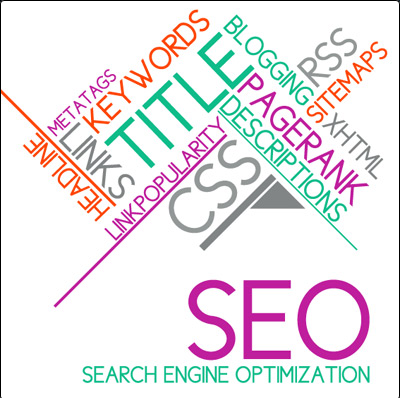
The main questions is how will make your content optimum for SEO. The key is the three building blocks of SEO or the three ‘C’s which are content, code and credibility.
1. Content:
Having a good, relevant content is extremely essential factor. Without the keyword loaded HTML text on all key pages it is not possible for search engine spiders to read the content. In order to show up in the top 10 search engine results, it is important to ensure your target phrases are fixed evenly throughout the page.
2. Code:
With the explosion of database-driven content management systems (CMS) and WYSIWYG editors, much of the source code behind a Web site that helps define the content and layout is inept. The ideal solution to ensure search engines systematically index your site is, to design it to widely accepted Web standards. To round out source code optimization, ensure that every page has keyword-optimized title, META and ALT tags.
3. Credibility or page rank
The best way to do that is to acquire links from relevant industry sites that are ideally popular and are visible in search for your target terms. The more popular and relevant a site is that links to you, the higher your link credibility will be with Google.
Thus with these 3 ‘C’s, your website is more likely to increase in search engine visibility.
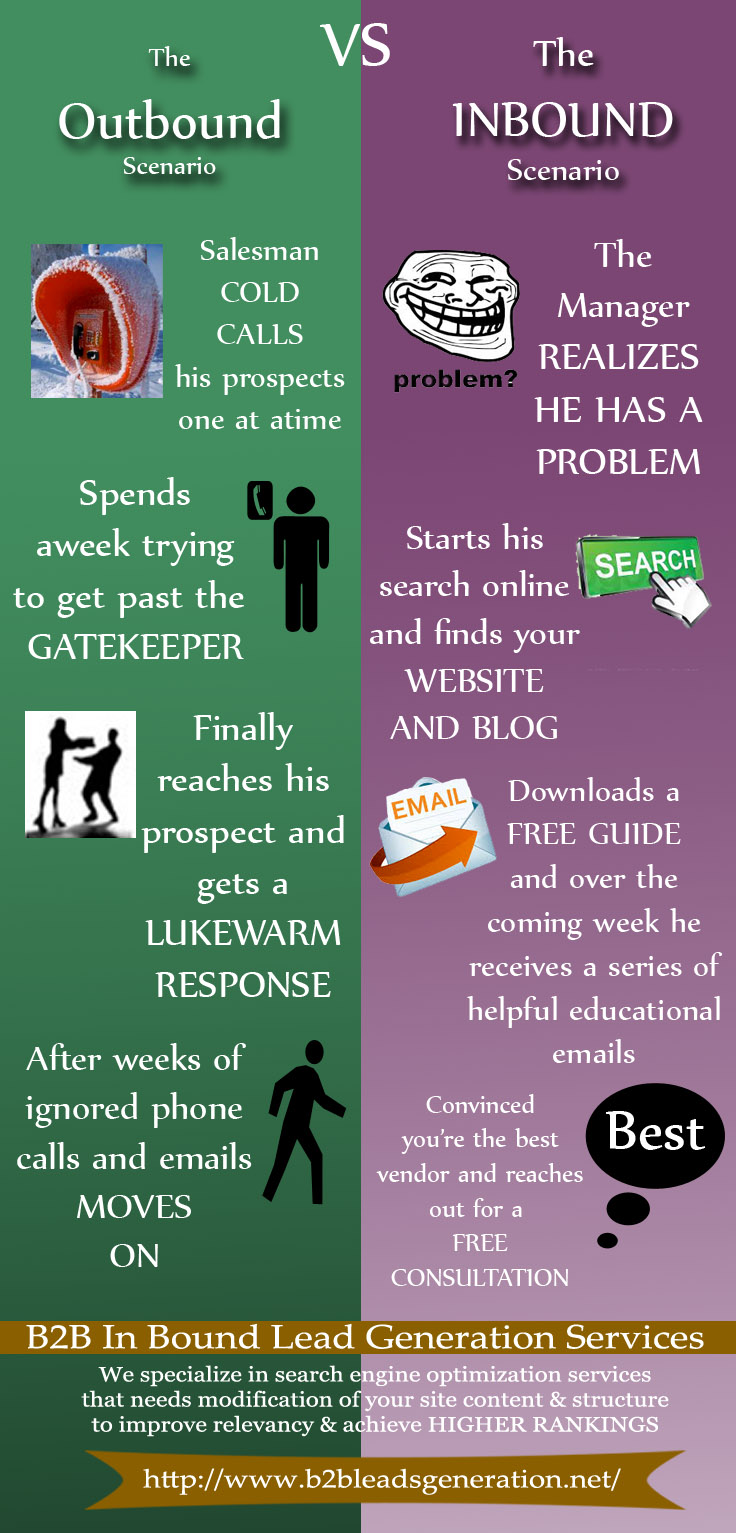
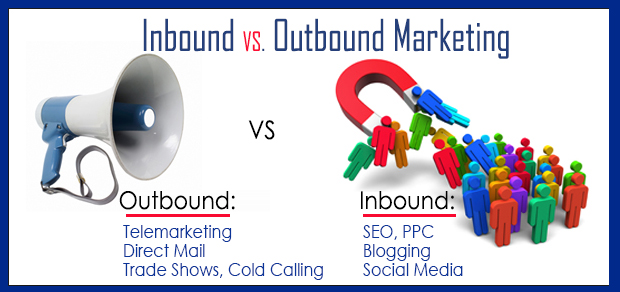
While some people feel that one can make a valid comparison between the traditional outbound method of marketing and the new inbound marketing, these two methods of marketing are actually meant to complement each other rather than be chosen against each other. Those business owners and employees who truly wish to benefit from the process of marketing as a whole have to ensure that they draw a smart balance between both these methods of marketing. While these two methods follow very different rather opposite methods of marketing, when combined to complement each other they can both prove to be very beneficial for companies which are willing to put in a balanced effort towards the progress and profitability of their company.
So if you have been thinking of which one to choose out of the two you would rather spend time in deciding on how to use both methods in a balanced way.
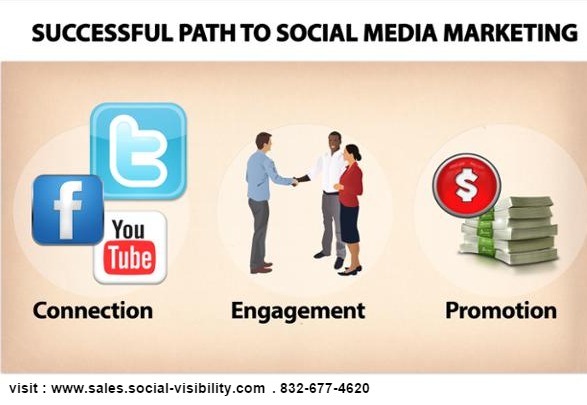
Benefits of Social Media Marketing : inbound Marketing
Social media marketing refers to the process of gaining traffic or attention through social media sites. Social media itself is a catchy term for sites that may provide different social actions. For example, Twitter is a social site designed to let people share short messages or “Tweets” with others. Facebook, in contrast is a full-blown social networking site that allows for sharing updates, photos, joining events and a variety of other activities.
Social media often feeds into the unearthing of new content such as news stories. Social media can also help build links that in turn support into SEO efforts. Many people all across the globe right from Houston, Texas to India perform searches at social media sites to find social media content. Most of the top entrepreneurs consider social media marketing as the next big thing!
Here is a look at some of the ways in which social media marketing can benefit your business.
1. Increased brand appreciation
Your social media networks are just new channels for your brand’s voice and content. This is important because it simultaneously makes you easier and more accessible for new customers, and makes you more familiar and recognizable for existing customers.
2. Improved brand loyalty
Brands who engage on social media channels enjoy higher loyalty from their customers.
3. More opportunities to convert
Every blog post, image, video, or comment you share is a chance for someone to react, and every reaction could lead to a site visit, and eventually a conversion.
4. Higher conversion rates
With more opportunities to convert, conversion rates will also increase. Simply building your audience in social media can improve conversion rates on your existing traffic.
5. Higher brand influence
The more people that are talking about you on social media, the more valuable and authoritative your brand will seem to new users.
6. Increased inbound traffic
The more quality content you syndicate on social media, the more inbound traffic you’ll generate, and more traffic means more leads and more conversions.
7. Decreased marketing costs
If you can lend just one hour a day to developing your content and syndication strategy, you could start seeing the results of your efforts. This in turn will automatically reduce the marketing costs
8. Better search engine ranking
If you want to rank for a given set of keywords, having a strong social media presence could be almost obligatory. This will surely increase the search engine ranking.
In this way, your business can benefit from social media marketing and establish as a brand in the business world.
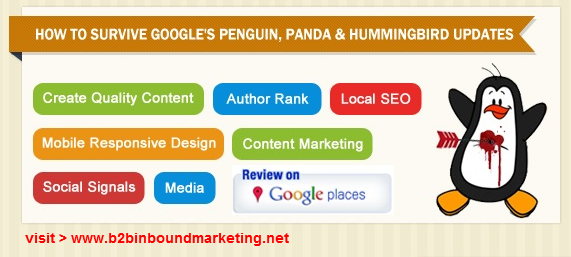
Panda 4.0 didn’t just punish, it also rewarded sites that may have been unduly affected in previous refreshes.
We did our own in-depth research with our own resources and have noticed that majority of the sites we are optimizing weren’t affected at all by this update by Google. This is how one should prevent small businesses like you being negatively affected by Panda 4.0 or future Panda updates.
• Focus on high quality web content – Do you have redundant text content on your blog? Time to clean it up! You should not be duplicating text content throughout your website or blogs.
• Avoid web site over-optimization – It may feel nice to add a keyword to every sentence, title tag, header tag and description. But that’s not going to cut it these days. Focus on quality and useful text content and readability.
• Maintain a useable website – We mean it! Your site should be easy to navigate and fast to load. Your pages should load quickly. You shouldn’t have broken images, links, or errors on the site. Google has been saying for years that usability will affect your ability to rank.
The good news is that for those who have focused on high quality, well writtenweb and blog content while keeping their audience firmly in focus, not much appears to have changed. And with Google focusing so heavily on quality content as a rank increases, it doesn’t look like it’s going to change anytime soon.