
If paid search is generating inquiries while organic traffic is rising, you still need to know which search themes produce buyers. SEO pay per click data becomes useful when you connect search behavior to landing-page performance and sales outcomes, rather than treating rankings and ad clicks as separate scorecards.
Search engine optimization earns visibility in unpaid results. Pay-per-click advertising buys placements and charges for clicks. Their reports answer different questions, but together they can reveal content gaps, weak offers and opportunities to reach more qualified prospects.
For B2B and industrial companies, that comparison needs care. A maintenance manager researching specifications may take months to become an opportunity. A purchasing agent searching for an available replacement part may need a quote today. The goal is to distinguish those journeys, then make a specific campaign decision from the evidence.
Build an SEO pay per click data set you can trust
Start with four sources: Google Search Console, your advertising platform, website analytics and your customer relationship management system. Each contributes a different part of the picture.
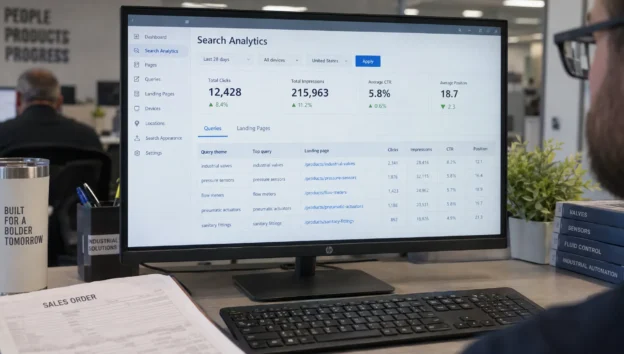
Search Console shows organic queries, impressions, clicks and average position. Google Ads shows paid search activity, costs and reported conversions. Website analytics connects acquisition channels with landing-page behavior. Your CRM supplies the commercial context: whether an inquiry became a qualified lead, opportunity or customer.
Before comparing reports, align date ranges, markets and conversion definitions. Separate branded searches from nonbranded searches, and distinguish existing-customer requests from new-business inquiries. Otherwise, navigational traffic and support requests can make acquisition performance look stronger than it is.
Also check that forms, phone calls and CRM records are measured consistently. Use permitted identifiers and consent-aware tracking rather than placing personal information in URLs or analytics parameters.
Join reports by intent, not by an assumed user match
Create a shared worksheet organized by search theme, destination page, geography, device and reporting period. Keep the original query beside the assigned theme so someone can check the classification later.
SEO pay per click analysis should compare compatible groups, not pretend every organic query can be traced to an individual sale. Google’s documentation explains that Search Console performance reports omit anonymized queries from query tables. The Google Ads search terms report also does not expose every search term because of reporting and privacy thresholds.
Service boundaries provide a useful starting point. Gus Logistics’ fulfillment, warehousing and transport services illustrate several distinct buying needs within one business. In a hypothetical campaign, pallet storage searches should sit in a different group from urgent transport requests, even if both eventually reach the same sales team.
Record those distinctions before interpreting performance. A practical worksheet might include the theme, organic landing page, paid destination, paid spend, qualified inquiries and recommended action. Label unavailable information as unavailable, not zero. Missing query data does not mean nobody searched.
Let paid search identify organic content opportunities
Paid search can reveal commercially useful language before a new organic page has gained visibility. The strongest evidence comes from actual search terms associated with qualified inquiries, not simply keywords with attractive click-through rates.
Imagine a manufacturer bidding on a broad equipment category. Its search terms report reveals repeated demand for a specific material, operating temperature or certification. Sales confirms that those requirements describe profitable projects. That is a stronger content signal than search volume alone.
Use SEO pay per click data to prioritize the missing answer: a service page, application guide, specification comparison or detailed product page. Choose the format that matches the buyer’s task rather than publishing another general blog post.
Before commissioning content, check three things:
- Commercial fit: Does the business actually supply the requested product, capability or service area?
- Evidence of demand: Has the theme appeared repeatedly, or is the recommendation based on one unusual inquiry?
- Existing coverage: Could an existing page satisfy the need with better specifications, examples or navigation?
An expensive paid click is not automatically a reason to invest in SEO. High costs can reflect competition without indicating acceptable margins or strong lead quality. Keep both acquisition economics and business fit in the decision.
Once content is published, track impressions, relevant query coverage and qualified organic inquiries over time. Do not expect a paid keyword’s conversion rate to transfer unchanged to organic visitors.
Use organic evidence to sharpen paid targeting
Organic search can expose vocabulary that an advertising account has overlooked. Search Console may show impressions for specialized applications, local requirements or technical questions that are absent from the paid keyword structure.
First inspect the actual results page and the destination content. Determine whether the query signals purchasing intent, research or an unrelated meaning. Then decide whether it deserves a controlled paid test, a content improvement or exclusion from a particular campaign.
For example, an engineering page attracting searches about a material’s suitability could support a narrowly scoped ad group. A page attracting student homework queries probably should not receive acquisition budget unless education serves a defined business purpose.
SEO pay per click comparisons also help diagnose landing-page mismatches. If a detailed technical page earns relevant organic visits but ads send similar searches to a general homepage, test a more closely matched destination.
Do not assume the organic page will automatically convert better. Check its mobile usability, quote path, loading experience and suitability for an ad visitor who may know nothing about the company. Test the destination while holding the offer and targeting as stable as practical.
Finally, avoid turning every low-converting organic query into a negative keyword. Some research terms belong to long sales journeys. Exclude terms because they conflict with campaign intent, not merely because they failed to generate an immediate form submission.
Compare commercial outcomes, not just conversion counts
A shared report needs a consistent definition of a qualified inquiry. Agree with sales on the criteria, such as a supported application, relevant geography, credible project and appropriate purchasing role. Keep spam, job applications and vendor solicitations separate.
The following example is hypothetical and shows why raw lead counts can mislead:
| Paid search theme | Ad spend | Inquiries | Qualified inquiries | Cost per inquiry | Cost per qualified inquiry |
|---|---|---|---|---|---|
| Broad supplier searches | $1,200 | 24 | 2 | $50 | $600 |
| Specification-led searches | $1,800 | 9 | 6 | $200 | $300 |
The broad theme produces cheaper inquiries, but the specification-led theme produces qualified inquiries at half the cost. Neither row proves profitability because opportunity value, sales costs and closed revenue are still missing.
SEO pay per click reporting becomes more actionable when those commercial measures sit beside search visibility. A theme with limited organic exposure and strong qualified paid demand deserves a different response from one generating plenty of visits but little business relevance.
Use acquisition cohorts when sales cycles are long. Compare inquiries first acquired during the same period, then allow similar time for qualification. Last month’s leads have had less opportunity to close than leads acquired six months ago.
For a deeper measurement framework, focus on PPC metrics that reflect qualified leads, pipeline and revenue rather than treating all recorded conversions as equally valuable.

Test whether paid and organic visibility add results
Appearing in both paid and organic results does not prove that both placements generate additional business. Some paid clicks may replace organic clicks, particularly for branded searches. In other situations, ads reach buyers who would not have clicked an unpaid result.
Platform attribution cannot settle that question by itself. It assigns credit under a reporting model; it does not directly show what would have happened without the ad.
Where volume permits, design a limited test around a defined keyword group or comparable geographic areas. Establish the success metric, duration and acceptable risk before changing spend. Keep an untreated comparison group when practical, and avoid simultaneous changes to pricing, landing pages or sales coverage.
Measure total qualified inquiries across paid and organic search, not just the conversions reported inside Google Ads. Also monitor total search spend and the quality of resulting opportunities. A reduction in paid conversions may be acceptable if overall qualified demand holds steady at lower cost.
Use SEO pay per click data to frame an incrementality question, not to declare a winner from a short-term fluctuation. Seasonality, competitors and changing search results can affect the comparison.
For low-volume industrial accounts, a clean experiment may take longer or remain inconclusive. Document that limitation. Several quiet days are not sufficient evidence to remove a channel that contributes to a lengthy buying process.
Turn the findings into a monthly decision cycle
A useful report ends with an action, an owner and a review date. Limit each cycle to a few changes so you can interpret what happened afterward.
Begin with a baseline that includes search themes, destination pages, qualified inquiries and opportunity progression. Add notes for tracking interruptions, major site changes and unusual sales conditions. These annotations help prevent operational problems from being mistaken for changes in buyer demand.
A practical first month can follow this sequence:
- Week one: Validate tracking, agree on lead-stage definitions and separate brand, nonbrand and existing-customer activity.
- Week two: Group queries by intent, compare landing-page coverage and identify themes with commercially relevant demand.
- Week three: Launch one focused change, such as a destination-page test or a tightly scoped keyword expansion, while assigning longer-term content work.
- Week four: Review early signals, incorporate sales feedback and decide whether to continue, revise or gather more evidence.
The first month should establish a reliable baseline and launch tests, not promise finished SEO results. New content may need substantially longer to earn useful visibility, and opportunities may take longer still to mature.
Keep a simple decision log for SEO pay per click improvements: what changed, why it changed, what result would support the hypothesis and when it will be reviewed. Record unsuccessful tests too, so the next campaign manager does not repeat them without new evidence.
This discipline turns reporting into accumulated knowledge. Over several cycles, you should understand which search themes warrant content investment, which need paid reach and which fail to attract suitable buyers.
Frequently asked questions
Can paid search results predict SEO performance? They can reveal useful search language and commercial intent, but they cannot predict rankings or guarantee organic conversions. Paid and organic placements attract different mixes of visitors, and their destination pages may differ.
Should you stop advertising when a page ranks well organically? Not automatically. Evaluate whether ads add qualified demand beyond the organic result. Consider brand versus nonbrand searches, competitors, geography and total acquisition cost before testing a reduction.
Can SEO pay per click data identify the exact keyword behind every lead? No. Query privacy restrictions, attribution limitations and incomplete tracking prevent a complete keyword-to-customer record. Compare themes and landing pages, then use CRM outcomes without implying a level of precision the data cannot support.
How much data is enough to make a change? There is no universal minimum. The requirement depends on conversion frequency, normal variation and the size of the improvement you need to detect. For a small B2B account, prioritize repeated patterns and sales validation, then test cautiously rather than reacting to a handful of clicks.
Get more useful decisions from your search reports
Start with one commercially important search theme. Reconcile its paid activity, organic coverage, destination pages and qualified inquiries, then choose one improvement you can evaluate.
Andy Alagappan’s B2B marketing services include SEO, pay-per-click management and inbound marketing strategy for industrial and B2B businesses. If your reports show activity but leave the next decision unclear, bring those reports and your sales-stage definitions to a proposal discussion.